CRNA vs CAA vs Anesthesiologist: Complete 3-Way Comparison
Quick Facts at a Glance
- CRNAs earn a national median of $223,210/year (BLS, 2024), with job postings averaging $260,000 (ZipRecruiter, 2026) | ~7–8 years of training | Independent practice in 26 states
- CAAs earn $247,000–$253,000/year average (Marit Health/Becker's, 2026), with top earners reaching $350,000 (BagMask Q1 2026) | ~6 years of training | Physician-led team model in ~20 states
- Anesthesiologists earn a BLS mean of $336,640 base salary (2024) and median total comp of $535,000 (SalaryDr, 2026) | 12–14 years of training | Full independent physician practice in all 50 states
- All three careers enjoy strong demand and the privilege of ensuring patient safety during surgery
- There is no single "best" path — only the path that's best for you
If you're exploring anesthesia careers, you've likely encountered three distinct roles that all converge at the head of the operating table: Certified Registered Nurse Anesthetists (CRNAs), Certified Anesthesiologist Assistants (CAAs), and anesthesiologists. Each career path leads to the same operating room, but the journey — and the professional life that follows — is different for each.
This is the definitive three-way comparison of every anesthesia career. Whether you're a pre-med student, a nursing student, an ICU nurse, or a career-changer exploring your options, this guide will help you understand how CRNAs, CAAs, and anesthesiologists differ in education, compensation, scope of practice, lifestyle, and job outlook — so you can make a confident, informed decision.
The Complete Comparison Table
📊 Salary Data Sources & Freshness This guide cites data from multiple sources: the U.S. Bureau of Labor Statistics (BLS, May 2024 — latest government data), ZipRecruiter (2026 advertised salaries), Glassdoor, AMN Healthcare, SalaryDr, and other industry reports. Government salary surveys have a 12–18 month reporting lag. Current advertised salaries on job boards typically reflect real-time market conditions and may be higher. Anesthesia provider compensation has risen steadily over the past five years.
| Factor | CRNA | CAA | Anesthesiologist |
|---|---|---|---|
| Education Foundation | Nursing (BSN) | Pre-Med / Science (BS) | Pre-Med / Science (BS) |
| Graduate Training | MSN or DNP (2–3 years) | Master's (2 years) | MD/DO (4 years) + Residency (4 years) |
| ICU/Clinical Prerequisite | 1–2 years ICU nursing | Built into master's program | Built into medical school + residency |
| Total Training Time | ~7–8 years | ~6 years | 12–14 years |
| Median / Avg Salary | $223,210 median (BLS, 2024) | $247K–$253K avg (Marit Health/Becker's, 2026) | $336,640 base (BLS, 2024); $535K total comp (SalaryDr, 2026) |
| Top-End Compensation | $330K–$400K+ (BagMask, 2025) | Up to $350K (BagMask Q1 2026) | $500K–$570K+ in total comp |
| Practice Model | Independent (26 states) or collaborative | Physician-led care team | Independent physician practice |
| Practice States | All 50 states + D.C. | ~20 states (expanding) | All 50 states + D.C. |
| Job Growth (2022–2032) | 38% | Strong (no BLS category yet) | 3.2% |
| Certifying Body | NBCRNA | NCCAA | ABA (American Board of Anesthesiology) |
| Degree Earned | MSN or DNP | Master's (MS/MMSc) | MD or DO |
(Sources: BLS May 2024, ZipRecruiter May 2026, SalaryDr 2026, Marit Health/Becker's 2026, BagMask Q1 2026, AMN Healthcare 2025)
Education: Three Paths to the OR
CRNA: The Nursing-to-Anesthesia Pipeline
The CRNA journey begins in nursing school. After earning your BSN and working 1–2 years in an ICU, you apply to a competitive CRNA graduate program that takes 2–3 years. Total time: ~7–8 years.
Why this path appeals: You gain hands-on patient experience as an ICU nurse before anesthesia training — building clinical judgment that's directly transferable to the OR. Many CRNAs say their ICU years were the most formative of their education. Learn the full pathway in our How to Become a CRNA guide.
CAA: The Pre-Med-to-Anesthesia Fast Track
CAAs follow a pre-medical track — biology, chemistry, physics, anatomy — into a focused 2-year master's program. Total time: ~6 years.
Why this path appeals: If you have a strong science background and want to reach the OR quickly, the CAA route offers the shortest path to practicing anesthesia. Clinical training is embedded in the master's program, so you're providing hands-on care during your education. Explore the full pathway at How to Become a CAA.
Anesthesiologist: The Full Physician Pipeline
Anesthesiologists complete medical school (4 years) followed by an anesthesiology residency (4 years), with optional fellowship (1–2 years). Total time: 12–14 years.
Why this path appeals: Medical school provides the broadest possible medical education, and the residency offers the deepest anesthesia training. Anesthesiologists develop expertise across the full medical spectrum — critical for managing the most complex patients and leading anesthesia departments. Learn more in our How to Become an Anesthesiologist guide.
Salary & Compensation Deep Dive
All three anesthesia careers rank among the highest-compensated professions in healthcare — full stop. Let's look at the details.
Compensation Comparison
| Salary Metric | CRNA | CAA | Anesthesiologist |
|---|---|---|---|
| Entry-Level | ~$220K–$260K | ~$200K–$250K | ~$377,000 (AMN Healthcare, 2025) |
| Median / Average | $223,210 (BLS, 2024) | $247K–$253K (Marit Health/Becker's, 2026) | $336,640 base (BLS, 2024); $535K total comp (SalaryDr, 2026) |
| Current Advertised | $260,000 (ZipRecruiter, 2026) | — | $393,215 (ZipRecruiter, 2026) |
| Top Earners | $330K–$400K+ (BagMask, 2025) | Up to $350K (BagMask Q1 2026) | $500K–$570K+ in total comp |
| Hourly Rate | ~$200/hr (market rate, 2026) | ~$200–$275/hr (market rate, 2026) | $189+ (ZipRecruiter, 2026) |
| Best-Paying State (CRNA) | Massachusetts — $292,390 (BLS, 2024) | Varies | Varies |
(Sources: BLS May 2024, ZipRecruiter May 2026, SalaryDr 2026, AMN Healthcare 2025, Marit Health/Becker's 2026, BagMask 2025/Q1 2026. Note: BLS anesthesiologist data captures base salary only — total compensation is significantly higher.)
Return on Investment
When you calculate salary relative to training time, all three paths deliver impressive ROI:
- CAAs start earning $200K–$250K+ after just 6 years of education — an outstanding return, with averages reaching $247K–$253K (Marit Health/Becker's, 2026)
- CRNAs start earning $220K–$260K+ after 7–8 years — at or near the national average from year one — with entry-level CRNA salaries that outpace most healthcare professions. Current advertised averages reach $260,000 (ZipRecruiter, 2026).
- Anesthesiologists invest more years but access the highest earning ceiling — median total compensation of $535,000 (SalaryDr, 2026), with starting salaries around $377,000 (AMN Healthcare, 2025)
For in-depth salary analysis, see:
- How Much Do CRNAs Make?
- CAA Salary by State
- How Much Do Anesthesiologists Make?
- CRNA vs Anesthesiologist Salary
Scope of Practice & Practice Models
CRNA: Independent Nursing Practice
CRNAs are APRNs who practice in all 50 states. In 26 states and Guam, they have full independent practice authority — administering anesthesia without physician supervision. CRNAs serve as the sole anesthesia provider in many rural and community hospitals, expanding healthcare access in underserved areas.
- Full spectrum of anesthesia services: general, regional, monitored care
- Airway management, regional blocks, pain management
- Independent practice or collaborative models depending on state
CAA: Physician-Led Anesthesia Teams
CAAs practice within physician-led care teams in ~20 states. Working alongside an anesthesiologist, the CAA delivers hands-on anesthesia care while the physician directs the overall anesthesia plan. This team-based model is built on collaboration and complementary expertise.
- Full hands-on anesthesia delivery within team structure
- Pre-operative assessment, airway management, monitoring
- Thrives in hospital-based and high-acuity surgical settings
Anesthesiologist: Physician Leadership
Anesthesiologists hold the broadest scope of practice in anesthesia. As physicians, they independently diagnose, treat, and manage patients across the full complexity spectrum. They lead anesthesia care teams, perform advanced interventional procedures, and direct departmental operations.
- Complete independent medical practice in anesthesia
- Lead and supervise anesthesia care teams (CRNAs and/or CAAs)
- Subspecialty expertise: cardiac, pediatric, neuro, pain, critical care
- Academic medicine, research, and administrative leadership
Practice Model Summary
| Model | CRNA | CAA | Anesthesiologist |
|---|---|---|---|
| Independent Practice | Yes (26 states) | No (physician-led team) | Yes (all states) |
| Team-Based Practice | Yes (in some states/settings) | Yes (always) | Yes (as team leader) |
| Can Supervise Others | Yes (student CRNAs, nursing staff) | No | Yes (CRNAs, CAAs, residents) |
Work-Life Balance & Lifestyle
| Factor | CRNA | CAA | Anesthesiologist |
|---|---|---|---|
| Typical Hours | 40 hrs/week | 40 hrs/week | 50–60+ hrs/week (esp. early career) |
| Call | Varies — many roles have no call | Shared within team | Frequent, especially during residency/early career |
| Flexibility | Excellent — locum, PRN, part-time | Good — team-based scheduling | Increases with seniority |
| Settings | Hospitals, ASCs, pain clinics, military, locum | Hospital-based, academic centers | All settings |
| Time to First Paycheck | ~7–8 years | ~6 years | ~12–14 years |
CRNAs enjoy a thriving locum tenens market that offers travel, flexibility, and often premium compensation. CAAs benefit from the built-in team structure that distributes workload and call responsibilities. Anesthesiologists invest the most years in training but gain access to leadership roles and the highest earning potential.
Job Outlook: All Three in Demand
The healthcare system needs more anesthesia providers — period. Whether you become a CRNA, CAA, or anesthesiologist, you'll be entering a field with robust demand and exceptional job security.
- CRNAs: 38% projected growth (2022–2032) — among the fastest-growing occupations in the U.S. (Source: BLS)
- CAAs: Strong and growing demand as states expand licensure and anesthesia care teams become more prevalent
- Anesthesiologists: 3.2% growth — steady demand driven by surgical volume, aging demographics, and retirement of existing practitioners (Source: BLS)
Explore current openings:
Choosing Your Path: A Decision Framework
Ask yourself these questions to clarify which career aligns with your goals:
1. What's your educational background?
- Already an RN or nursing student? → The CRNA path builds directly on your training
- Pre-medical background (not nursing)? → Both the CAA and anesthesiologist paths are open to you
- Willing to invest 12+ years? → Anesthesiology offers the broadest scope and highest ceiling
2. What practice model appeals to you?
- Independent practice → CRNA (26 states) or Anesthesiologist
- Collaborative team-based → CAA or CRNA (in team-model states)
3. How important is geographic flexibility?
- All 50 states → CRNA or Anesthesiologist
- Specific states you plan to stay in → Check CAA licensure availability
4. What timeline fits your life?
- Fastest to practice (~6 years) → CAA
- Fast with nursing foundation (~7–8 years) → CRNA
- Longest but broadest training (12+ years) → Anesthesiologist
5. What compensation range do you need?
- All three pay exceptionally well. If maximizing earning potential is your top priority, anesthesiologists access the highest ceiling, while CRNAs and CAAs both earn among the top non-physician salaries in healthcare.
For more detailed one-on-one comparisons, explore:
And for broader career exploration, visit Exploring Anesthesia Careers and Anesthesiologist Trends & Opportunities.
Related Reading
- CRNA vs Anesthesiologist: Salary, Education, Scope Compared
- CAA vs CRNA: Which Path Is Right for You?
- CAA vs Anesthesiologist: Education, Salary & Career Compared
- 1099 vs W-2 for CRNAs: Tax & Compensation Comparison
Find Your Anesthesia Career Today
No matter which path you choose, opportunities are waiting. Browse openings tailored to your role:
Browse CRNA Jobs → | Browse CAA Jobs → | Browse Anesthesiologist Jobs →
Stay ahead of the market — sign up for job alerts → and get matched with positions that fit your credentials and goals.
Frequently Asked Questions
What is the difference between a CRNA, CAA, and anesthesiologist?
All three provide anesthesia care, but they differ in education and practice model. CRNAs are advanced-practice nurses (BSN → ICU → graduate program, ~7–8 years). CAAs hold a medically-focused master's degree (~6 years) and practice in physician-led teams. Anesthesiologists are physicians (MD/DO) who complete medical school and residency (12–14 years) with the broadest independent scope.
Which anesthesia career pays the most?
Anesthesiologists earn the highest total compensation, with a BLS mean of $336,640 in base salary (2024) and median total compensation of $535,000 (SalaryDr, 2026). CRNAs earn a national median of $223,210 (BLS, 2024), with advertised averages of $260,000 (ZipRecruiter, 2026). CAAs earn an average of $247,000–$253,000 (Marit Health/Becker's, 2026). All three rank among the highest-compensated professionals in healthcare.
Which anesthesia career has the best job outlook?
CRNAs have the highest projected growth rate at 38% (2022–2032), making them one of the fastest-growing occupations in the country. CAA demand is also growing rapidly as more states expand licensure. Anesthesiologists see steady 3.2% growth supported by aging demographics. All three roles enjoy strong job security.
Can a CAA or CRNA become an anesthesiologist?
Yes. Either a CAA or CRNA can pursue medical school and an anesthesiology residency to become an anesthesiologist. This requires additional years of education (4 years medical school + 4 years residency), but the clinical anesthesia experience provides a strong foundation for medical training.
How do I decide between CRNA, CAA, and anesthesiologist?
Consider your educational background (nursing vs. medicine), desired training timeline (6, 7–8, or 12+ years), preferred practice model (independent vs. team-based), geographic flexibility needs, and compensation goals. All three are exceptional careers — the right choice depends on your personal circumstances and professional aspirations. Visit our FAQs page for more guidance.
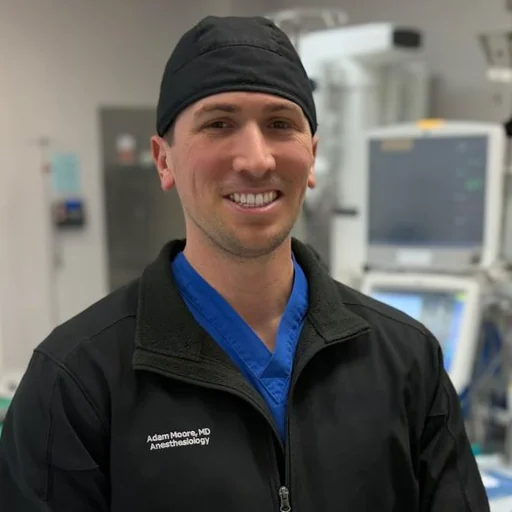
Practicing anesthesiologist with experience across MD-only, medical supervision of CRNAs, and medical direction of CAAs. Founded AnesthesiaJobs.com to help anesthesia professionals find the best job for their personal and professional life.
More about Adam →