How to Become a CRNA: 2026 Step-by-Step Guide
Quick Facts: CRNA Career at a Glance
- Total timeline: 7–9 years after high school
- Education required: BSN + DNP/DNAP (doctoral degree)
- ICU experience needed: 1–2+ years minimum
- Certification: NCE by NBCRNA
- Accredited programs: 130+ nationwide
- Average salary: $223,210/year median (BLS, May 2024); advertised avg ~$260,000 (ZipRecruiter, 2026)
- Program acceptance rate: ~20–30%
Becoming a Certified Registered Nurse Anesthetist (CRNA) is one of the most rewarding career paths in healthcare — and one of the highest-paying roles in advanced practice nursing. If you've been searching for how to become a CRNA, you're looking at a profession that combines clinical excellence, patient autonomy, and exceptional earning potential. Whether you're a pre-nursing student mapping out your future or an experienced ICU nurse ready for the next step, this comprehensive 2026 guide walks you through every phase of the journey.
CRNAs administer anesthesia for surgeries, pain management, and emergency procedures across hospitals, ambulatory surgical centers, and private practices. With a growing number of states granting full practice authority, CRNAs enjoy increasing independence — making now an outstanding time to pursue this career.
Step 1: Earn Your Bachelor of Science in Nursing (BSN)
📊 Salary Data Sources & Freshness This guide cites data from multiple sources: the U.S. Bureau of Labor Statistics (BLS, May 2024 — latest government data), ZipRecruiter (2026 advertised salaries), Glassdoor, AMN Healthcare, SalaryDr, and other industry reports. Government salary surveys have a 12–18 month reporting lag. Current advertised salaries on job boards typically reflect real-time market conditions and may be higher. Anesthesia provider compensation has risen steadily over the past five years.
Timeline: 4 years
Your CRNA journey begins with a Bachelor of Science in Nursing (BSN) from an accredited university. While some nurses enter the field through ADN (Associate Degree in Nursing) programs, virtually all CRNA programs require a BSN as a minimum entry requirement.
What to Focus on During Your BSN
- Sciences: Anatomy, physiology, pharmacology, pathophysiology, and chemistry build the foundation you'll need for anesthesia coursework
- GPA: Aim for a 3.3 cumulative GPA or higher — many top CRNA programs have average accepted GPAs of 3.5+
- Clinical rotations: Seek out ICU and critical care rotations to start building relevant experience early
- Leadership: Join nursing honor societies and student organizations to strengthen your application
GPA Benchmarks for Competitive Applicants
| GPA Range | Competitiveness |
|---|---|
| 3.7+ | Highly competitive |
| 3.5–3.69 | Strong candidate |
| 3.3–3.49 | Meets most minimums |
| Below 3.3 | May limit options |
If your GPA falls below 3.3, don't count yourself out — outstanding ICU experience, certifications, and a strong personal statement can compensate. Some programs also weigh your science GPA separately.
Step 2: Pass the NCLEX-RN and Obtain Your RN License
Timeline: Immediately following BSN graduation
After completing your BSN, you'll need to pass the NCLEX-RN examination to obtain your Registered Nurse license. This is a non-negotiable prerequisite for every CRNA program in the country. Make sure your license remains active and in good standing throughout the application process and beyond.
Step 3: Gain Critical Care ICU Experience
Timeline: 1–2+ years (minimum)
This step is where many aspiring CRNAs build the clinical foundation that makes them exceptional anesthesia providers. CRNA programs require a minimum of one year of critical care ICU experience as a registered nurse, though most competitive applicants have two or more years.
What Counts as Qualifying ICU Experience?
- Adult surgical ICU (SICU) — highly valued
- Medical ICU (MICU)
- Cardiovascular ICU (CVICU) — particularly desirable
- Neuro ICU
- Trauma ICU
- Pediatric ICU (PICU)
Tips for Maximizing Your ICU Experience
- Pursue high-acuity patients: Manage ventilators, vasopressors, arterial lines, and Swan-Ganz catheters
- Earn your CCRN certification: The Critical Care Registered Nurse credential significantly strengthens your application and is required by some programs
- Shadow CRNAs: Gain firsthand insight into the role and build mentorship connections
- Document everything: Track your patient acuity, procedures performed, and skills developed
Many aspiring CRNAs use this period to also study for the GRE, complete prerequisite courses, and begin researching top CRNA programs.
Step 4: Complete Prerequisites and Apply to CRNA Programs
Timeline: During ICU experience years
While gaining your ICU experience, you'll also need to prepare your applications. CRNA program admissions are highly competitive, with acceptance rates averaging 20–30%.
Common Prerequisites
- Active, unencumbered RN license
- BSN from an accredited program
- Minimum 1 year ICU experience (2+ preferred)
- GRE scores (required by some programs — check individual requirements)
- CCRN certification (required or strongly recommended)
- Current ACLS and PALS certifications
- Letters of recommendation (typically 3, including CRNA and/or physician references)
- Minimum GPA of 3.0–3.3 (program-dependent)
Application Tips for a Competitive Edge
- Apply broadly: Submit to 5–8 programs to increase your chances
- Personal statement: Tell a compelling story about why anesthesia, not just why advanced practice
- Interview prep: Practice clinical scenario questions and be prepared to discuss pharmacology and hemodynamics
- Research programs: Look at NBCRNA pass rates, clinical diversity, and program culture
Step 5: Complete Your CRNA Program (DNP/DNAP)
Timeline: 2–3 years (28–36 months for most programs)
CRNA programs are rigorous, full-time graduate programs that combine advanced didactic coursework with extensive clinical rotations. As of 2025, all accredited CRNA programs have transitioned to the doctoral level, awarding either a Doctor of Nursing Practice (DNP) or Doctor of Nurse Anesthesia Practice (DNAP) degree.
What You'll Study
- Advanced pharmacology and anesthesia pharmacology
- Advanced physiology and pathophysiology
- Principles of anesthesia practice
- Airway management
- Regional anesthesia techniques
- Pain management
- Pediatric and obstetric anesthesia
- Anesthesia for specialty procedures (cardiac, neuro, trauma)
Clinical Training
You'll complete 2,000+ clinical hours across multiple settings, including:
- Hospitals and academic medical centers
- Ambulatory surgery centers
- Obstetric suites
- Pediatric facilities
- Pain management clinics
- Trauma centers
There are currently 130+ COA-accredited CRNA programs across the United States. Choosing the right program is a major decision — explore our comprehensive guide to the best CRNA programs for detailed program profiles and selection criteria.
CRNA Program Cost Breakdown
| Cost Category | Estimated Range |
|---|---|
| Tuition (total program) | $80,000–$200,000+ |
| Books and supplies | $2,000–$5,000 |
| Clinical fees and equipment | $1,000–$3,000 |
| Living expenses (2–3 years) | $40,000–$90,000 |
| Total investment | $120,000–$300,000+ |
While the cost may seem daunting, the return on investment is exceptional. CRNAs earn among the highest salaries in nursing, with most graduates recouping their educational investment within 2–4 years of practice. See our detailed breakdown in How Much Do CRNAs Make?
Step 6: Pass the National Certification Examination (NCE)
Timeline: Within months of graduation
After completing your CRNA program, you'll sit for the National Certification Examination (NCE) administered by the National Board of Certification and Recertification for Nurse Anesthetists (NBCRNA). This computer-based exam tests your knowledge across all areas of nurse anesthesia practice.
- Format: Computer-adaptive test
- Content areas: Pharmacology, physiology, anesthesia equipment, clinical anesthesia, and professional practice
- Pass rate: First-time pass rates for accredited programs typically range from 85–100%
- Recertification: Required every 4 years through the Continued Professional Certification (CPC) program
Step 7: Obtain State Licensure and Begin Your Career
Timeline: Weeks to months after passing NCE
With your NCE certification in hand, you'll apply for state licensure as an Advanced Practice Registered Nurse (APRN) in the state where you plan to practice. Licensing requirements vary by state, so research your target state's specific requirements.
Where CRNAs Work
- Hospitals — the largest employer of CRNAs
- Ambulatory surgical centers — growing employer with excellent work-life balance
- Private anesthesia groups
- Military and VA facilities — CRNAs have full practice authority in all VA systems
- Pain management clinics
- Academic institutions
When it comes to finding your first position, understanding the landscape is key. New graduates should review our New Grad CRNA Guide and prepare for interviews with our CRNA Interview Questions resource.
Your CRNA Timeline at a Glance
Year 1–4:     BSN Program
               ↓
Year 4:       NCLEX-RN → RN License
               ↓
Year 5–6:     ICU Experience (1–2+ years)
               ↓
Year 6–7:     Apply to CRNA Programs
               ↓
Year 7–9:     CRNA Doctoral Program (DNP/DNAP)
               ↓
Year 9+:      NCE Certification → Practice!
Total: ~7–9 years from high school graduation to CRNA practice
How the CRNA Path Compares to Other Anesthesia Careers
Wondering how the CRNA pathway stacks up against other routes into anesthesia? Here's a quick comparison:
| Factor | CRNA | CAA | Anesthesiologist |
|---|---|---|---|
| Total years | 7–9 | 6–7 | 12+ |
| Degree earned | DNP/DNAP | Master's | MD/DO |
| Clinical background | Nursing (ICU) | Pre-med sciences | Medical school |
| Independent practice? | Yes, in 26+ states | No (physician-supervised) | Yes |
| Average salary | $223,210+ median (BLS, 2024); ~$260K advertised (ZipRecruiter, 2026) | $247,000–$253,000 (Marit Health/Becker's, 2026) | $336,640 base (BLS, 2024); $535K total comp (SalaryDr, 2026) |
For a deeper dive into these comparisons, explore our CRNA vs. Anesthesiologist and CRNA vs. CAA guides. You can also learn about how to become a CAA or how to become an anesthesiologist if you're still exploring your options.
The Salary Payoff: Why It's Worth It
After years of hard work and significant financial investment, CRNAs enjoy some of the highest salaries in healthcare:
- National median salary: $223,210/year (BLS, May 2024), while current job postings average ~$260,000 (ZipRecruiter, 2026). Top earners reach $394,500 (ZipRecruiter, 90th percentile)
- Top-paying states: Earning $270,000–$292,000+ annually (BLS, 2024), with advertised salaries exceeding $330,000–$400,000 in high-demand states (BagMask, 2025)
- Entry-level salary: ~$220,000–$260,000 in most markets — new grads typically earn at or near the national average from year one
- Locum tenens CRNAs: Often earn even more with flexible schedules — learn more in our Locum Tenens Guide for CRNAs
Explore the full salary picture in our state-by-state analysis: Top 10 Highest-Paying States for CRNAs.
Related Reading
- Best CRNA Programs & Schools: 2026 Rankings Guide
- CRNA Independent Practice States: 2026 Complete List
- CRNA vs. Anesthesiologist: Roles, Education & Salary Compared
- How Much Do CRNAs Make? Salary Guide
Ready to take the next step in your CRNA career? Whether you're a new graduate or an experienced nurse anesthetist, thousands of opportunities are waiting for you.
Browse CRNA Jobs on AnesthesiaJobs.com →
Looking to stay ahead of the market? Sign up for job alerts and get the latest CRNA positions delivered straight to your inbox.
Frequently Asked Questions
How long does it take to become a CRNA?
The typical path takes 7–9 years after high school: 4 years for a BSN, 1–2 years of ICU experience, and 2–3 years for a doctoral CRNA program. Some accelerated pathways may shorten this slightly, but most candidates should plan for approximately 8 years total.
How much does CRNA school cost?
CRNA program tuition ranges from $80,000 to $200,000+, depending on the program and whether you attend a public or private institution. Including living expenses, the total investment can reach $120,000–$300,000. However, CRNAs typically recoup this investment within 2–4 years thanks to a national median salary of $223,210 (BLS, 2024) and advertised averages around $260,000 (ZipRecruiter, 2026).
Do I need a doctorate to become a CRNA?
Yes. As of 2025, all accredited CRNA programs award a doctoral degree — either a Doctor of Nursing Practice (DNP) or Doctor of Nurse Anesthesia Practice (DNAP). Previously, master's-level programs existed, but the profession has fully transitioned to doctoral education.
What GPA do I need to get into CRNA school?
Most programs require a minimum GPA of 3.0–3.3, but competitive applicants typically have GPAs of 3.5 or higher. Your science GPA is often weighted heavily. Strong ICU experience, CCRN certification, and excellent recommendation letters can help offset a lower GPA.
Can CRNAs practice independently?
Yes — in approximately 26 states plus Washington, D.C., CRNAs have full practice authority and can administer anesthesia without physician supervision. CRNAs also have full practice authority in all VA facilities nationwide. Check our CRNA Independent Practice States guide for the complete list.
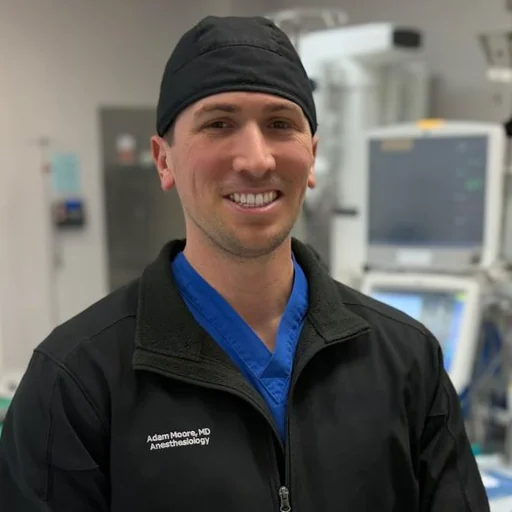
Practicing anesthesiologist with experience across MD-only, medical supervision of CRNAs, and medical direction of CAAs. Founded AnesthesiaJobs.com to help anesthesia professionals find the best job for their personal and professional life.
More about Adam →