CAA vs CRNA: Which Path Is Right for You?
Quick Facts at a Glance
- CAAs (Certified Anesthesiologist Assistants) earn an average of $247,000–$253,000 (Marit Health/Becker's, 2026), with top earners reaching $350,000 (BagMask Q1 2026). Training takes ~6 years post–high school.
- CRNAs (Certified Registered Nurse Anesthetists) earn a national median of $223,210/year (BLS, 2024), with current job postings averaging $260,000 (ZipRecruiter, 2026). Training takes ~7–8 years.
- CAAs practice within physician-led anesthesia care teams in approximately 20 states
- CRNAs have independent practice authority in 26 states and practice in all 50 states
- Both careers enjoy excellent job growth and strong demand nationwide
If you're passionate about anesthesia but unsure whether to pursue the CAA or CRNA route, you're comparing two genuinely outstanding career paths. Both Certified Anesthesiologist Assistants and Certified Registered Nurse Anesthetists provide hands-on anesthesia care every day — managing airways, administering medications, monitoring patients, and ensuring safe surgical outcomes. The differences lie in educational background, practice model, and state-level regulations.
This guide covers everything you need to compare "CAA vs CRNA" and "anesthesiologist assistant vs nurse anesthetist" so you can make the best decision for your unique goals and circumstances.
Education: Two Different Starting Points
📊 Salary Data Sources & Freshness This guide cites data from multiple sources: the U.S. Bureau of Labor Statistics (BLS, May 2024 — latest government data), ZipRecruiter (2026 advertised salaries), Glassdoor, AMN Healthcare, SalaryDr, and other industry reports. Government salary surveys have a 12–18 month reporting lag. Current advertised salaries on job boards typically reflect real-time market conditions and may be higher. Anesthesia provider compensation has risen steadily over the past five years.
The most fundamental difference between these careers is the educational foundation: CRNAs come from nursing, while CAAs come from a pre-medical/medicine background.
CRNA Education
| Stage | Duration | Details |
|---|---|---|
| Bachelor of Science in Nursing (BSN) | 4 years | Nursing coursework and clinical rotations |
| ICU Nursing Experience | 1–2 years | Minimum 1 year critical-care bedside experience |
| CRNA Graduate Program (MSN/DNP) | 2–3 years | Anesthesia-focused advanced practice education |
| Total | ~7–8 years | Earns a graduate degree and national certification (NCE) |
The CRNA path builds on nursing fundamentals. Your ICU experience as a bedside RN gives you invaluable clinical judgment before you ever enter a CRNA program. Learn more about each step in our How to Become a CRNA guide.
CAA Education
| Stage | Duration | Details |
|---|---|---|
| Bachelor's Degree (Pre-Med/Science) | 4 years | Biology, chemistry, physics, anatomy & physiology |
| CAA Master's Program | 2 years | Intensive didactic + clinical anesthesia training (~2,000+ clinical hours) |
| Total | ~6 years | Earns a master's degree and national certification (NCCAA exam) |
CAAs follow a pre-medical track that mirrors the early stages of physician training. The two-year master's program is highly concentrated, focusing entirely on anesthesia medicine and clinical practice. For full details, see How to Become a CAA.
Education Takeaway
CRNAs invest an extra 1–2 years primarily due to the required ICU nursing experience. CAAs can enter anesthesia practice slightly sooner since clinical experience is built into the master's program. Both paths are academically demanding and produce skilled anesthesia professionals.
Certification & Credentialing
| CRNA | CAA | |
|---|---|---|
| Certifying Body | NBCRNA (National Board of Certification and Recertification for Nurse Anesthetists) | NCCAA (National Commission for Certification of Anesthesiologist Assistants) |
| Initial Exam | National Certification Examination (NCE) | Certification Examination for Anesthesiologist Assistants |
| Recertification | Continued Professional Certification (CPC) program — 8-year cycle | Recertification every 6 years with continuing education |
| Credential | CRNA | CAA (or AA in some states) |
Both credentials signify a high level of competency and are recognized by healthcare employers and state licensing boards.
Scope of Practice: Independent Model vs. Team-Based Model
This is the area that generates the most discussion — and both models have genuine advantages.
CRNA Practice Model
CRNAs are Advanced Practice Registered Nurses (APRNs) licensed to practice in all 50 states, D.C., and U.S. territories. In 26 states and Guam, CRNAs have full independent practice authority, meaning they serve as the sole anesthesia provider without physician oversight. In remaining states, varying collaborative or supervisory arrangements exist.
CRNAs practice in:
- Hospitals and academic medical centers
- Ambulatory surgery centers
- Pain management clinics
- Military and VA facilities
- Rural and underserved communities (often as the primary anesthesia provider)
The independent practice option gives CRNAs tremendous flexibility, including the ability to open their own practices in qualifying states. Check out our CRNA independent practice states guide for a state-by-state breakdown.
CAA Practice Model
CAAs practice within physician-led anesthesia care teams, working directly alongside anesthesiologists. This collaborative model is built on a partnership where the anesthesiologist and CAA function as an integrated unit. CAAs currently practice in approximately 20 states, though legislative efforts are expanding that number each year.
CAAs excel in:
- High-acuity hospital settings alongside anesthesiologists
- Cardiac, neuro, and trauma surgery centers
- Large multi-specialty surgical groups
- Academic medical centers with robust anesthesia care teams
The physician-led team model appeals to professionals who thrive in structured, collaborative environments where each team member brings complementary expertise to patient care.
Practice States Comparison
| Factor | CRNA | CAA |
|---|---|---|
| States Licensed | All 50 + D.C. | ~20 states (growing) |
| Independent Practice | 26 states + Guam | Physician-led team model in all practice states |
| Practice Flexibility | Very high — multiple settings and models | Growing — state-by-state expansion continues |
Salary & Compensation
Both CAAs and CRNAs enjoy compensation that ranks among the highest in healthcare for non-physician providers.
| Metric | CRNA | CAA |
|---|---|---|
| Median / Average Salary | $223,210 median (BLS, 2024) | $247,000–$253,000 average (Marit Health/Becker's, 2026) |
| Current Advertised Average | $260,000 (ZipRecruiter, 2026) | Up to $350,000 ceiling (BagMask Q1 2026) |
| High-End Compensation | $330K–$400K+ in top-paying states (BagMask, 2025) | $264,000–$328,000 in cardiac anesthesia (Emory) |
| Mean Hourly Rate | ~$200/hr (market rate, 2026) | ~$200–$275/hr (market rate, 2026) |
| Top State (CRNA) | Massachusetts — $292,390 (BLS, 2024) | Varies; St. Louis averages $238,309 (Glassdoor, 2026) |
| Survey Range | $190,500–$348,000 middle 50% (ZipRecruiter, 2026) | $158,000–$240,000 (AAAA Survey, 2025) |
(Sources: BLS May 2024, ZipRecruiter May 2026, Marit Health/Becker's 2026, BagMask Q1 2026, AAAA 2025 Survey, Glassdoor 2026. Government data lags market by 12–18 months; advertised salaries reflect current conditions.)
CRNAs benefit from well-established national salary benchmarking. The BLS reports a national median of $223,210 (May 2024), while current job postings average $260,000 (ZipRecruiter, 2026). Top earners in high-demand states can exceed $330,000–$400,000. See the full picture at How Much Do CRNAs Make? and our CRNA salary by state breakdown.
CAAs see strong and rapidly growing compensation, with current averages of $247,000–$253,000 (Marit Health/Becker's, 2026). The AAAA survey reports a range of $158,000–$240,000 (2025), while top earners in specialized roles such as cardiac anesthesia earn $264,000–$328,000 (Emory), and BagMask reports a new salary ceiling of $350,000 in Q1 2026. Our CAA Salary by State guide covers regional differences in detail.
Both careers offer exceptional return on educational investment, especially when you consider the relatively short training timelines compared to physicians.
Lifestyle & Day-to-Day Experience
| Factor | CRNA | CAA |
|---|---|---|
| Typical Setting | OR, ambulatory centers, pain clinics, rural facilities | OR, hospital-based teams, high-acuity surgery suites |
| Schedule | Shift-based; flexible options including locum tenens and PRN | Typically scheduled hours within team structure |
| Call | Varies widely — some roles have no call | Shared within the care team |
| Locum Tenens | Widely available — see our locum tenens guide | Growing but less established |
| Geographic Flexibility | All 50 states | ~20 states currently |
CRNAs enjoy broad geographic flexibility and a well-developed locum tenens market that enables travel, contract work, and schedule control. CAAs benefit from the built-in team structure, which can reduce individual burden during complex cases and create a strong sense of camaraderie.
A Day in the Life
As a CRNA, your day might include arriving early to review your case schedule, performing pre-anesthesia assessments, inducing and maintaining general anesthesia for a slate of surgeries, placing nerve blocks for post-operative pain control, and managing patients through recovery. Depending on your setting, you may work independently or alongside an anesthesiologist. In rural hospitals, you may be the sole anesthesia provider — a critical role in healthcare access.
As a CAA, your day follows a similar clinical rhythm — pre-op evaluations, airway management, intraoperative monitoring, and post-anesthesia care — but always within the structure of a physician-led team. You'll collaborate closely with your supervising anesthesiologist on case planning, and you may assist with complex procedures such as cardiac or neurological cases where team coordination is especially valuable.
Both roles share the deep satisfaction of knowing that every patient who comes through the OR relies on your expertise for their safety and comfort.
Which Fits Your Goals?
Here's a simple decision framework:
The CAA path may be ideal if you…
- Have a pre-medical background (not nursing)
- Want to enter anesthesia practice in as few as 6 years
- Thrive in collaborative, physician-led team environments
- Plan to practice in one of the ~20 CAA-licensed states
- Enjoy high-acuity, hospital-based surgical care
The CRNA path may be ideal if you…
- Are a registered nurse or pursuing a nursing degree
- Value the option of independent practice in 26+ states
- Want maximum geographic and practice-setting flexibility
- Are drawn to rural healthcare, military service, or locum tenens
- Appreciate the ability to work in all 50 states
Still deciding between all anesthesia roles? Our CRNA vs CAA vs Anesthesiologist: Complete 3-Way Comparison puts all three careers side by side in one comprehensive guide. You can also explore our Exploring Anesthesia Careers pillar page for a broader view.
Related Reading
- CRNA vs Anesthesiologist: Salary, Education, Scope Compared
- CAA vs Anesthesiologist: Education, Salary & Career Compared
- CAA Salary by State
- How to Become a CAA
Find Your Next Anesthesia Role
Whether you're a CAA looking for your next team-based opportunity or a CRNA seeking independent practice in a high-paying market, we've got you covered.
Browse CAA Jobs on AnesthesiaJobs.com → Browse CRNA Jobs on AnesthesiaJobs.com →
Stay ahead of the market — sign up for personalized job alerts → today.
Frequently Asked Questions
What is the difference between a CAA and a CRNA?
The primary differences are educational background and practice model. CRNAs come from a nursing background (BSN → ICU experience → CRNA graduate program) and can practice independently in 26 states. CAAs come from a pre-medical/medicine background (bachelor's in science → CAA master's program) and practice within physician-led anesthesia care teams. Both provide hands-on anesthesia care in the operating room.
Do CAAs or CRNAs make more money?
Both earn excellent compensation. CRNAs earn a national median of $223,210/year (BLS, 2024), with current job postings averaging $260,000 (ZipRecruiter, 2026). CAAs earn an average of $247,000–$253,000 (Marit Health/Becker's, 2026), with top earners reaching $350,000 (BagMask Q1 2026). Compensation varies by state, experience, and practice setting for both roles.
Can a CAA practice in all 50 states?
Currently, CAAs are licensed to practice in approximately 20 states, though legislative efforts are actively expanding that number. CRNAs, by contrast, are licensed in all 50 states plus D.C. and U.S. territories.
Is it faster to become a CAA or a CRNA?
The CAA path is typically slightly shorter at ~6 years post–high school (4-year bachelor's + 2-year master's). The CRNA path takes ~7–8 years because it includes 1–2 years of required ICU nursing experience between the bachelor's degree and graduate school.
Can you switch from CAA to CRNA or vice versa?
Switching between these careers would require completing the other profession's full educational pathway, as they have different foundational training (nursing vs. medicine). However, your anesthesia knowledge and clinical experience would be a significant advantage in either direction.
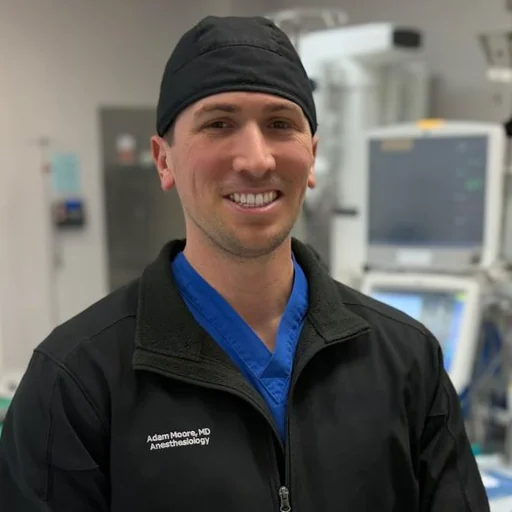
Practicing anesthesiologist with experience across MD-only, medical supervision of CRNAs, and medical direction of CAAs. Founded AnesthesiaJobs.com to help anesthesia professionals find the best job for their personal and professional life.
More about Adam →