CAA vs Anesthesiologist: Education, Salary & Career Compared
Quick Facts at a Glance
- CAAs earn an average of $247,000–$253,000 (Marit Health/Becker's, 2026), with top earners reaching $350,000 (BagMask Q1 2026). Training takes ~6 years post–high school.
- Anesthesiologists earn a BLS mean of $336,640 in base salary (2024) and a median total compensation of $535,000 (SalaryDr, 2026). Training takes 12–14 years.
- CAAs and anesthesiologists work side by side in physician-led anesthesia care teams — a collaborative partnership
- Both careers are in high demand as surgical volumes grow and the population ages
- CAAs currently practice in ~20 states; anesthesiologists practice in all 50
If you're exploring anesthesia as a career and weighing "CAA vs anesthesiologist," you're comparing two roles that work together every day in operating rooms across the country. Certified Anesthesiologist Assistants (CAAs) and anesthesiologists share the same mission — safe, effective anesthesia care — but their educational journeys, day-to-day roles, earning potential, and career trajectories look quite different. Understanding these differences will help you choose the path that aligns with your timeline, interests, and professional aspirations.
Education Timeline: 6 Years vs. 12+ Years
📊 Salary Data Sources & Freshness This guide cites data from multiple sources: the U.S. Bureau of Labor Statistics (BLS, May 2024 — latest government data), ZipRecruiter (2026 advertised salaries), Glassdoor, AMN Healthcare, SalaryDr, and other industry reports. Government salary surveys have a 12–18 month reporting lag. Current advertised salaries on job boards typically reflect real-time market conditions and may be higher. Anesthesia provider compensation has risen steadily over the past five years.
One of the most significant distinctions between these two careers is the length and structure of training.
CAA Education Path
| Stage | Duration | Details |
|---|---|---|
| Bachelor's Degree (Science/Pre-Med) | 4 years | Biology, chemistry, physics, anatomy, physiology |
| CAA Master's Program | 2 years | Didactic anesthesia coursework + 2,000+ clinical hours |
| Total | ~6 years | Earns master's degree and NCCAA certification |
CAA programs are highly focused on anesthesia from day one of the master's curriculum. Pre-requisites mirror pre-med coursework, so many CAA students originally considered medical school before discovering this faster route to the OR. Our How to Become a CAA guide covers every step.
Anesthesiologist Education Path
| Stage | Duration | Details |
|---|---|---|
| Bachelor's Degree (Pre-Med) | 4 years | Science-heavy coursework, MCAT preparation |
| Medical School (MD/DO) | 4 years | Comprehensive medical education across all specialties |
| Anesthesiology Residency | 4 years | Hospital-based, intensive anesthesia training |
| Fellowship (optional) | 1–2 years | Cardiac, pediatric, pain medicine, critical care |
| Total | 12–14 years | Earns MD/DO and ABA board certification |
Anesthesiologists complete the full physician training pipeline, giving them the broadest medical knowledge base and the widest clinical scope in anesthesia. Explore the full timeline in our How to Become an Anesthesiologist guide.
What This Means for You
If you want to be delivering anesthesia care as quickly as possible, the CAA path gets you to the operating room in roughly half the time. If you're drawn to the depth of a full medical education and want the broadest possible scope, the anesthesiologist route is the path to pursue. Both are excellent investments in a fulfilling career.
Day-to-Day Role: Collaborative Partners in the OR
CAAs and anesthesiologists don't compete — they collaborate. In a physician-led anesthesia care team, the anesthesiologist and CAA work together to provide patient care, each bringing complementary strengths.
CAA Daily Responsibilities
- Conduct pre-anesthetic assessments and patient evaluations
- Administer general, regional, and monitored anesthesia care
- Manage patient airways and ventilation during surgery
- Monitor hemodynamics, adjust medications in real time
- Assist with invasive monitoring (arterial lines, central venous catheters)
- Participate in post-anesthesia care and pain management
Anesthesiologist Daily Responsibilities
- Perform comprehensive pre-operative medical evaluations
- Develop and direct the anesthesia care plan
- Manage complex and high-risk cases (cardiac, pediatric, trauma)
- Supervise anesthesia care teams including CAAs and CRNAs
- Perform advanced procedures and interventional pain management
- Engage in research, teaching, and departmental leadership
The Collaborative Dynamic
Think of the anesthesiologist-CAA relationship as a physician-and-specialist-partner team. The anesthesiologist brings broader medical oversight and directs the care plan, while the CAA brings focused anesthesia expertise and hands-on execution. Together, they provide highly efficient and safe care — often managing multiple operating rooms simultaneously.
Salary Range: Both Among Healthcare's Top Earners
| Metric | CAA | Anesthesiologist |
|---|---|---|
| Average Salary | $247,000–$253,000 (Marit Health/Becker's, 2026) | $336,640 mean base (BLS, 2024) |
| Median Total Compensation | — | $535,000 (SalaryDr, 2026 — 176 verified reports) |
| Current Advertised Average | — | $393,215 (ZipRecruiter, 2026) |
| Top Earners | Up to $350,000 (BagMask Q1 2026) | $500K–$570K+ in total comp |
| Specialty Premium | $264K–$328K cardiac (Emory) | Higher in private practice & pain mgmt |
| Starting Salary | ~$200K–$250K | ~$377,000 (AMN Healthcare, 2025) |
| Market Hourly Rate | ~$200–$275/hr | — |
| Survey Range | $158,000–$240,000 (AAAA, 2025) | $466,000–$578,000 typical total comp (SalaryDr, 2026) |
| Earnings per Year of Training | Exceptional ROI given 6-year pathway | Highest ceiling, longer investment |
(Sources: BLS May 2024, Marit Health/Becker's 2026, SalaryDr 2026, ZipRecruiter May 2026, AMN Healthcare 2025, BagMask Q1 2026, AAAA 2025 Survey. Note: BLS anesthesiologist data captures base salary only — total compensation including bonuses, call pay, and production incentives is significantly higher.)
When you factor in return on investment (salary relative to years of training), both careers are remarkably strong. CAAs begin earning a substantial salary after just 6 years of education, while anesthesiologists invest 12+ years but access the highest earning potential in the anesthesia field.
For detailed salary data, explore:
- CAA Salary by State
- How Much Do Anesthesiologists Make?
- Top 10 Highest-Paying States for Anesthesiologists
Practice Settings & Geographic Considerations
| Factor | CAA | Anesthesiologist |
|---|---|---|
| Practice States | ~20 states (expanding) | All 50 states + D.C. |
| Typical Settings | Hospital-based surgical suites, academic medical centers, large group practices | All settings — hospitals, ASCs, academic centers, private practice, military |
| Practice Model | Physician-led anesthesia care team | Independent physician practice or care team leadership |
| Rural Practice | Less common (physician-team model requires anesthesiologist availability) | Yes — private and employed models in rural settings |
CAAs currently practice in approximately 20 states, with active legislative efforts to expand that number. If you're considering the CAA path, research the licensure landscape in states where you'd like to live and work. Anesthesiologists enjoy full licensure in every state and the flexibility to practice across the full spectrum of settings.
Career Advancement & Long-Term Growth
Both CAAs and anesthesiologists have clear trajectories for professional growth, though the paths look quite different.
CAA Career Trajectory
- Clinical advancement: Senior CAA, lead CAA, clinical coordinator within your anesthesia care team
- Education: Program instructor, clinical preceptor, or simulation lab director in CAA programs — helping shape the next generation of anesthesia professionals
- Leadership: Anesthesia department coordinator, practice manager, quality improvement lead
- Advocacy: Involvement in state legislative efforts to expand CAA practice authority to new states — a growing area of impact
- Mentorship: Senior CAAs play a critical role in onboarding new graduates and fostering professional development within the care team
Anesthesiologist Career Trajectory
- Subspecialty fellowship: Cardiac, pediatric, neuroanesthesia, pain medicine, obstetric anesthesia, critical care
- Academic medicine: Professor, department chair, principal investigator, residency program director
- Leadership: Chief of anesthesia, medical director, hospital C-suite executive
- Private practice/ownership: Solo practice, anesthesia group partnership, management services organization (MSO)
- Industry: Pharmaceutical consulting, medical device development, health-tech advisory boards
Professional Satisfaction
Both careers offer meaningful avenues for professional growth and high career satisfaction. CAAs consistently report strong job satisfaction driven by the collaborative team environment, excellent compensation, and the satisfaction of hands-on patient care. Anesthesiologists value their broad scope, leadership opportunities, and the ability to shape the future of anesthesia through research and education. CAAs who want to expand their scope further sometimes pursue medical school to become anesthesiologists — their clinical experience provides an exceptional foundation.
Choosing Your Path: A Framework
The CAA path may be the best fit if you…
- Want to practice anesthesia with a 6-year educational timeline
- Enjoy the physician-led team dynamic and collaborative care
- Have a strong pre-med or science background
- Plan to work in one of the ~20 states that license CAAs
- Value an outstanding salary and career stability without the length of medical school
The anesthesiologist path may be the best fit if you…
- Want the broadest clinical scope and medical training in anesthesia
- Are passionate about leading anesthesia teams and departments
- Want to pursue subspecialty fellowships (cardiac, pediatric, pain)
- Are willing to invest 12–14 years of training for the highest earning ceiling
- Value the flexibility to practice in all 50 states across every setting
No matter which you choose, you'll be entering a field with tremendous demand and the opportunity to make a profound impact on patient care every single day. Browse our Exploring Anesthesia Careers page for a bird's-eye view of all paths, or visit the Anesthesiologist Job Market page for current trends.
Related Reading
- CRNA vs Anesthesiologist: Salary, Education, Scope Compared
- CAA vs CRNA: Which Path Is Right for You?
- CRNA vs CAA vs Anesthesiologist: Complete 3-Way Comparison
- How Much Do Anesthesiologists Make?
Start Your Anesthesia Career Search
Ready to explore open positions? Whether you're a CAA looking for a team-based role or an anesthesiologist seeking your next practice opportunity, we make it easy to find the right fit.
Browse CAA Jobs on AnesthesiaJobs.com → Browse Anesthesiologist Jobs on AnesthesiaJobs.com →
Don't miss out — sign up for job alerts → and get matched with opportunities tailored to your credentials.
Frequently Asked Questions
What is the difference between a CAA and an anesthesiologist?
A CAA (Certified Anesthesiologist Assistant) holds a master's degree and works within a physician-led anesthesia care team, delivering hands-on anesthesia under the direction of an anesthesiologist. An anesthesiologist is a physician (MD/DO) who has completed medical school and a four-year residency, giving them the broadest clinical scope in anesthesia, including the ability to lead care teams and perform complex independent procedures.
How much does a CAA make compared to an anesthesiologist?
CAAs earn an average of $247,000–$253,000 per year (Marit Health/Becker's, 2026), with top earners reaching $350,000 (BagMask Q1 2026) and cardiac anesthesia roles paying $264,000–$328,000 (Emory). Anesthesiologists earn a BLS mean of $336,640 in base salary (2024), but median total compensation reaches $535,000 (SalaryDr, 2026), with total packages often exceeding $500K–$570K+. Both are among the highest-compensated healthcare professionals in the country.
Can a CAA become an anesthesiologist?
Yes. A CAA who wishes to become an anesthesiologist would need to complete medical school (4 years) and an anesthesiology residency (4 years). While this is a significant additional commitment, CAAs enter medical school with outstanding clinical anesthesia experience that gives them a strong advantage.
How many states allow CAAs to practice?
As of 2024, CAAs are licensed to practice in approximately 20 states, with active legislative efforts underway to expand to additional states. Anesthesiologists, by comparison, are licensed in all 50 states plus D.C.
Do CAAs and anesthesiologists work together?
Absolutely. In the physician-led anesthesia care team model, CAAs and anesthesiologists work side by side every day. The anesthesiologist directs the anesthesia care plan, while the CAA provides hands-on anesthesia delivery, monitoring, and airway management. This collaborative partnership is the foundation of the care team approach.
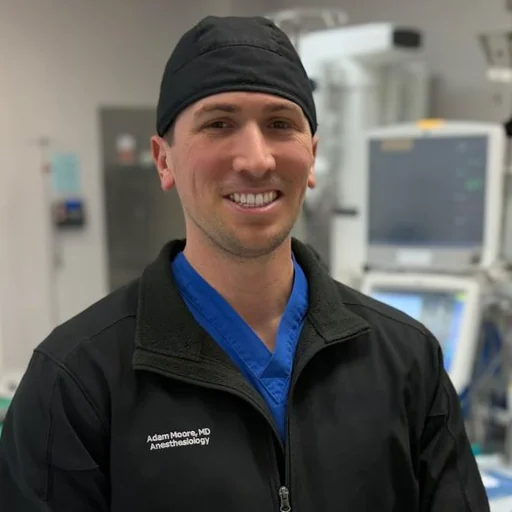
Practicing anesthesiologist with experience across MD-only, medical supervision of CRNAs, and medical direction of CAAs. Founded AnesthesiaJobs.com to help anesthesia professionals find the best job for their personal and professional life.
More about Adam →