How to Become a CAA: Education & Career Guide
Quick Facts: CAA Career at a Glance
- Total timeline: 6–7 years after high school
- Education required: Bachelor's degree + Master's in Anesthesia
- Accredited programs: 13 CAAHEP-accredited programs (and growing)
- Certification: NCCAA certification exam
- Practice model: Physician-supervised (anesthesiologist direction)
- Practice states: ~20 states and expanding
- Average salary: $247,000–$253,000/year (Marit Health/Becker's, 2026); top earners up to $350,000 (BagMask, Q1 2026)
The Certified Anesthesiologist Assistant (CAA) is one of the fastest-growing careers in anesthesia — and one of the most efficient pathways into the operating room. If you're researching how to become a CAA, you're exploring a career that offers hands-on anesthesia practice, excellent compensation, and a training timeline significantly shorter than the physician route. With only 13 accredited programs and rising demand, the CAA profession presents a compelling opportunity for science-minded students drawn to anesthesia.
CAAs work under the direction of anesthesiologists as part of the anesthesia care team, delivering anesthesia for surgical and diagnostic procedures across hospitals, ambulatory surgery centers, and specialty clinics. They're trained in the same medical model as anesthesiologists, making them uniquely prepared to collaborate seamlessly with physician anesthesiologists.
What Does a CAA Do?
📊 Salary Data Sources & Freshness This guide cites data from multiple sources: the U.S. Bureau of Labor Statistics (BLS, May 2024 — latest government data), ZipRecruiter (2026 advertised salaries), Glassdoor, AMN Healthcare, SalaryDr, and other industry reports. Government salary surveys have a 12–18 month reporting lag. Current advertised salaries on job boards typically reflect real-time market conditions and may be higher. Anesthesia provider compensation has risen steadily over the past five years.
Before mapping out the educational path, here's what CAAs do in daily practice:
- Administer general, regional, and local anesthesia under anesthesiologist supervision
- Perform pre-anesthetic assessments and develop anesthesia care plans
- Manage patient airways using advanced airway devices and techniques
- Monitor physiological status during surgery — heart rate, blood pressure, oxygenation, ventilation
- Establish vascular access including arterial lines and central venous catheters
- Administer medications — anesthetic agents, vasoactive drugs, analgesics
- Assist with pain management procedures including nerve blocks
- Respond to emergencies in the operating room environment
CAAs and CRNAs perform many of the same clinical tasks. The key difference is the practice model: CAAs always work under the direction of an anesthesiologist, while CRNAs can practice independently in 26+ states. For a detailed comparison, see our CAA vs. CRNA guide.
Step 1: Complete Your Bachelor's Degree with Pre-Med Prerequisites
Timeline: 4 years | Estimated cost: $40,000–$200,000+
Your CAA career begins with a four-year bachelor's degree that includes the pre-medical prerequisites required by CAA master's programs. There is no specific required major, but most successful applicants choose science-based fields.
Common Majors for CAA Applicants
- Biology
- Chemistry or Biochemistry
- Biomedical Sciences
- Health Sciences
- Exercise Science
- Any major — provided you complete all prerequisites
Required Prerequisites
| Course | Duration |
|---|---|
| Biology I & II (with labs) | 2 semesters |
| General Chemistry I & II (with labs) | 2 semesters |
| Organic Chemistry I & II (with labs) | 2 semesters |
| Physics I & II (with labs) | 2 semesters |
| Biochemistry | 1 semester |
| Statistics | 1 semester |
| Additional recommended: Anatomy, Physiology, Genetics | Varies |
Building a Strong Application
- GPA: Aim for 3.3+ overall and 3.3+ science GPA — competitive applicants often have 3.5+
- GRE scores: Required by all programs — aim for 310+ combined (verbal + quantitative)
- Clinical experience: Shadow anesthesiologists and CAAs to demonstrate genuine interest in the field
- Healthcare experience: EMT, medical scribe, research assistant, or patient care roles strengthen your application
- Letters of recommendation: Ideally from science faculty and anesthesia professionals
Step 2: Take the GRE
Timeline: During junior or senior year of college
The Graduate Record Examination (GRE) is required by all CAA programs. Plan to dedicate 2–4 months of focused study and aim for a competitive score:
| GRE Section | Target Score |
|---|---|
| Verbal Reasoning | 155+ |
| Quantitative Reasoning | 155+ |
| Analytical Writing | 4.0+ |
Many applicants take the GRE multiple times to achieve their best score. Register early and take it no later than the fall before your intended application cycle.
Step 3: Apply and Gain Admission to a CAA Master's Program
Timeline: During senior year of college
With only 13 accredited CAA programs in the country, admissions are competitive. Applications are typically submitted through CASPA (Centralized Application Service for Physician Assistants) or directly through the program.
All 13 Accredited CAA Programs (2026)
| # | Program | Location | Program Length |
|---|---|---|---|
| 1 | Case Western Reserve University | Cleveland, OH | 28 months |
| 2 | Emory University | Atlanta, GA | 28 months |
| 3 | South University (Savannah) | Savannah, GA | 28 months |
| 4 | Nova Southeastern University | Fort Lauderdale, FL | 27 months |
| 5 | University of Colorado | Denver, CO | 28 months |
| 6 | Indiana University | Indianapolis, IN | 24 months |
| 7 | Quinnipiac University | Hamden, CT | 28 months |
| 8 | University of Missouri–Kansas City | Kansas City, MO | 24 months |
| 9 | Adventist University of Health Sciences | Orlando, FL | 28 months |
| 10 | Medical University of South Carolina | Charleston, SC | 28 months |
| 11 | University of Wisconsin–Madison | Madison, WI | 24 months |
| 12 | Loma Linda University | Loma Linda, CA | 28 months |
| 13 | George Washington University | Washington, DC | 28 months |
Note: The number of accredited CAA programs continues to grow. Several additional programs are in development or seeking accreditation. Check the CAAHEP website for the most current list.
Admissions Tips
- Apply to multiple programs — with only 13 options, casting a wide net is essential
- Highlight anesthesia exposure — shadowing experience in anesthesia is often required or strongly preferred
- Prepare for interviews — expect questions about the anesthesia care team model, why CAA over other anesthesia careers, and clinical scenarios
- Strong personal statement — articulate why the CAA model (physician-supervised, medical-model education) appeals to you specifically
Step 4: Complete Your CAA Master's Program
Timeline: 24–28 months | Estimated cost: $80,000–$160,000
CAA programs are intensive, full-time master's degree programs typically lasting 24–28 months. The curriculum follows a medical education model similar to what anesthesiology residents experience, compressed into a graduate program format.
Curriculum Overview
Didactic Phase (approximately 12 months):
- Advanced anatomy and physiology
- Pharmacology and anesthesia pharmacology
- Chemistry and physics of anesthesia
- Principles of anesthesia practice
- Airway management
- Monitoring techniques
- Regional anesthesia
- Patient assessment and evaluation
Clinical Phase (approximately 12–16 months):
- 2,000+ clinical hours in anesthesia care delivery
- Rotations across multiple surgical specialties:
- General surgery, orthopedic, urologic
- Cardiac and thoracic surgery
- Pediatric anesthesia
- Obstetric anesthesia
- Neurosurgical anesthesia
- Outpatient/ambulatory surgery
- Pain management
- Increasing independence and case complexity under anesthesiologist direction
Program Cost Comparison
| Program Type | Tuition Estimate |
|---|---|
| Public university | $60,000–$100,000 |
| Private university | $100,000–$160,000 |
| Average total (with living expenses) | $120,000–$200,000 |
While the investment is significant, the salary payoff is substantial. CAAs typically earn $247,000–$253,000 on average (Marit Health/Becker's, 2026), equivalent to approximately $200–$275/hr in market hourly rate, with the AAAA reporting a range of $158,000–$240,000 (2025 survey) and top earners reaching up to $350,000 (BagMask, Q1 2026) — meaning most graduates recoup their educational investment within 1–3 years. Compare this with the CAA salary by state for location-specific data.
Step 5: Pass the NCCAA Certification Examination
Timeline: Upon completion of program
After graduating from an accredited CAA program, you must pass the NCCAA (National Commission for Certification of Anesthesiologist Assistants) certification exam to earn the AA-C (Anesthesiologist Assistant–Certified) credential.
- Format: Computer-based exam covering all aspects of anesthesia practice
- Content: Pharmacology, physiology, clinical anesthesia, equipment, patient safety
- Pass rate: Generally high for accredited program graduates
- Recertification: Required every 6 years with continuing medical education (CME) credits
Step 6: Obtain State Licensure and Begin Practice
Timeline: Weeks to months after certification
With your NCCAA certification, you'll apply for state licensure in a state that recognizes CAA practice. This is a critical consideration — not all states currently authorize CAA practice.
States Where CAAs Can Practice (2026)
CAAs currently practice in approximately 20 states, with more states actively pursuing legislation to add CAA licensure:
| States with CAA Licensure | Region |
|---|---|
| Alabama | Southeast |
| Colorado | West |
| Connecticut | Northeast |
| Florida | Southeast |
| Georgia | Southeast |
| Indiana | Midwest |
| Kentucky | Southeast |
| Michigan | Midwest |
| Missouri | Midwest |
| New Mexico | West |
| North Carolina | Southeast |
| Ohio | Midwest |
| Oklahoma | South Central |
| South Carolina | Southeast |
| Texas | South Central |
| Vermont | Northeast |
| Virginia | Southeast |
| Washington, D.C. | Mid-Atlantic |
| Wisconsin | Midwest |
| West Virginia | Southeast |
The trend is encouraging: Several additional states are actively considering CAA licensure legislation. As the profession grows and demand for anesthesia providers increases, CAA practice authority is expected to continue expanding.
Search for positions in your preferred location: CAA Jobs or filter by state, such as CAA Jobs in Florida, CAA Jobs in Georgia, or CAA Jobs in Ohio.
Why Choose the CAA Path?
The CAA career offers several distinct advantages:
Faster Route to Anesthesia Practice
At 6–7 total years, the CAA path is the shortest route to administering anesthesia — compared to 7–9 years for a CRNA and 12+ years for an anesthesiologist. If your goal is to practice anesthesia as quickly as possible, the CAA pathway delivers.
Strong Salary-to-Training Ratio
With average salaries of $247,000–$253,000 (Marit Health/Becker's, 2026) and only 6–7 years of total education, the return on investment is outstanding. Many CAAs are debt-free within 2–3 years of practice.
Growing Demand and Expanding Opportunities
With a national shortage of anesthesia providers and an aging population requiring more surgical procedures, CAAs are in high demand. The small number of programs (13) means the supply of new CAAs remains limited relative to need — which supports strong salaries and excellent job security.
Team-Based Practice Model
CAAs work in a collaborative model with anesthesiologists, benefiting from direct physician mentorship and support. This team structure is valued in many hospital and surgical center environments.
How the CAA Path Compares
| Factor | CAA | CRNA | Anesthesiologist |
|---|---|---|---|
| Total timeline | 6–7 years | 7–9 years | 12+ years |
| Degree | Master's | DNP/DNAP | MD/DO |
| Entry background | Pre-med sciences | Nursing (BSN + ICU) | Pre-med + Medical school |
| Practice model | Physician-supervised | Independent (26+ states) or supervised | Independent |
| Programs available | 13 | 130+ | ~160 residencies |
| Average salary | $247,000–$253,000 (Marit Health/Becker's, 2026) | $223,210+ median (BLS, 2024); ~$260K advertised (ZipRecruiter, 2026) | $336,640 base (BLS, 2024); $535K total comp (SalaryDr, 2026) |
Each path is an excellent career choice in anesthesia. For detailed comparisons, explore:
Career Outlook and Future of the CAA Profession
The CAA profession is on a strong growth trajectory:
- More accredited programs are in development, increasing the pipeline of new graduates
- More states are adding CAA licensure, expanding practice opportunities nationwide
- Anesthesia provider shortages drive demand in hospitals and surgical centers
- Competitive salaries continue to rise as demand outpaces supply
- Professional organizations like the AAAA (American Academy of Anesthesiologist Assistants) actively advocate for expanded practice rights
For the broader anesthesia industry outlook, visit our Anesthesiologist Trends & Opportunities page and the Exploring Anesthesia Careers hub.
Related Reading
- CAA vs. CRNA: Education, Salary & Scope of Practice Compared
- CAA Salary by State: 2026 Compensation Guide
- CRNA vs. CAA vs. Anesthesiologist: Complete Comparison
- How to Become an Anesthesiologist: Complete 2026 Guide
Ready to launch your CAA career? AnesthesiaJobs.com connects you with the best CAA positions across the country — from teaching hospitals to high-volume surgical centers.
Browse CAA Jobs on AnesthesiaJobs.com →
Want to hear about new CAA positions the moment they're posted? Sign up for job alerts and never miss an opportunity.
Frequently Asked Questions
How long does it take to become a CAA?
It takes approximately 6–7 years after high school: 4 years for a bachelor's degree with pre-med prerequisites, followed by a 24–28-month CAA master's program. This makes it the fastest route to a career administering anesthesia.
How many CAA programs are there?
There are currently 13 CAAHEP-accredited CAA programs in the United States, with several more in development. The limited number of programs contributes to the high demand for CAA graduates and competitive salaries.
In which states can CAAs practice?
CAAs can currently practice in approximately 20 states, including Florida, Georgia, Ohio, Texas, Colorado, and others. The number of states authorizing CAA practice continues to grow as legislatures recognize the value of CAAs in addressing anesthesia provider shortages.
What is the difference between a CAA and a CRNA?
CAAs and CRNAs both administer anesthesia, but they differ in their educational background, practice model, and scope. CAAs are trained in the medical model with pre-med prerequisites and always practice under anesthesiologist supervision. CRNAs come from a nursing background (BSN + ICU experience) and can practice independently in 26+ states. Both are rewarding career paths. See our full CAA vs. CRNA comparison.
How much do CAAs earn?
CAAs earn an average salary of $247,000–$253,000 per year (Marit Health/Becker's, 2026), equivalent to approximately $200–$275/hr in market hourly rate, with the AAAA reporting a range of $158,000–$240,000 (2025 survey) and top earners reaching up to $350,000 in specialized settings like cardiac anesthesia (BagMask, Q1 2026). With only 6–7 years of education required, the salary-to-training ratio is one of the strongest in healthcare. Explore our CAA salary by state guide for detailed compensation data.
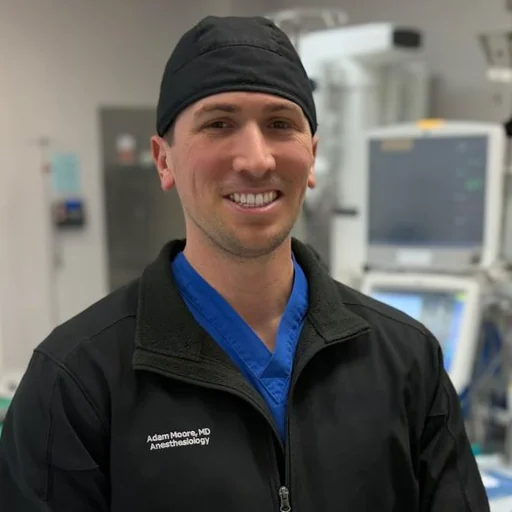
Practicing anesthesiologist with experience across MD-only, medical supervision of CRNAs, and medical direction of CAAs. Founded AnesthesiaJobs.com to help anesthesia professionals find the best job for their personal and professional life.
More about Adam →