CRNA vs Anesthesiologist: Salary, Education, Scope Compared
Quick Facts at a Glance
- CRNAs earn a national median of $223,210/year (BLS, 2024), with current job postings averaging $260,000 (ZipRecruiter, 2026). Training takes ~7–8 years post–high school.
- Anesthesiologists earn a BLS mean of $336,640 in base salary (2024) and a median total compensation of $535,000 (SalaryDr, 2026). Training takes 12+ years.
- Both roles enjoy outstanding job security and are among the highest-compensated professionals in all of healthcare
- CRNA job growth is projected at 38% (2022–2032) — nearly ten times the national average
- Anesthesiologists benefit from a stable 3.2% growth rate with strong demand in surgical centers and hospitals nationwide
Choosing between becoming a CRNA or an anesthesiologist is one of the most consequential — and exciting — career decisions you can make in healthcare. Both Certified Registered Nurse Anesthetists (CRNAs) and anesthesiologists play essential roles in patient safety, delivering anesthesia care across surgeries, labor and delivery, trauma, and pain management. If you've searched "CRNA vs anesthesiologist" or "nurse anesthetist vs anesthesiologist," you're already on the right track: understanding the differences (and similarities) is the first step toward picking the path that fits your strengths, interests, and life goals.
In this comprehensive comparison, we'll walk through education requirements, salary and compensation, scope of practice, work-life balance, job outlook, and ultimately help you decide which of these two outstanding anesthesia careers is right for you. Let's dive in.
Education Path: Two Routes to the Same Operating Room
📊 Salary Data Sources & Freshness This guide cites data from multiple sources: the U.S. Bureau of Labor Statistics (BLS, May 2024 — latest government data), ZipRecruiter (2026 advertised salaries), Glassdoor, AMN Healthcare, SalaryDr, and other industry reports. Government salary surveys have a 12–18 month reporting lag. Current advertised salaries on job boards typically reflect real-time market conditions and may be higher. Anesthesia provider compensation has risen steadily over the past five years.
Both CRNAs and anesthesiologists arrive at the head of the OR table — they simply take different educational journeys to get there.
CRNA Education Timeline
| Stage | Duration | Details |
|---|---|---|
| Bachelor of Science in Nursing (BSN) | 4 years | Foundation in nursing science and clinical rotations |
| ICU Experience | 1–2 years | Critical-care bedside nursing (most programs require ≥1 year) |
| CRNA Graduate Program (MSN or DNP) | 2–3 years | Advanced pharmacology, anatomy, physics of anesthesia, 2,000+ clinical hours |
| Total | ~7–8 years | Includes licensure and national certification exam (NCE) |
CRNAs build on a nursing foundation, gaining hands-on ICU experience before entering graduate school. Many programs now award a Doctor of Nursing Practice (DNP), and by 2025 the profession is transitioning toward doctoral-level preparation. If you're already a registered nurse considering a specialty that commands top-tier compensation, the path to becoming a CRNA offers a well-defined roadmap.
Anesthesiologist Education Timeline
| Stage | Duration | Details |
|---|---|---|
| Bachelor's Degree (Pre-Med) | 4 years | Heavy science coursework + MCAT preparation |
| Medical School (MD or DO) | 4 years | Complete medical education covering all specialties |
| Anesthesiology Residency | 4 years | Intensive hospital-based anesthesia training |
| Fellowship (optional) | 1–2 years | Subspecialties like cardiac, pediatric, or pain medicine |
| Total | 12–14 years | Includes board certification via ABA |
Anesthesiologists follow the physician track, completing medical school and a dedicated residency. The longer training pipeline reflects the broader medical education and the additional responsibilities physicians assume. If the physician route excites you, explore our guide on how to become an anesthesiologist.
Key Education Takeaway
Both pathways are rigorous and respected. CRNAs reach practice more quickly, while anesthesiologists invest additional years for a broader medical education. Neither path is "easier" — they're simply structured differently.
Salary & Compensation: Both Among Healthcare's Highest Earners
When people compare the CRNA vs anesthesiologist salary, the headline numbers are impressive on both sides of the table.
| Metric | CRNA | Anesthesiologist |
|---|---|---|
| Median Annual Salary | $223,210 (BLS, 2024) | $336,640 mean base (BLS, 2024) |
| Current Advertised Average | $260,000 (ZipRecruiter, 2026) | $393,215 (ZipRecruiter, 2026) |
| Median Total Compensation | — | $535,000 (SalaryDr, 2026 — 176 verified reports) |
| Mean Hourly Rate | ~$200/hr (market rate, 2026) | $189+ (ZipRecruiter, 2026) |
| Top-Paying State (CRNA) | Massachusetts — $292,390 (BLS, 2024) | Varies; many states exceed $500K in total comp |
| Total Comp Range | $220K–$350K+ | $350K–$570K+ |
| Starting Salary | ~$220,000–$260,000 | ~$377,000 (AMN Healthcare, 2025) |
(Sources: BLS May 2024, ZipRecruiter May 2026, SalaryDr 2026, AMN Healthcare 2025. Note: BLS figures reflect base salary and have a 12–18 month reporting lag. Job board data reflects current advertised rates. Anesthesiologist BLS data captures base salary only — total compensation including bonuses, call pay, and production incentives is significantly higher.)
CRNAs rank among the highest-paid nursing professionals in the United States, with a national median of $223,210 per year (BLS, 2024) and current job postings averaging $260,000 (ZipRecruiter, 2026). In the top-paying states for CRNAs, compensation frequently exceeds $275,000–$330,000+, with some advertised roles offering over $400,000 (BagMask, 2025). Even entry-level CRNA salaries are remarkably strong relative to other healthcare roles.
Anesthesiologists are among the highest-compensated physicians nationwide. While the BLS reports a mean base salary of $336,640 (2024), this figure captures base salary only and significantly underreports actual earnings. Industry data shows a median total compensation of $535,000 (SalaryDr, 2026 — 176 verified physician reports), with starting salaries around $377,000 (AMN Healthcare, 2025) and packages frequently reaching $500K–$570K+ when you factor in bonuses, call pay, and production income. The top-paying states for anesthesiologists offer even more impressive figures.
For an in-depth salary breakdown, read our dedicated guides: How Much Do CRNAs Make? and How Much Do Anesthesiologists Make?. You can also compare the numbers directly in our CRNA vs Anesthesiologist Salary deep dive.
Compensation Beyond Base Pay
Don't overlook the total compensation picture:
- CRNAs often receive sign-on bonuses ($10K–$50K), relocation packages, student-loan assistance, and generous PTO. Locum tenens CRNAs can earn even higher gross rates on a per-diem basis.
- Anesthesiologists frequently enjoy partnership tracks, profit-sharing, production-based bonuses, and robust retirement contributions.
Both roles also provide comprehensive benefits including health insurance, malpractice coverage, and continuing-education allowances.
Scope of Practice: Independent vs. Collaborative Models
Scope of practice is one of the most-discussed differences — and it's evolving every year.
CRNA Scope of Practice
CRNAs are Advanced Practice Registered Nurses (APRNs) who administer anesthesia, manage airways, place regional blocks, and monitor patients throughout surgical procedures. As of 2024, 26 states and Guam allow CRNAs to practice independently without physician supervision. In states with CRNA independent practice authority, CRNAs serve as the sole anesthesia provider in many rural and community hospitals — a vital role in expanding healthcare access.
Even in states that require varying degrees of physician involvement, CRNAs practice with a high degree of clinical autonomy at the bedside. Their training in pharmacology, physiology, and hands-on airway management prepares them to handle the full spectrum of anesthesia cases.
Anesthesiologist Scope of Practice
Anesthesiologists are physicians (MD/DO) with the broadest scope of medical practice in anesthesia. They diagnose and treat complex medical conditions, lead anesthesia care teams, perform advanced procedures, and direct post-operative pain management. Anesthesiologists also:
- Supervise anesthesia care teams that may include CRNAs and CAAs
- Lead pre-operative assessment clinics
- Pursue subspecialties such as cardiac anesthesia, pediatric anesthesia, neurosurgical anesthesia, and chronic pain medicine
- Engage in medical education and clinical research
Bottom Line on Scope
Both CRNAs and anesthesiologists provide safe, high-quality anesthesia care — clinical outcomes research consistently demonstrates this. The practice model you prefer (independent nursing practice vs. physician-led team) is often a matter of professional philosophy and state regulations rather than competence.
Work-Life Balance & Lifestyle
How does everyday life compare between these two rewarding careers?
| Factor | CRNA | Anesthesiologist |
|---|---|---|
| Typical Schedule | 40 hrs/week; shift-based or scheduled cases | 50–60+ hrs/week; call, weekends common in early career |
| Call Requirements | Varies — many outpatient settings have no call | Frequent during residency and early career; decreases over time |
| Practice Settings | Hospitals, surgery centers, pain clinics, military, locum tenens | Academic medical centers, hospitals, private practice groups, pain clinics |
| Flexibility | High — locum, PRN, part-time options widely available | Moderate — increases with seniority and private practice |
| Time to First Paycheck | ~7–8 years post–high school | ~12–14 years post–high school |
CRNAs often highlight the ability to earn a strong income while maintaining favorable work-life balance. The rise of locum tenens opportunities for CRNAs has expanded lifestyle flexibility even further. Anesthesiologists invest more years in training but gain access to leadership positions, academic careers, and subspecialty expertise that can shape their long-term schedule.
Job Outlook: Strong Demand Across the Board
The future is bright for anesthesia professionals of every stripe.
- CRNA projected job growth: 38% (2022–2032) — one of the fastest-growing occupations in the country. Rural hospitals, ambulatory surgery centers, and the expansion of independent practice authority are major demand drivers. (Source: BLS)
- Anesthesiologist projected job growth: 3.2% — steady demand fueled by an aging population, increasing surgical volumes, and retirements within the existing physician workforce. (Source: BLS)
Both roles benefit from a nationwide shortage of anesthesia providers. Whether you browse CRNA jobs or search for anesthesiologist positions, you'll find robust opportunities in virtually every state.
Which Is Right for You? A Decision Framework
There's no single "better" career — only the career that's better for you. Consider these guiding questions:
You might lean toward the CRNA path if you…
- Already hold a BSN or are working toward a nursing degree
- Value reaching practice and earning potential in ~7–8 years
- Enjoy hands-on, patient-centered anesthesia delivery
- Want the option of independent practice in many states
- Appreciate schedule flexibility and locum tenens options
You might lean toward the anesthesiologist path if you…
- Are drawn to the depth and breadth of medical school training
- Want to lead anesthesia care teams and pursue academic medicine
- Are interested in subspecialties like pediatric or cardiac anesthesia
- Are comfortable with a 12+ year training commitment for broader clinical scope
- Seek the highest possible earning ceiling in anesthesiology
Still exploring? Our complete 3-way comparison of CRNAs, CAAs, and anesthesiologists adds a third outstanding career path to the equation. You can also explore broader guidance on anesthesia careers or check our FAQs page for quick answers.
Related Reading
- CAA vs CRNA: Which Path Is Right for You?
- CRNA vs Nurse Practitioner: Salary, Scope & Lifestyle Compared
- CRNA vs CAA vs Anesthesiologist: Complete 3-Way Comparison
- How to Become a CRNA
Ready to Take the Next Step?
Whether you're leaning toward the CRNA or anesthesiologist track, opportunities are waiting for you right now.
Browse CRNA Jobs on AnesthesiaJobs.com → Browse Anesthesiologist Jobs on AnesthesiaJobs.com →
Want new openings delivered straight to your inbox? Sign up for job alerts → and never miss a match.
Frequently Asked Questions
Is a CRNA as good as an anesthesiologist?
CRNAs and anesthesiologists both deliver safe, high-quality anesthesia care. Research — including a landmark RAND Corporation study — consistently shows comparable patient outcomes. They are two different professional models (advanced-practice nursing vs. physician practice), each with unique strengths, training backgrounds, and career advantages.
Can a CRNA make as much as an anesthesiologist?
CRNAs and anesthesiologists are both among the highest-compensated healthcare professionals. CRNAs earn a national median of $223,210/year (BLS, 2024) with current advertised salaries averaging $260,000 (ZipRecruiter, 2026), and can exceed $330K–$400K in high-demand markets or locum tenens roles. Anesthesiologists earn a BLS mean of $336,640 in base salary (2024), but median total compensation reaches $535,000 (SalaryDr, 2026). Both enjoy exceptional earning power relative to their training investment.
How long does it take to become a CRNA vs. an anesthesiologist?
The CRNA pathway takes approximately 7–8 years after high school (4-year BSN + 1–2 years ICU experience + 2–3 year graduate program). The anesthesiologist pathway takes approximately 12–14 years (4-year bachelor's + 4-year medical school + 4-year residency, plus optional fellowship).
Do CRNAs work independently?
Yes — in 26 states and Guam, CRNAs have full independent practice authority and can administer anesthesia without physician supervision. In other states, varying levels of collaboration or supervision are required. See our CRNA independent practice states guide for the full breakdown.
Which has better job outlook — CRNA or anesthesiologist?
Both enjoy strong demand. CRNAs have a 38% projected job growth rate (2022–2032), making them one of the fastest-growing occupations in the U.S. Anesthesiologists see a steady 3.2% growth rate, supported by aging demographics and rising surgical volumes. Neither career faces a shortage of opportunity.
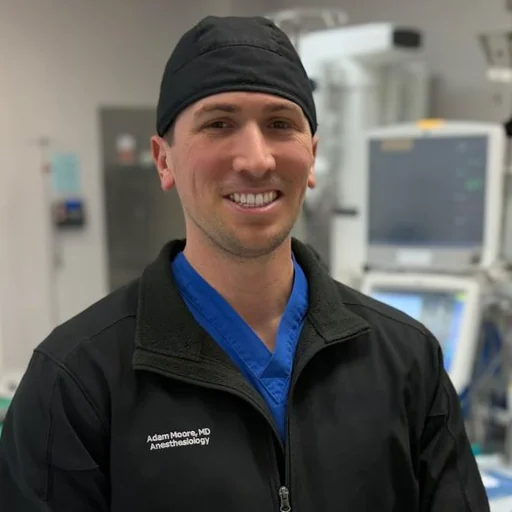
Practicing anesthesiologist with experience across MD-only, medical supervision of CRNAs, and medical direction of CAAs. Founded AnesthesiaJobs.com to help anesthesia professionals find the best job for their personal and professional life.
More about Adam →