How to Become an Anesthesiologist: Complete 2026 Guide
Quick Facts: Anesthesiologist Career at a Glance
- Total timeline: 12 years minimum (13+ with fellowship)
- Education required: Bachelor's degree + MD/DO + Residency
- Board certification: American Board of Anesthesiology (ABA)
- Residency programs: ~160 in the United States
- Average salary: $336,640 base (BLS, 2024); $535,000 median total comp (SalaryDr, 2026); starting ~$377,000 (AMN Healthcare, 2025)
- Job outlook: 5% growth projected through 2032 (Source: BLS)
- Medical school debt: Average ~$200,000
Anesthesiology is one of the most respected, intellectually demanding, and financially rewarding specialties in medicine. If you're researching how to become an anesthesiologist, you're considering a career that combines cutting-edge science, critical decision-making, and direct impact on patient safety. From the operating room to the pain clinic, anesthesiologists serve as essential members of every surgical team — and the demand for qualified professionals continues to grow.
This is the definitive 2026 guide to the anesthesiologist career path. Whether you're a high school student planning ahead, a pre-med undergraduate, or a career changer exploring your options, we'll walk you through every step of the journey — including realistic timelines, costs at each stage, and the substantial salary payoff that awaits.
Overview: What Does an Anesthesiologist Do?
📊 Salary Data Sources & Freshness This guide cites data from multiple sources: the U.S. Bureau of Labor Statistics (BLS, May 2024 — latest government data), ZipRecruiter (2026 advertised salaries), Glassdoor, AMN Healthcare, SalaryDr, and other industry reports. Government salary surveys have a 12–18 month reporting lag. Current advertised salaries on job boards typically reflect real-time market conditions and may be higher. Anesthesia provider compensation has risen steadily over the past five years.
Before diving into the educational path, it's important to understand what anesthesiologists actually do day-to-day. Anesthesiologists are physician specialists who:
- Administer anesthesia for surgical, obstetric, and diagnostic procedures
- Monitor vital signs and manage patient physiology during surgery
- Manage pre-operative assessments and develop individualized anesthesia plans
- Provide post-operative pain management and recovery care
- Lead anesthesia care teams that may include CRNAs and CAAs
- Specialize in critical care medicine, chronic pain management, and emergency resuscitation
- Perform regional anesthesia techniques including nerve blocks, epidurals, and spinal anesthesia
Anesthesiologists work in hospitals, ambulatory surgery centers, academic medical centers, pain management clinics, and private practices. To explore the current landscape, visit our anesthesiologist job market overview.
Step 1: Complete Your Undergraduate Degree
Timeline: 4 years | Estimated cost: $40,000–$200,000+
Your path to becoming an anesthesiologist begins with a four-year bachelor's degree. While there is no single required major, most aspiring anesthesiologists pursue degrees in:
- Biology (most common)
- Chemistry or Biochemistry
- Neuroscience
- Biomedical engineering
- Any major — as long as you complete the required pre-med prerequisites
Required Pre-Med Prerequisites
| Course | Typical Duration |
|---|---|
| Biology I & II (with labs) | 2 semesters |
| General Chemistry I & II (with labs) | 2 semesters |
| Organic Chemistry I & II (with labs) | 2 semesters |
| Physics I & II (with labs) | 2 semesters |
| Biochemistry | 1 semester |
| English/Writing | 2 semesters |
| Mathematics (Calculus/Statistics) | 1–2 semesters |
| Psychology and Sociology | 1 semester each |
Building a Competitive Medical School Application
Beyond coursework, you'll need to demonstrate your commitment to medicine through:
- Research experience: Ideally in a lab relevant to anesthesiology, pharmacology, or physiology
- Clinical volunteering: Shadow physicians, especially anesthesiologists, to confirm your interest
- Extracurricular leadership: Student organizations, community service, and healthcare-related activities
- GPA: Aim for a 3.5+ overall and science GPA — the national average for matriculants is approximately 3.7
- MCAT preparation: Begin studying 6–12 months before your planned test date
MCAT Score Targets
The Medical College Admission Test (MCAT) is a critical component of your application:
- Average score for accepted students: ~511 out of 528
- Competitive range: 510–520
- Preparation time: 300–400+ hours of dedicated study
- Test format: 7.5 hours covering biological sciences, physical sciences, psychology, and critical analysis
Step 2: Complete Medical School (MD or DO)
Timeline: 4 years | Estimated cost: $200,000–$350,000+
Medical school is where your clinical education truly begins. You'll earn either a Doctor of Medicine (MD) or Doctor of Osteopathic Medicine (DO) degree — both pathways lead to anesthesiology.
Medical School Curriculum Breakdown
Years 1–2: Preclinical Sciences
- Anatomy and gross dissection
- Physiology and pathophysiology
- Pharmacology
- Microbiology and immunology
- Biochemistry and genetics
- Neuroscience
- Introduction to clinical skills
Years 3–4: Clinical Clerkships (Rotations)
- Internal medicine
- Surgery
- Pediatrics
- Obstetrics/Gynecology
- Psychiatry
- Emergency medicine
- Anesthesiology rotation — your chance to confirm this is your specialty
- Elective rotations (choose additional anesthesiology or ICU time)
Medical School Costs
| Cost Component | Estimated Range |
|---|---|
| Tuition (4 years, public in-state) | $160,000–$250,000 |
| Tuition (4 years, private) | $250,000–$350,000+ |
| Living expenses | $60,000–$100,000 |
| Books, equipment, fees | $10,000–$20,000 |
| Average total debt at graduation | ~$200,000 |
USMLE Step Exams
During medical school, you'll complete the first two parts of the United States Medical Licensing Examination (USMLE):
- USMLE Step 1: Taken after Year 2 — now scored Pass/Fail (changed in 2022)
- USMLE Step 2 CK: Taken during Year 3 or 4 — scored numerically and increasingly important for residency applications
For DO students, the equivalent is the COMLEX series, though many DO students also take the USMLE.
Step 3: Match into an Anesthesiology Residency
Timeline: Application during 4th year of medical school
Securing a residency position happens through the National Resident Matching Program (NRMP), commonly known as "The Match." Anesthesiology is a moderately competitive specialty.
Anesthesiology Residency Match Statistics
- ~160 anesthesiology residency programs in the United States
- ~1,800+ positions offered annually
- Match rate: Approximately 80–90% of U.S. MD seniors who rank anesthesiology
- Key factors: USMLE Step 2 score, clinical grades, research, letters of recommendation, interview performance
How to Strengthen Your Residency Application
- Strong Step 2 CK score — aim for 240+
- Anesthesiology research — publications and presentations make a difference
- Away rotations at programs you're interested in
- Letters of recommendation from anesthesiologists who know your work well
- Leadership and teaching experience
Step 4: Complete Anesthesiology Residency
Timeline: 4 years | Salary during training: ~$60,000–$75,000/year
Anesthesiology residency is a four-year training program that transforms medical school graduates into competent anesthesiologists.
Residency Training Breakdown
CA-1 (Clinical Anesthesia Year 1):
- Core anesthesia rotations: general OR, airway management fundamentals
- Introduction to regional anesthesia
- Obstetric anesthesia basics
CA-2 (Clinical Anesthesia Year 2):
- Subspecialty rotations: cardiac, pediatric, neuro, trauma
- Advanced regional anesthesia
- Pain medicine introduction
- ICU rotations
CA-3 (Clinical Anesthesia Year 3):
- Advanced subspecialty training
- Elective rotations in areas of interest
- Increased autonomy and case complexity
- Research or quality improvement projects
PGY-1 (Intern Year):
- Many programs include a preliminary year of internal medicine, surgery, or transitional year training
- Builds broad medical knowledge essential for anesthesia practice
What Residency Life Looks Like
- Work hours: 60–80 hours per week (capped at 80 by ACGME regulations)
- Call schedule: Overnight and weekend call, typically every 3rd–5th night
- Salary: ~$60,000–$75,000/year (increases slightly each year)
- Benefits: Health insurance, malpractice coverage, educational stipends
While the residency salary is modest compared to your eventual earnings, remember that this phase builds the expertise that commands a top-tier attending salary.
Step 5: Pursue Fellowship Training (Optional but Valuable)
Timeline: 1 additional year | Salary: ~$75,000–$90,000
After completing residency, many anesthesiologists pursue fellowship training for additional subspecialty expertise. Fellowships are one year in duration and open doors to niche practice areas and often higher earning potential.
Popular Anesthesiology Fellowships
| Fellowship | Focus Area | Career Impact |
|---|---|---|
| Cardiac Anesthesiology | Heart/thoracic surgery, TEE, mechanical circulatory support | High demand at academic centers |
| Pediatric Anesthesiology | Infants through adolescents, congenital defects | Essential for children's hospitals |
| Pain Medicine | Chronic pain interventions, nerve blocks, spinal cord stimulation | Growing outpatient market |
| Critical Care Medicine | Surgical/medical ICU, ECMO, sepsis management | Dual-practice opportunities |
| Regional Anesthesia & Acute Pain | Nerve blocks, enhanced recovery programs | Rapidly growing subspecialty |
| Obstetric Anesthesiology | Labor analgesia, high-risk obstetrics | Vital for large maternity programs |
| Neuroanesthesiology | Brain and spine surgery | Academic center focus |
Should you do a fellowship? It depends on your career goals. Fellowship-trained anesthesiologists often have access to specialized positions and may command higher salaries in their niche. However, general anesthesiologists remain in very strong demand and earn excellent compensation.
Step 6: Board Certification and Licensure
Timeline: Within 1–2 years of completing training
To practice as a board-certified anesthesiologist, you must:
- Pass USMLE Step 3 — the final licensing exam, typically taken during residency
- Obtain state medical licensure — requirements vary by state; apply to the medical board in your target state
- Pass the ABA Board Examinations:
- BASIC Examination — taken during CA-1 year of residency
- ADVANCED Examination — taken after completing residency
- Applied Examination (OSCE) — oral/simulation-based exam taken after the Advanced exam
- Maintain board certification through the MOCA (Maintenance of Certification in Anesthesiology) program
Board certification through the American Board of Anesthesiology (ABA) is the gold standard and is required by virtually all employers.
The Complete Timeline: From Day One to Attending Physician
Years 1–4:     Undergraduate Degree (Pre-Med)
                 ↓
Years 5–8:     Medical School (MD/DO)
                 ↓
Years 9–12:    Anesthesiology Residency
                 ↓
Year 13:       Fellowship (Optional)
                 ↓
Year 12–13+:   Board Certification → Practice!
Minimum: 12 years | With fellowship: 13 years | Average age entering practice: 30–33
For a focused breakdown of the timeline, see our companion article: How Long Does It Take to Become an Anesthesiologist?
Salary and Return on Investment
After 12+ years of training and significant educational debt, the financial rewards of an anesthesiology career are substantial:
Anesthesiologist Salary Overview
| Metric | Amount |
|---|---|
| BLS mean (base salary) | $336,640/year (BLS, May 2024) — base salary only, underreports total comp |
| ZipRecruiter average (advertised) | $393,215/year (ZipRecruiter, May 2026) |
| Median total compensation | $535,000/year (SalaryDr, 2026 — 176 verified reports) |
| Starting salary | ~$377,000 (AMN Healthcare, 2025) |
| Experienced (10+ years) | $500,000–$600,000+ total comp |
| Private practice/partnership | $500,000–$700,000+ total comp |
| Typical total comp range | $466,000–$578,000 (SalaryDr, 2026) |
Financial ROI Calculation
Despite average medical school debt of ~$200,000, anesthesiologists recoup their educational investment relatively quickly:
- Average debt at start of practice: $200,000–$300,000
- Average attending total compensation: $466,000–$578,000 (SalaryDr, 2026); BLS base mean $336,640 (2024)
- Starting salary: ~$377,000 (AMN Healthcare, 2025)
- Typical debt payoff timeline: 3–7 years with aggressive repayment
- Lifetime earning potential: $12,000,000–$15,000,000+ over a 25–30-year career
Explore the full salary breakdown by state and experience level in How Much Do Anesthesiologists Make? and see the top 10 highest-paying states.
A Day in the Life of an Anesthesiologist
Understanding what daily practice looks like can help you decide if this career is right for you:
6:00 AM — Pre-Op Preparation
- Review the surgical schedule and patient charts
- Conduct pre-anesthesia assessments for the day's cases
- Develop individualized anesthesia plans based on patient history, allergies, and surgical requirements
7:30 AM — Operating Room Cases Begin
- Induce anesthesia (general, regional, or monitored anesthesia care depending on the case)
- Manage airway and establish vascular access
- Continuously monitor vital signs: heart rate, blood pressure, oxygen saturation, end-tidal CO2, temperature
Throughout the Day:
- Manage multiple cases, potentially supervising CRNAs or anesthesiology residents
- Respond to emergencies — difficult airways, hemodynamic instability, anaphylaxis
- Perform nerve blocks and regional techniques between cases
- Consult with surgeons on anesthesia approaches for complex patients
3:00–5:00 PM — Wrapping Up
- Complete documentation and billing
- Post-operative rounds on patients in PACU (post-anesthesia care unit)
- Hand off to the on-call anesthesiologist
Work-Life Balance Considerations:
- Hours: Typically 40–60 hours/week as an attending
- Call: Night and weekend call varies by practice setting
- Vacation: Typically 4–8 weeks per year
- Flexibility: Locum tenens and part-time options are increasingly available
Anesthesiology Career Outlook and Future Trends
The future for anesthesiologists remains strong:
- Employment growth: 5% projected through 2032, in line with overall physician growth (Source: BLS)
- Aging population: More surgeries and procedures drive demand
- Subspecialization: Pain medicine and critical care fellowships open additional career paths
- Team-based care: Anesthesiologists increasingly lead care teams, expanding their impact
- Technology: AI-assisted monitoring and robotic surgery create new opportunities
For a deeper look at industry trends, visit our Anesthesiologist Trends & Opportunities page and the Anesthesiologist Job Market overview.
How Anesthesiology Compares to Other Anesthesia Careers
If you're still deciding between anesthesia career paths, here's how they compare:
| Factor | Anesthesiologist | CRNA | CAA |
|---|---|---|---|
| Timeline | 12–13 years | 7–9 years | 6–7 years |
| Degree | MD/DO | DNP/DNAP | Master's |
| Average salary | $336,640 base (BLS, 2024); $535K total comp (SalaryDr, 2026) | $223,210+ median (BLS, 2024); ~$260K advertised (ZipRecruiter, 2026) | $247,000–$253,000 (Marit Health/Becker's, 2026) |
| Independent practice | Yes | Yes (26+ states) | No |
| Supervision role | Supervises team | Independent or supervised | Physician-supervised |
| Residency required | Yes (4 years) | No (clinical embedded in program) | No |
All three paths lead to fulfilling, well-compensated careers in anesthesia. Explore the detailed comparisons: CRNA vs. Anesthesiologist, CAA vs. Anesthesiologist, and our comprehensive comparison of all three roles.
Related Reading
- How Long Does It Take to Become an Anesthesiologist?
- How Much Do Anesthesiologists Make? Salary Guide
- CRNA vs. Anesthesiologist: Roles, Education & Salary Compared
- Exploring Anesthesia Careers
Ready to launch or advance your anesthesiology career? The job market for anesthesiologists is strong — and AnesthesiaJobs.com has the largest collection of anesthesia-specific positions nationwide.
Browse Anesthesiologist Jobs on AnesthesiaJobs.com →
Want to be the first to know about new opportunities? Sign up for job alerts and never miss a listing in your preferred location or subspecialty.
Frequently Asked Questions
How long does it take to become an anesthesiologist?
It takes a minimum of 12 years after high school: 4 years of undergraduate education, 4 years of medical school, and 4 years of anesthesiology residency. Adding a fellowship extends the timeline to 13 years. Most anesthesiologists begin independent practice between ages 30 and 33.
How much do anesthesiologists make?
Anesthesiologists earn a BLS-reported mean of $336,640 per year in base salary (BLS, May 2024), but total compensation is significantly higher. Industry surveys show a median total compensation of $535,000 (SalaryDr, 2026), with starting salaries around $377,000 (AMN Healthcare, 2025) and job board averages of $393,215 (ZipRecruiter, 2026). Those in private practice or high-demand locations can earn $500,000–$700,000+ in total compensation. See our full anesthesiologist salary guide for state-by-state data.
Is anesthesiology a competitive residency?
Anesthesiology is moderately competitive. With approximately 160 residency programs and 1,800+ positions, well-prepared applicants with solid Step 2 scores, clinical grades, and research experience typically match successfully. The match rate for U.S. MD seniors applying to anesthesiology is approximately 80–90%.
What is the difference between an anesthesiologist and a CRNA?
Anesthesiologists are physicians (MD/DO) who complete 12+ years of training, while CRNAs are advanced practice nurses who complete 7–9 years of training. Both administer anesthesia, but anesthesiologists have broader training in medicine and surgery and often lead anesthesia care teams. Both career paths offer excellent compensation and fulfilling work. Learn more in our CRNA vs. Anesthesiologist comparison.
Are anesthesiology fellowships worth it?
Fellowships add one year of training but can significantly enhance your career options and earning potential in subspecialty areas like cardiac anesthesia, pain medicine, and critical care. Whether a fellowship is worth it depends on your career goals — general anesthesiologists are in high demand and earn excellent salaries, while fellowship-trained specialists may have access to unique positions and academic opportunities.
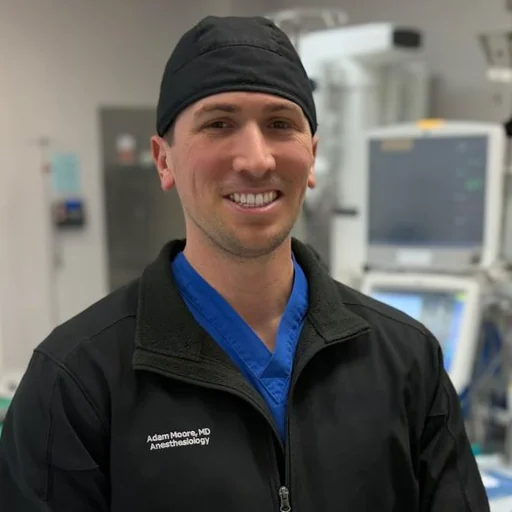
Practicing anesthesiologist with experience across MD-only, medical supervision of CRNAs, and medical direction of CAAs. Founded AnesthesiaJobs.com to help anesthesia professionals find the best job for their personal and professional life.
More about Adam →