CRNA vs Nurse Practitioner: Salary, Scope & Lifestyle Compared
Quick Facts at a Glance
- CRNAs earn a national median of $223,210/year (BLS, 2024), with current job postings averaging $260,000 (ZipRecruiter, 2026)
- Nurse Practitioners (NPs) earn a median of $126,260/year (BLS, 2024) with broad scope across primary and specialty care
- Both are Advanced Practice Registered Nurses (APRNs) — built on the same nursing foundation
- CRNA job growth: 38% (2022–2032) | NP job growth: 40%+ projected
- Both careers offer independent practice authority in many states and outstanding career satisfaction
Deciding between becoming a CRNA or a nurse practitioner is a pivotal moment in any nursing career. Both paths build on your RN foundation and lead to the Advanced Practice Registered Nurse (APRN) credential — but they take you in very different clinical directions. If you've been searching "CRNA vs NP" or "nurse anesthetist vs nurse practitioner," this guide will give you a clear, honest comparison of salary, education, scope of practice, work environment, schedule, and career satisfaction so you can choose the path that matches your passions.
The great news? There is no wrong answer. Both careers are in exceptionally high demand, offer strong compensation, and allow you to make a meaningful difference in patients' lives every single day.
Education Path: Same Foundation, Different Specializations
📊 Salary Data Sources & Freshness This guide cites data from multiple sources: the U.S. Bureau of Labor Statistics (BLS, May 2024 — latest government data), ZipRecruiter (2026 advertised salaries), Glassdoor, AMN Healthcare, SalaryDr, and other industry reports. Government salary surveys have a 12–18 month reporting lag. Current advertised salaries on job boards typically reflect real-time market conditions and may be higher. Anesthesia provider compensation has risen steadily over the past five years.
Both CRNAs and NPs start as registered nurses, then diverge into specialty graduate programs.
CRNA Education
| Stage | Duration | Details |
|---|---|---|
| Bachelor of Science in Nursing (BSN) | 4 years | Core nursing education |
| ICU Experience | 1–2 years | Critical-care bedside nursing required before admission |
| CRNA Graduate Program (MSN/DNP) | 2–3 years | Anesthesia pharmacology, advanced physiology, 2,000+ clinical hours |
| Total | ~7–8 years | National certification exam (NCE) upon completion |
CRNA programs are among the most competitive graduate programs in nursing. They require ICU experience because the critical-care environment builds assessment skills that are directly transferable to the OR. Learn more in our How to Become a CRNA guide.
NP Education
| Stage | Duration | Details |
|---|---|---|
| Bachelor of Science in Nursing (BSN) | 4 years | Core nursing education |
| Clinical RN Experience | 1–2 years | Recommended but not always required (varies by program) |
| NP Graduate Program (MSN/DNP) | 2–3 years | Population-focused: family, adult-gero, psych-mental health, pediatric, etc. |
| Total | ~6–7 years | National certification by AANP or ANCC upon completion |
NP programs offer multiple specialty tracks, allowing you to choose a population focus that resonates with your interests — from family practice (FNP) to acute care to psychiatric-mental health (PMHNP). This breadth of options is one of the NP path's greatest strengths.
Key Difference
The CRNA path is deeply specialized from the start — everything centers on anesthesia. The NP path offers broad flexibility across multiple clinical specialties and populations. Both require graduate-level education and national certification.
Specialization vs. Broad Scope: Two Philosophies of Practice
CRNA: The Specialist
CRNAs are the specialists of advanced-practice nursing. Your entire clinical focus is anesthesia:
- Pre-operative assessment and anesthesia planning
- Administering general, regional, and monitored anesthesia care
- Airway management and ventilation
- Hemodynamic monitoring during surgery
- Post-anesthesia recovery management
- Pain management (acute and chronic)
This deep specialization means CRNAs develop extraordinary expertise in pharmacology, physiology, and high-acuity decision-making. In 26 states with independent practice authority, CRNAs serve as the sole anesthesia provider — particularly vital in rural communities.
NP: The Versatile Generalist (or Focused Specialist)
NPs offer a remarkably flexible scope depending on their specialty track:
- Family NPs (FNPs): Primary care across the lifespan — the most popular NP specialty
- Acute Care NPs (ACNPs): Hospital-based care for complex, acutely ill patients
- Psychiatric-Mental Health NPs (PMHNPs): Assessment, diagnosis, and medication management for mental health conditions
- Pediatric NPs (PNPs): Primary or acute care for children and adolescents
- Women's Health NPs (WHNPs): Reproductive and gynecological care
NPs prescribe medications, order diagnostic tests, interpret results, develop treatment plans, and often serve as patients' primary healthcare providers. In many states, NPs have full practice authority similar to CRNAs.
Salary: Both Among Nursing's Highest Earners
| Metric | CRNA | NP |
|---|---|---|
| Median Annual Salary | $223,210 (BLS, 2024) | $126,260 (BLS, 2024) |
| Current Advertised Average | $260,000 (ZipRecruiter, 2026) | Varies widely by specialty |
| Mean Annual Salary | $231,700 (BLS, 2024) | ~$128,000–$140,000 |
| Hourly Rate | ~$200/hr (market rate, 2026) | ~$60.70 (BLS, 2024) |
| Top-Paying Specialties/Settings | Hospital-based, locum tenens, independent practice | PMHNP, acute care, specialty clinics |
| Salary Ceiling | $330K–$400K+ (BagMask, 2025) | $160K–$200K+ (specialty-dependent) |
(Sources: BLS May 2024, ZipRecruiter May 2026. Government data lags market by 12–18 months; advertised salaries reflect current conditions.)
CRNAs are consistently the highest-paid nursing professionals in the United States, earning a national median of $223,210 (BLS, 2024) while current job postings average $260,000 (ZipRecruiter, 2026). Top earners in high-demand states exceed $330,000–$400,000 (BagMask, 2025). The specialized nature of anesthesia care, combined with strong demand and limited training seats, drives this premium compensation. Explore the full data in How Much Do CRNAs Make? and Top 10 Highest-Paying States for CRNAs.
NPs earn excellent compensation that has been rising steadily year-over-year. Certain NP specialties — particularly psychiatric-mental health (PMHNP) and acute care — command salaries that approach or exceed $160K–$180K in high-demand markets. NPs also benefit from extensive bonus and incentive structures in primary care settings facing provider shortages.
Both roles offer strong compensation relative to their educational investment, and both continue to see upward salary trends driven by nationwide provider shortages.
Work Environment & Daily Life
| Factor | CRNA | NP |
|---|---|---|
| Primary Setting | Operating rooms, procedure suites, pain clinics | Clinics, hospitals, urgent care, telehealth, schools, community health |
| Patient Interaction | Episode-based (surgical encounters) | Ongoing relationships (many NPs manage patient panels) |
| Typical Day | Cases back-to-back in the OR; high-intensity, procedural | Patient appointments, assessments, medication management, care coordination |
| Physical Demands | Standing for long periods, high-acuity decision-making | Mix of desk work and patient encounters |
| Team Dynamics | OR team (surgeons, nurses, techs) | Multidisciplinary primary/specialty care teams |
CRNAs thrive in the high-adrenaline OR environment — if you love procedural work, critical moments, and immediate patient impact, anesthesia is incredibly fulfilling. NPs who love building ongoing patient relationships, managing chronic conditions, and having autonomy over a patient panel find deep satisfaction in their role.
Schedule & Lifestyle
| Factor | CRNA | NP |
|---|---|---|
| Hours | 40 hrs/week typical; shift-based | 36–40 hrs/week typical; clinic-based schedules common |
| Weekends/Holidays | Some roles include call; outpatient/ASC roles often have none | Rare in outpatient settings; hospital NPs may have some |
| Flexibility | High — locum tenens, PRN, part-time, travel | High — part-time, telehealth, multiple practice settings |
| Remote/Telehealth | Limited (hands-on procedural work) | Growing rapidly — especially for FNPs and PMHNPs |
One of the NP path's unique advantages is the growing availability of telehealth practice, particularly for PMHNPs and FNPs. CRNAs, by nature of their hands-on procedural work, are always physically present — but they enjoy robust locum tenens opportunities that offer travel and schedule flexibility.
Career Satisfaction & Job Outlook
Both CRNAs and NPs consistently rank among the most satisfying healthcare careers:
- CRNA projected job growth: 38% (2022–2032) — driven by expanding surgical volumes and independent practice legislation (Source: BLS)
- NP projected job growth: 40%+ — fueled by primary care shortages, aging populations, and scope-of-practice expansion (Source: BLS)
Both careers enjoy virtually zero unemployment and remarkable job security for the foreseeable future.
Which Nursing Path Suits You?
You might lean toward the CRNA path if you…
- Love the OR environment and procedural, hands-on patient care
- Enjoy high-acuity, fast-paced clinical decision-making
- Want to earn at the top of the nursing pay scale ($223K+ median, $260K+ advertised average)
- Have ICU experience and thrive in critical-care settings
- Want independent practice options in anesthesia
You might lean toward the NP path if you…
- Enjoy building long-term patient relationships and managing chronic conditions
- Want flexibility to choose among multiple specialty tracks (family, psych, acute care, peds)
- Value the growing opportunity for telehealth and remote practice
- Want a broad, versatile career with many directions you can take over time
- Are passionate about primary care, mental health, or community health
Exploring all your options? If you're a nurse weighing advanced-practice paths, our Exploring Anesthesia Careers page provides a comprehensive overview of anesthesia-specific roles. And if you're curious how CRNAs stack up against non-nursing roles, check out CRNA vs PA for another perspective.
Related Reading
- CRNA vs Anesthesiologist: Salary, Education, Scope Compared
- CRNA vs PA: Two Great Healthcare Careers Compared
- How Much Do CRNAs Make?
- New Grad CRNA Guide
Ready to Advance Your Nursing Career?
If anesthesia calls to you, there's never been a better time to explore CRNA opportunities.
Browse CRNA Jobs on AnesthesiaJobs.com →
Prefer to keep your options open? Sign up for job alerts → and we'll notify you when new positions match your profile.
Frequently Asked Questions
Do CRNAs make more than nurse practitioners?
Yes, CRNAs are the highest-paid nursing specialty in the United States, with a national median of $223,210/year (BLS, 2024) and current job postings averaging $260,000 (ZipRecruiter, 2026), compared to the NP median of $126,260/year (BLS, 2024). However, certain NP specialties like psychiatric-mental health can reach $160K–$180K+ in high-demand markets. Both earn excellent compensation relative to their training.
Is it harder to become a CRNA than an NP?
CRNA programs are among the most competitive in graduate nursing, requiring ICU experience and often higher GPA and GRE thresholds. NP programs vary in competitiveness by specialty and school. Both require strong academic performance and clinical dedication — "harder" depends on your background and strengths.
Can an NP become a CRNA?
Yes. An NP who wants to become a CRNA would need to gain ICU experience (if not already obtained) and complete a CRNA graduate program. Some NPs choose this path after discovering a passion for anesthesia. Your advanced clinical training as an NP provides a strong foundation.
Which has better work-life balance — CRNA or NP?
Both offer strong work-life balance compared to physicians. CRNAs typically work 40-hour weeks with shift-based scheduling, while NPs often work clinic hours (Monday–Friday). CRNAs may have occasional call requirements; NPs in outpatient settings rarely do. NPs have growing telehealth options, while CRNAs enjoy robust locum tenens flexibility.
Are CRNAs and NPs both APRNs?
Yes. Both CRNAs and NPs hold the Advanced Practice Registered Nurse (APRN) designation, along with Certified Nurse-Midwives (CNMs) and Clinical Nurse Specialists (CNSs). All four APRN roles require graduate education, national certification, and state licensure.
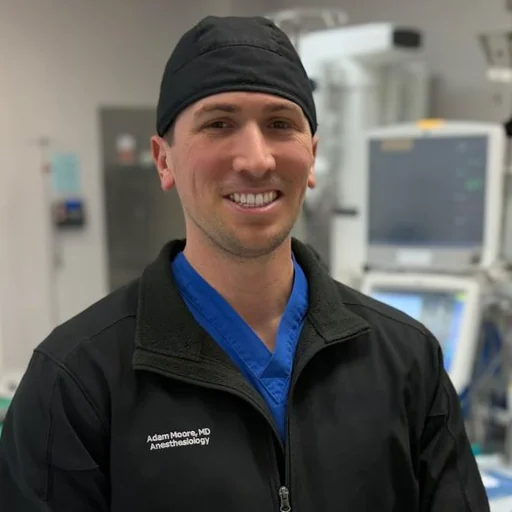
Practicing anesthesiologist with experience across MD-only, medical supervision of CRNAs, and medical direction of CAAs. Founded AnesthesiaJobs.com to help anesthesia professionals find the best job for their personal and professional life.
More about Adam →