New Grad CRNA Guide: First Job Tips & Mistakes to Avoid
Quick Facts:
- Average new grad CRNA starting salary: $220,000–$260,000 (new grads earn at or near the national average from year one; ZipRecruiter 2026, industry reports)
- Start your job search 3-6 months before graduation for the best outcomes
- Sign-on bonuses for new grad CRNAs: $10,000-$30,000 in high-demand areas
- The #1 mistake new grads make: taking the highest-paying offer without considering mentorship and support
- CRNAs are in high demand — you have more leverage than you think
Graduating from a nurse anesthesia program is one of the most significant achievements of your career. Years of rigorous academic study, thousands of clinical hours, and countless early mornings in the OR have prepared you for this moment. As a new grad CRNA, you're entering a job market that's overwhelmingly in your favor — the demand for nurse anesthetists continues to grow, and opportunities abound across the country.
But having options can be both exciting and overwhelming. How do you choose the right first position? What should you negotiate? What mistakes do experienced CRNAs wish they'd avoided? This comprehensive guide walks you through everything you need to know as a new CRNA — from your job search timeline to thriving in your first 90 days on the job.
When to Start Looking: Your Job Search Timeline
Timing your job search correctly gives you the widest selection of opportunities and the strongest negotiating position.
6 Months Before Graduation
- Build your CRNA resume — Use a specialized anesthesia format, not a generic nursing resume
- Define your priorities — Geography, practice model, mentorship, case mix, schedule, salary
- Research the market — Review CRNA salary data by state and practice setting
- Start networking — Connect with clinical preceptors, AANA contacts, and alumni from your program
- Create profiles on job boards like AnesthesiaJobs.com and set up alerts
3-4 Months Before Graduation
- Begin applying to positions that align with your priorities
- Prepare for interviews — Study our CRNA Interview Questions Guide and practice your answers
- Draft your cover letter — Tailor it for each application
- Obtain state licensure for states where you're applying (processing times vary — some take 4-8 weeks)
1-2 Months Before Graduation
- Interview and evaluate offers — Use our CRNA Contract Negotiation Guide to compare packages
- Negotiate your top choice — Yes, new grads should negotiate (more on this below)
- Complete credentialing — Hospital credentialing can take 60-90 days, so start early
Graduation to Start Date
- Pass your NBCRNA certification exam — Most offers are contingent on certification
- Complete onboarding paperwork — DEA registration, state license activation, malpractice enrollment
- Plan your relocation if moving to a new area
- Rest and recharge — You've earned it before starting your career
What to Look for in Your First Position
Not all CRNA positions are created equal — and for new graduates, certain factors matter more than salary.
1. Mentorship and Support (The Most Important Factor)
This cannot be overstated: The quality of mentorship in your first CRNA role will shape the trajectory of your entire career.
Look for:
- Structured orientation (3-6 months is ideal for new grads)
- Designated mentors or preceptors — not just "ask anyone if you have questions"
- Graduated independence — starting with lower-acuity cases and progressively advancing
- Accessible backup — experienced CRNAs or anesthesiologists available for real-time support
- Culture of learning — no one shames you for asking questions
Red flags:
- "We expect new grads to hit the ground running" — this means minimal support
- No formal orientation program
- High turnover among recently hired CRNAs — a sign of inadequate support
- Reluctance to discuss mentorship specifics during the interview
2. Case Mix and Variety
Your first position should offer exposure to diverse case types to build your confidence and clinical skills.
Ideal first-job case mix:
- General surgery, orthopedics, GI, and ENT (bread-and-butter cases)
- Some exposure to higher-acuity cases (cardiac, neuro, pediatric) with support
- Regional anesthesia opportunities
- OB anesthesia (if that interests you)
- Emergency and trauma cases (with backup available)
A community hospital or mid-sized medical center often provides the best balance of case variety and mentorship for new graduates. Large academic centers offer complexity but may have rigid hierarchies. Small ambulatory centers offer limited case diversity.
3. Practice Model
Understand the practice model before accepting:
- Care team model: You work alongside anesthesiologists. Great for new grads who want accessible physician support.
- Independent practice: Full autonomy. Exciting but can be challenging for brand-new CRNAs. Ensure strong CRNA mentorship is available.
- Supervision model: Specific oversight requirements. Understand the state regulations — check our guide on CRNA independent practice states.
There's no "wrong" model — but as a new grad, having experienced colleagues (whether CRNAs or anesthesiologists) available for support is crucial.
4. Geography and Lifestyle
Consider:
- Cost of living vs. salary — a $240,000 salary in rural Tennessee goes much further than $260,000 in San Francisco
- Community and social fit — especially if you're relocating
- Future flexibility — will this location limit or expand your career options?
- State practice environment — independent practice states offer different career trajectories
Browse opportunities by location: California CRNA jobs, Texas CRNA jobs, Florida CRNA jobs, or explore all states.
5. Call Expectations
Call can significantly impact your quality of life, especially in your first year. Clarify:
- Frequency: How many call shifts per month?
- Type: In-house vs. home call?
- Support: Is there backup available when you're on call?
- Compensation: Is call pay separate from base salary? (It should be — see our contract negotiation guide)
- Case types on call: Trauma? Emergency C-sections? Cardiac?
For new grads, 6-8 call shifts per month with accessible backup is reasonable. More than that without strong support can be overwhelming.
Salary Expectations for New Grad CRNAs
📊 Salary Data Sources & Freshness This guide cites data from multiple sources: the U.S. Bureau of Labor Statistics (BLS, May 2024 — latest government data), ZipRecruiter (2026 advertised salaries), Glassdoor, AMN Healthcare, SalaryDr, and other industry reports. Government salary surveys have a 12–18 month reporting lag. Current advertised salaries on job boards typically reflect real-time market conditions and may be higher. Anesthesia provider compensation has risen steadily over the past five years.
Understanding your market value prevents two common mistakes: accepting too little and having unrealistic expectations.
National New Grad CRNA Salary Ranges
| Setting | Typical Starting Salary |
|---|---|
| Community Hospital (Midwest/South) | $220,000 – $255,000 |
| Urban Medical Center | $230,000 – $270,000 |
| Rural/Critical Access Hospital | $240,000 – $290,000 |
| Ambulatory Surgery Center | $220,000 – $250,000 |
| Academic Medical Center | $210,000 – $245,000 |
Sources: Industry salary reports, job board data (ZipRecruiter, Indeed, Glassdoor, 2025–2026), and employer surveys. For comparison, the national median for all CRNAs (all experience levels) is $223,210 (BLS, May 2024), with current advertised averages of $260,000 (ZipRecruiter, 2026).
Note: These are base salary ranges. Total compensation including sign-on bonus, call pay, overtime, and benefits can add $20,000-$50,000+ to these figures.
Factors That Affect New Grad Salary
- Geography: State-by-state salary differences can exceed $50,000
- Practice setting: Rural and underserved areas typically pay more to attract talent
- Specialty skills: If your training included strong cardiac, pediatric, or regional rotations, leverage that
- Call willingness: Being flexible with call expectations can increase your offer
- Employment model: W-2 vs. 1099 structures impact your effective take-home pay
For detailed salary data, review our comprehensive CRNA salary guide and entry-level CRNA salary analysis.
Common Mistakes New Grad CRNAs Make
Learn from those who came before you. These are the most frequent — and most costly — mistakes new CRNA graduates make.
Mistake #1: Taking the Highest-Paying Offer Without Considering Mentorship
The scenario: You receive two offers — Position A pays $255,000 with minimal orientation and a "sink or swim" culture. Position B pays $235,000 with a 6-month structured orientation, dedicated mentors, and a supportive team.
The right choice is almost always Position B. The $20,000 salary difference is temporary. The clinical confidence, skills development, and professional growth from proper mentorship compound throughout your entire career. CRNAs who struggle in unsupportive first jobs often burn out, develop bad habits, or leave the profession entirely.
Mistake #2: Not Negotiating
Many new grads feel grateful just to receive an offer and accept without negotiating. This is a mistake. Employers expect you to negotiate. At minimum, negotiate:
- Sign-on bonus amount and repayment terms
- Non-compete clause scope
- Orientation length and structure
- CME allowance
- Schedule preferences
Even small improvements add up. See our full CRNA Contract Negotiation Guide for specific strategies.
Mistake #3: Accepting a Broad Non-Compete Without Understanding It
A non-compete that restricts you from practicing within 50 miles for 3 years could force you to relocate your entire life if the job doesn't work out. Always negotiate the non-compete before signing. Reasonable terms: 15-25 mile radius, 1-2 year duration, void if terminated without cause.
Mistake #4: Undervaluing Benefits
A position offering $5,000 less in salary but with a 6% retirement match (worth $10,000-$12,000/year), superior health insurance, and 5 weeks of PTO is objectively more valuable than the higher salary with minimal benefits. Calculate total compensation, not just base salary.
Mistake #5: Not Visiting the Facility Before Accepting
You will spend more waking hours at work than anywhere else. Visit the facility, tour the ORs, meet the team, and get a feel for the culture. Observe how CRNAs interact with surgeons, anesthesiologists, and OR staff. The vibe of a department tells you more than any job posting can.
Mistake #6: Ignoring Red Flags During the Interview
Watch for:
- Interviewers who speak negatively about current or former employees
- Vague answers about call expectations, mentorship, or orientation
- High turnover rates (ask: "What's the average tenure for CRNAs here?")
- Pressure to sign quickly ("This offer expires in 48 hours")
- Unwillingness to let you speak with current CRNAs
Negotiation Tips Specifically for New Grads
You may not have the leverage of a 10-year veteran, but you have more power than you think:
Your leverage:
- CRNA demand exceeds supply in most markets — employers need you
- You're a long-term investment — employers who hire new grads want to retain them
- Specialty clinical rotation experience — cardiac, OB, pediatric rotations are valuable
- Flexibility — willingness to relocate, take call, or work less desirable shifts
- Multiple offers — if you have them, mention it professionally
Negotiation script for new grads:
"Thank you for this offer — I'm genuinely excited about the opportunity and the team here. I've done extensive research on the CRNA market, and I'd like to discuss a few elements of the package. Specifically, I'm hoping we can discuss the sign-on bonus structure, the non-compete terms, and the orientation program length. I believe these adjustments will set us both up for a successful long-term relationship."
What's realistic to negotiate as a new grad:
| Element | Negotiable? | Typical Range |
|---|---|---|
| Base Salary | Sometimes (modest increase) | $5,000-$10,000 above initial offer |
| Sign-On Bonus | Yes | $10,000-$30,000 |
| Relocation Assistance | Yes | $3,000-$10,000 |
| Non-Compete Scope | Yes | Narrow radius and duration |
| Orientation Length | Yes | 3-6 months |
| CME Allowance | Yes | $2,000-$5,000/year |
| Start Date | Yes | Flexibility to pass boards first |
Your First 90 Days: How to Thrive
You've signed the contract. Now it's time to establish yourself as a competent, collaborative, and growing professional.
Days 1-30: Observe, Learn, Build Relationships
- Listen more than you speak — Every department has its own culture, workflows, and unwritten rules
- Learn the systems — EMR, anesthesia machines, medication dispensing, code protocols
- Build relationships — Introduce yourself to surgeons, OR nurses, surgical techs, and pre-op/PACU staff. These relationships are foundational.
- Ask questions freely — Your first month is the one time where no question is too basic
- Document your cases — Track your volumes, techniques, and learning points
Days 31-60: Expand Your Comfort Zone
- Take on progressively complex cases with mentor support
- Start handling routine cases independently (with backup available)
- Develop your personal anesthesia style — equipment setup, monitoring preferences, communication approach
- Seek feedback proactively — Don't wait for formal evaluations. Ask your mentors: "How am I doing? What should I focus on improving?"
- Handle your first on-call shifts — Ensure you know the escalation protocols
Days 61-90: Establish Your Professional Identity
- Increase your case volume toward full productivity
- Identify areas for continued growth — Maybe you need more regional anesthesia reps or complex airway experience
- Contribute to the team — Volunteer for committees, participate in M&M conferences, offer to precept students
- Assess your fit — Is this the right environment for your long-term growth? If concerns are emerging, address them early with your supervisor
- Start thinking about professional development — AANA membership, state association involvement, specialty certifications
Keys to Long-Term Success
- Never stop learning — Anesthesia practice evolves constantly. Stay current with literature, attend conferences, pursue advanced training
- Build your professional network — Connect with CRNAs at other facilities, join online communities, attend state and national meetings
- Maintain work-life balance — Burnout in anesthesia is real. Establish healthy boundaries early
- Document everything — Your case volumes, specialty experience, and professional achievements build your career portfolio
- Explore career paths — Consider how to become a CRNA leader, pursue teaching, explore locum tenens work, or develop a subspecialty
Building Your Career Beyond the First Job
Your first position is the foundation, not the ceiling. As you grow:
- Years 1-3: Build clinical competence, expand specialty skills, develop professional relationships
- Years 3-5: Consider specialty advancement, leadership roles, or geographic moves for career growth
- Years 5-10: Explore advanced opportunities — department leadership, education, independent practice, entrepreneurship, or locum tenens for lifestyle flexibility
- Years 10+: Mentorship, advocacy, organizational leadership, shaping the future of the profession
The CRNA career is remarkably versatile. With strategic planning from day one, you can build a career that's both financially rewarding and personally fulfilling.
Start Your CRNA Career Today
The anesthesia job market is waiting for you. Your training has prepared you — now find the position that sets you up for long-term success.
Browse CRNA Jobs on AnesthesiaJobs.com →
New to the market? Sign up for job alerts and be notified the moment positions matching your location, specialty, and schedule preferences become available.
Related Reading
- Entry-Level CRNA Salary: What to Expect in Your First Year — Detailed compensation data for new graduates
- 15 CRNA Interview Questions (And How to Answer Them) — Prepare for the interviews ahead
- CRNA Resume Template & Writing Guide — Build a resume that stands out
- CRNA Contract Negotiation: 10 Tips to Get the Best Deal — Negotiate your first offer with confidence
Frequently Asked Questions
When should a new grad CRNA start looking for jobs?
Begin your job search 3-6 months before graduation. Start building your resume and researching markets 6 months out. Apply to positions 3-4 months before graduation. This timeline allows for interview scheduling, offer evaluation, credentialing (which can take 60-90 days), and state licensure processing. Starting too late means missing top positions; starting too early means some employers won't engage until you're closer to graduation.
What is the average starting salary for a new grad CRNA?
New grad CRNA starting salaries typically range from $220,000 to $260,000 nationally — at or near the national average from year one — with significant variation by geography and setting (ZipRecruiter 2026, industry reports). Rural and underserved areas often offer $240,000–$290,000+ to attract talent, while academic medical centers may start at $210,000–$245,000. For context, the national median for all CRNAs is $223,210 (BLS, May 2024), and current advertised positions average $260,000 (ZipRecruiter, 2026). Total compensation including sign-on bonus, call pay, and benefits can add $20,000–$50,000 to base salary. See our entry-level CRNA salary guide for detailed state-by-state data.
Should I prioritize salary or mentorship for my first CRNA job?
Prioritize mentorship. The clinical confidence, skills development, and professional habits you build during your first 1-2 years of practice will shape your entire career. A position with strong mentorship, structured orientation, and accessible support at a slightly lower salary will almost always yield better long-term outcomes — both professionally and financially — than a high-paying role with minimal support. You can always negotiate a higher salary later once you've built a strong clinical foundation.
How long should orientation be for a new grad CRNA?
A quality new grad CRNA orientation program should be 3-6 months, with graduated independence. The first month should focus on facility orientation, systems, and basic cases with close supervision. Months 2-3 should expand to increasing independence with diverse case types. Months 4-6 should progress toward full autonomy with mentor availability for complex or unfamiliar cases. Be cautious about positions offering less than 3 months of orientation for new graduates.
Can new grad CRNAs negotiate their contracts?
Yes, absolutely. While new graduates may have slightly less leverage on base salary compared to experienced CRNAs, there are many negotiable elements in a new grad contract. Sign-on bonuses, non-compete clauses, orientation length, CME allowance, relocation assistance, and schedule preferences are all fair game. The CRNA job market strongly favors candidates, and most employers expect some negotiation. See our CRNA Contract Negotiation Guide for specific strategies tailored to new grads.
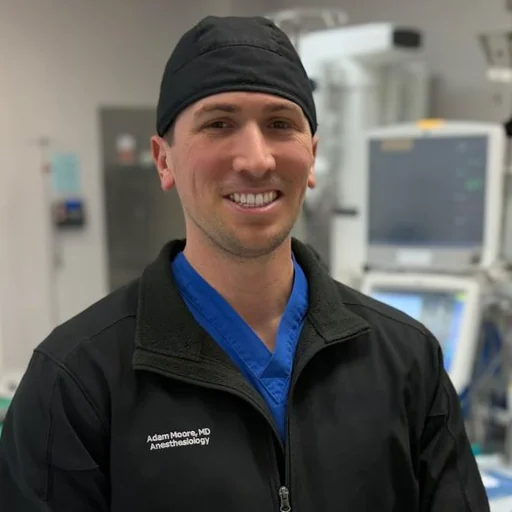
Practicing anesthesiologist with experience across MD-only, medical supervision of CRNAs, and medical direction of CAAs. Founded AnesthesiaJobs.com to help anesthesia professionals find the best job for their personal and professional life.
More about Adam →