How Long Does It Take to Become an Anesthesiologist?
Quick Answer: It takes a minimum of 12 years after high school to become an anesthesiologist — 4 years of undergraduate school, 4 years of medical school, and 4 years of residency. With an optional fellowship, the total reaches 13 years.
If you're wondering how long it takes to become an anesthesiologist, you're asking one of the most important questions about this career path. The answer is straightforward — 12 years minimum — but the journey through each phase involves distinct milestones, challenges, and costs. In this guide, we'll break down every stage of the timeline so you know exactly what to expect, year by year.
Anesthesiology is one of the most intellectually rewarding and highest-paying medical specialties, with a BLS-reported mean of $336,640 (May 2024, base salary only) and median total compensation of $535,000 (SalaryDr, 2026), with starting salaries around $377,000 (AMN Healthcare, 2025). The length of training reflects the complexity and responsibility of the role — anesthesiologists manage patient physiology during surgery and hold lives in their hands every day.
The Complete Timeline: Year by Year
📊 Salary Data Sources & Freshness This guide cites data from multiple sources: the U.S. Bureau of Labor Statistics (BLS, May 2024 — latest government data), ZipRecruiter (2026 advertised salaries), Glassdoor, AMN Healthcare, SalaryDr, and other industry reports. Government salary surveys have a 12–18 month reporting lag. Current advertised salaries on job boards typically reflect real-time market conditions and may be higher. Anesthesia provider compensation has risen steadily over the past five years.
Here's how the 12-year path to becoming an anesthesiologist breaks down:
Phase 1: Undergraduate Education — 4 Years
| Detail | Information |
|---|---|
| Duration | 4 years |
| Degree earned | Bachelor's (any major with pre-med prerequisites) |
| Key milestones | Complete pre-med coursework, MCAT, clinical volunteering |
| Estimated cost | $40,000–$200,000+ |
| Ages (typical) | 18–22 |
During your undergraduate years, you'll complete the pre-medical prerequisites (biology, chemistry, organic chemistry, physics, biochemistry, and more) while maintaining a competitive GPA of 3.5 or higher. You'll also prepare for and take the MCAT, volunteer in clinical settings, and build research experience.
This phase sets the foundation for everything that follows. For the full breakdown of what to do during undergrad, see our complete guide to becoming an anesthesiologist.
Phase 2: Medical School — 4 Years
| Detail | Information |
|---|---|
| Duration | 4 years |
| Degree earned | MD (Doctor of Medicine) or DO (Doctor of Osteopathic Medicine) |
| Key milestones | USMLE Step 1 & 2, clinical rotations, residency applications |
| Estimated cost | $200,000–$350,000+ |
| Ages (typical) | 22–26 |
Medical school consists of two years of classroom-based preclinical sciences followed by two years of hands-on clinical rotations. During your third or fourth year, you'll complete an anesthesiology rotation that confirms your specialty choice and strengthens your residency application.
The average medical student graduates with approximately $200,000 in educational debt — a significant investment, but one that the anesthesiologist salary more than justifies over a career spanning decades. Learn more about the financial return in How Much Do Anesthesiologists Make?
Phase 3: Anesthesiology Residency — 4 Years
| Detail | Information |
|---|---|
| Duration | 4 years (including intern year at some programs) |
| Status | Physician in training |
| Key milestones | Progressive clinical responsibility, ABA BASIC exam, subspecialty exposure |
| Salary during training | ~$60,000–$75,000/year |
| Ages (typical) | 26–30 |
Residency is where you transform from a medical school graduate into a skilled anesthesiologist. Over four years, you'll gain experience across all areas of anesthesia:
- Year 1 (Intern/CA-1): Core anesthesia fundamentals, airway management, basic cases
- Year 2 (CA-2): Subspecialty rotations — cardiac, pediatric, neuro, obstetric anesthesia
- Year 3 (CA-3): Advanced cases, increased autonomy, elective rotations in areas of interest
You'll work 60–80 hours per week, manage complex cases, and develop the clinical judgment that defines an attending anesthesiologist. Residency salary is modest at $60,000–$75,000/year, but this phase ends with a dramatic salary increase once you enter practice.
Phase 4 (Optional): Fellowship — 1 Year
| Detail | Information |
|---|---|
| Duration | 1 year |
| Status | Fellow (subspecialty training) |
| Salary during training | ~$75,000–$90,000/year |
| Ages (typical) | 30–31 |
Many anesthesiologists pursue fellowship training for subspecialty expertise in areas like:
- Cardiac anesthesiology
- Pediatric anesthesiology
- Pain medicine
- Critical care medicine
- Regional anesthesia and acute pain
A fellowship adds one year to your timeline but can open doors to specialized positions and potentially higher compensation. It's not required for general practice. For details on each fellowship option, see our comprehensive anesthesiologist guide.
Total Timeline Summary
| Path | Total Years | Typical Age at Start of Practice |
|---|---|---|
| Without fellowship | 12 years | 30 |
| With 1-year fellowship | 13 years | 31 |
| With gap year(s) | 13–14 years | 31–33 |
The average age an anesthesiologist begins independent practice is 30–33 years old.
How Does This Compare to Other Anesthesia Careers?
One of the most common follow-up questions is how the anesthesiologist timeline compares to other paths into anesthesia. Here's a side-by-side comparison:
| Career Path | Total Years | Degree | Average Salary | Independent Practice? |
|---|---|---|---|---|
| Anesthesiologist | 12–13 | MD/DO | $336,640 base (BLS, 2024); $535K total comp (SalaryDr, 2026) | Yes |
| CRNA | 7–9 | DNP/DNAP | $223,210+ median (BLS, 2024); ~$260K advertised (ZipRecruiter, 2026) | Yes (26+ states) |
| CAA | 6–7 | Master's | $247,000–$253,000 (Marit Health/Becker's, 2026) | No (physician-supervised) |
Key takeaway: Each anesthesia career path has its own strengths. Anesthesiologists invest the most time in training but earn the highest salaries and have the broadest scope of practice. CRNAs offer a faster route with growing independence. CAAs provide the quickest path into the operating room.
All three are outstanding careers — the right choice depends on your goals, timeline, and the role you want to play. Explore each path in detail:
What If You're a Late Career Changer?
If you're considering anesthesiology as a career change later in life, the 12-year timeline naturally raises questions. Here's what to know:
Starting Medical School After 25
- It's absolutely possible — medical schools accept students of all ages, and many classes include career changers in their 30s and 40s
- Post-baccalaureate pre-med programs can help you complete prerequisites if your undergraduate degree was in a non-science field
- Your life experience is an asset — maturity, work ethic, and diverse perspectives are valued in medicine
- Financial planning is crucial — factor in the opportunity cost of 12+ years of training alongside educational debt
Accelerated Pathways
While there's no way to significantly shorten the 12-year minimum, some strategies can optimize your path:
- Combined BS/MD programs: A few universities offer 6–8-year combined undergraduate/medical school programs for exceptional high school students
- Military pathways: The military offers medical school scholarships (HPSP) in exchange for service commitment, eliminating debt
- Efficient prerequisite completion: Post-bacc programs can be completed in 1–2 years
- No gap years: Moving directly from each phase to the next minimizes total time
Alternative Anesthesia Careers for Career Changers
If the 12-year physician timeline feels too long, consider these fulfilling alternatives:
- CRNA pathway: 7–9 years with BSN + ICU experience + CRNA program
- CAA pathway: 6–7 years with bachelor's + CAA master's program
Both careers offer meaningful work in anesthesia with shorter training timelines and excellent compensation.
The Salary Payoff: Is 12 Years Worth It?
The short answer is yes — by virtually every financial measure, the investment pays off handsomely:
- BLS mean salary (base only): $336,640/year (BLS, May 2024) — note: this captures base salary only and underreports total compensation
- Median total compensation: $535,000/year (SalaryDr, 2026, 176 verified reports)
- ZipRecruiter average (advertised): $393,215/year (ZipRecruiter, May 2026)
- Starting salary: ~$377,000 (AMN Healthcare, 2025)
- Lifetime earnings (30-year career): $12,000,000–$15,000,000+
- Average debt payoff timeline: 3–7 years with focused repayment
- Top-paying states: $500,000–$600,000+ total comp annually
Even accounting for the $200,000+ in medical school debt and the $60,000–$75,000 residency salary over four years, anesthesiologists achieve a positive net worth relatively quickly once entering practice. The top 10 highest-paying states for anesthesiologists offer even more accelerated financial returns.
For a comprehensive salary analysis, visit How Much Do Anesthesiologists Make?
Key Milestones and Exams Along the Way
Throughout the 12-year journey, you'll encounter several critical exams and milestones:
| Milestone | When | Purpose |
|---|---|---|
| MCAT | Junior/Senior year of college | Medical school admission |
| USMLE Step 1 | After Year 2 of med school | Medical licensing (Pass/Fail) |
| USMLE Step 2 CK | Year 3–4 of med school | Medical licensing + residency applications |
| The Match (NRMP) | Year 4 of med school | Residency placement |
| ABA BASIC Exam | CA-1 year of residency | Board certification (part 1) |
| USMLE Step 3 | During residency | Final medical licensing exam |
| ABA ADVANCED Exam | After residency | Board certification (part 2) |
| ABA Applied Exam | After Advanced Exam | Board certification (part 3) |
Related Reading
- How to Become an Anesthesiologist: Complete 2026 Guide
- How Much Do Anesthesiologists Make? Salary Guide
- CRNA vs. Anesthesiologist: Roles, Education & Salary Compared
- Exploring Anesthesia Careers
Ready to start — or advance — your career in anesthesiology? AnesthesiaJobs.com features the most comprehensive collection of anesthesiologist positions across the country, from academic medical centers to private practice groups.
Browse Anesthesiologist Jobs on AnesthesiaJobs.com →
Stay ahead of new openings in your preferred state or subspecialty. Sign up for job alerts today.
Frequently Asked Questions
How many years of school does it take to become an anesthesiologist?
You need 12 years of education and training after high school: 4 years of undergraduate school, 4 years of medical school, and 4 years of anesthesiology residency. An optional subspecialty fellowship adds one more year, bringing the total to 13 years.
At what age do most anesthesiologists start practicing?
Most anesthesiologists begin independent practice between ages 30 and 33, depending on whether they took gap years or pursued fellowship training. Those who enter combined BS/MD programs or proceed without any breaks may start practicing as early as age 30.
Can I become an anesthesiologist faster than 12 years?
The 12-year pathway is the standard minimum. A few combined BS/MD programs can condense the undergraduate and medical school portions, but residency (4 years) cannot be shortened. Alternative paths into anesthesia — like becoming a CRNA (7–9 years) or CAA (6–7 years) — offer faster timelines to an anesthesia career.
Is becoming an anesthesiologist worth the time investment?
For most physicians, absolutely yes. Anesthesiologists earn a BLS mean of $336,640 in base salary (2024), with median total compensation of $535,000 (SalaryDr, 2026) and starting salaries around $377,000 (AMN Healthcare, 2025). Lifetime earnings can exceed $12–15 million. The combination of high compensation, strong job security, and intellectually stimulating work makes the 12-year investment worthwhile for those passionate about the field.
How long is an anesthesiology fellowship?
Anesthesiology fellowships are typically one year in duration. Popular subspecialties include cardiac anesthesiology, pediatric anesthesiology, pain medicine, critical care, and regional anesthesia. Fellowships are optional but can enhance career opportunities and earning potential.
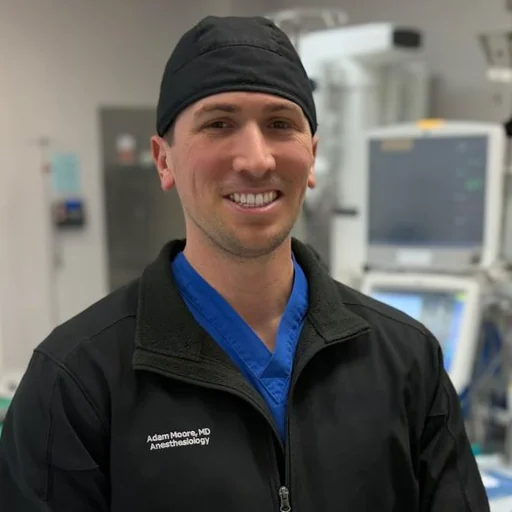
Practicing anesthesiologist with experience across MD-only, medical supervision of CRNAs, and medical direction of CAAs. Founded AnesthesiaJobs.com to help anesthesia professionals find the best job for their personal and professional life.
More about Adam →