CRNA vs PA: Two Great Healthcare Careers Compared
Quick Facts at a Glance
- CRNAs earn a national median of $223,210/year (BLS, 2024), with current job postings averaging $260,000 (ZipRecruiter, 2026) — specializing exclusively in anesthesia
- PAs (Physician Associates/Assistants) earn a median of $130,020/year (BLS, 2024; AAPA 2025 median: $140,000) with the flexibility to work across virtually any medical specialty
- CRNAs train through the nursing pathway (~7–8 years); PAs train through a medical model (~6–7 years)
- CRNA job growth: 38% (2022–2032) | PA job growth: 28%
- Both offer outstanding job security, high satisfaction, and the ability to positively impact patient lives
If you're weighing "CRNA vs PA," you're considering two of the most rewarding careers in healthcare — and two fundamentally different approaches to clinical practice. CRNAs are deep specialists, channeling their expertise into the art and science of anesthesia. PAs are versatile generalists, trained to diagnose and treat across the full spectrum of medicine and surgery. The question isn't which career is "better" — it's which career philosophy excites you more: the specialist or the generalist?
Let's break it all down.
Education Requirements: Nursing vs. Medical Model
📊 Salary Data Sources & Freshness This guide cites data from multiple sources: the U.S. Bureau of Labor Statistics (BLS, May 2024 — latest government data), ZipRecruiter (2026 advertised salaries), Glassdoor, AMN Healthcare, SalaryDr, and other industry reports. Government salary surveys have a 12–18 month reporting lag. Current advertised salaries on job boards typically reflect real-time market conditions and may be higher. Anesthesia provider compensation has risen steadily over the past five years.
CRNA Education
| Stage | Duration | Details |
|---|---|---|
| Bachelor of Science in Nursing (BSN) | 4 years | Nursing fundamentals and clinical rotations |
| ICU Experience | 1–2 years | Critical-care bedside nursing (required for CRNA admission) |
| CRNA Graduate Program (MSN/DNP) | 2–3 years | Anesthesia-focused advanced practice education, 2,000+ clinical hours |
| Total | ~7–8 years | NCE certification exam |
CRNAs build on a nursing foundation. Your journey begins at the bedside — the ICU experience requirement isn't just an admission box to check; it's where you develop the clinical instincts that make you an exceptional anesthetist. For the complete roadmap, see How to Become a CRNA.
PA Education
| Stage | Duration | Details |
|---|---|---|
| Bachelor's Degree (any field, with science prerequisites) | 4 years | Biology, chemistry, anatomy, physiology, psychology + patient-care hours |
| PA Master's Program | 2–3 years | Medical model education — clinical rotations across multiple specialties |
| Total | ~6–7 years | PANCE certification exam |
PA programs follow a medical model inspired by physician training. During your clinical year, you rotate through family medicine, internal medicine, surgery, emergency medicine, pediatrics, psychiatry, and more. This broad exposure is by design — PAs are trained to be adaptable across the medical landscape.
Education Takeaway
The CRNA path requires you to be a nurse first (BSN + ICU), then specialize. The PA path accepts graduates from many undergraduate backgrounds and trains you broadly. If you're already an RN with ICU experience, the CRNA path builds directly on your skills. If you're coming from a non-nursing science background and want clinical versatility, the PA path may feel more natural.
Salary & Benefits: Both at the Top of Their Fields
| Metric | CRNA | PA |
|---|---|---|
| Median Annual Salary | $223,210 (BLS, 2024) | $130,020 (BLS, 2024); $140,000 (AAPA 2025) |
| Current Advertised Average | $260,000 (ZipRecruiter, 2026) | Varies by specialty |
| Mean Hourly Rate | ~$200/hr (market rate, 2026) | ~$62.51 (BLS, 2024) |
| High-End Range | $330K–$400K+ (BagMask, 2025) | $160K–$200K+ (specialty-dependent) |
| Top-Paying Settings | Independent practice, locum tenens, high-COL states | Surgical subspecialties, dermatology, emergency medicine |
| Job Growth | 38% (2022–2032) | 28% (2022–2032) |
(Sources: BLS May 2024, ZipRecruiter May 2026, AAPA 2025. Government data lags market by 12–18 months; advertised salaries reflect current conditions.)
CRNAs command a significant salary premium driven by the specialized nature of anesthesia, the intensity of the training, and the high demand for anesthesia providers. With a national median of $223,210 (BLS, 2024) and current job postings averaging $260,000 (ZipRecruiter, 2026), CRNAs earn among the highest non-physician salaries in healthcare. In the highest-paying states, CRNAs routinely earn $275K–$330K+, with some advertised roles exceeding $400,000 (BagMask, 2025). See the full picture at How Much Do CRNAs Make?.
PAs enjoy strong and steadily rising compensation, with significant variation by specialty. PAs in surgical subspecialties, dermatology, and emergency medicine often earn at the higher end of the scale. The PA profession's flexibility means you can potentially switch specialties to pursue higher-paying niches over the course of your career.
Both careers offer comprehensive benefits packages including health insurance, retirement contributions, CME allowances, and — particularly for CRNAs — sign-on bonuses and relocation assistance.
Scope of Practice: Specialist vs. Generalist
CRNA Scope
CRNAs focus exclusively on anesthesia and pain management:
- Administer general, regional, and monitored anesthesia care
- Manage patient airways and ventilation
- Place arterial lines, central lines, and nerve blocks
- Conduct pre-anesthetic assessments
- Manage acute and chronic pain
- Practice independently in 26 states
The specialization is the superpower. CRNAs develop profound expertise in pharmacology, physiology, and high-stakes decision-making that comes from doing one thing — anesthesia — at an extraordinarily high level.
PA Scope
PAs practice across virtually every medical and surgical specialty:
- Primary care (family medicine, internal medicine, pediatrics)
- Emergency medicine
- Surgical specialties (orthopedics, cardiothoracic, neurosurgery)
- Dermatology, psychiatry, urgent care
- Hospital medicine (hospitalist PAs)
PAs work under a collaborative agreement with physicians, though the specifics vary by state. Many PAs enjoy significant autonomy in their daily practice. Crucially, PAs have the unique ability to switch specialties throughout their career without additional formal training — moving from emergency medicine to dermatology to orthopedic surgery as interests evolve.
The Specialist-vs.-Generalist Tradeoff
This is the core philosophical difference:
- CRNAs go deep — unparalleled expertise in one critical domain
- PAs go wide — adaptable expertise across the entire healthcare landscape
Neither approach is superior. It depends on whether you're energized by mastering a single discipline or by the variety of a broad clinical career.
Work Settings & Daily Life
| Factor | CRNA | PA |
|---|---|---|
| Primary Setting | Operating rooms, surgery centers, pain clinics | Almost anywhere: clinics, hospitals, ERs, specialty offices, urgent care |
| Daily Rhythm | Case-based (surgical procedures); high intensity per case | Appointment-based or shift-based; varies by specialty |
| Physical Demands | Standing for extended procedures; high-acuity decision-making | Varies — desk-and-exam-room in primary care, physically demanding in surgery/ER |
| Patient Relationships | Episodic (surgical encounters) | Can be ongoing (primary care panels) or episodic (ER, surgery) |
| Team | OR team: surgeons, scrub techs, circulating nurses | Varies by setting: physicians, nurses, allied health professionals |
A Day in the Life
As a CRNA, you might start your morning reviewing the surgical schedule, then spend the day inducing anesthesia, managing airways, monitoring vitals in real time, titrating medications, and ensuring patients emerge safely from anesthesia. Each case is its own high-stakes clinical episode — and the variety of surgical procedures keeps every day engaging.
As a PA, your day could look completely different depending on your specialty. In primary care, you'd see a full panel of patients — diagnosing conditions, prescribing medications, and managing chronic diseases. In orthopedic surgery, you might assist in the OR, manage post-op patients, and reduce fractures in clinic. In emergency medicine, you'd triage, diagnose, and treat everything from chest pain to lacerations. This breadth is one of the PA career's defining features.
Lifestyle & Schedule: Both Offer Attractive Options
| Factor | CRNA | PA |
|---|---|---|
| Typical Hours | 40 hrs/week; many shift-based roles | 36–45 hrs/week; depends on specialty |
| Call | Varies — outpatient roles often have no call | Varies — primary care rarely; surgical/ER may include call |
| Flexibility | Excellent — locum tenens, PRN, part-time widely available | Very good — specialty switching, part-time, locum options growing |
| Geographic Mobility | All 50 states; locum tenens is well-established | All 50 states; broad demand across settings |
CRNAs benefit from a robust locum tenens market that enables travel assignments, flexible scheduling, and premium pay rates. PAs enjoy the lifestyle advantage of being able to switch specialties — if your current setting isn't ideal, you can transition without going back to school.
How to Decide: A Framework for Your Choice
You might thrive as a CRNA if you…
- Are passionate about anesthesia specifically — the pharmacology, the procedures, the OR environment
- Are already an RN (or plan to become one) with ICU aspirations
- Want the highest salary among advanced-practice nursing roles
- Enjoy high-acuity, moment-to-moment clinical decision-making
- Value the ability to practice independently in many states
You might thrive as a PA if you…
- Want a career with maximum clinical variety — the ability to work in almost any specialty
- Come from a non-nursing background and want a medical-model education
- Value the freedom to switch specialties as your interests evolve
- Enjoy both procedural and primary-care patient relationships
- Want strong demand and flexibility in virtually every healthcare market
Still exploring all your advanced-practice options? Compare how CRNAs stack up against nurse practitioners, or see the full anesthesia career landscape including CAAs and anesthesiologists.
Related Reading
- CRNA vs Anesthesiologist: Salary, Education, Scope Compared
- CRNA vs NP: Salary, Scope & Lifestyle Compared
- CRNA vs CAA vs Anesthesiologist: Complete 3-Way Comparison
- CRNA Interview Questions to Prepare For
Explore Your Next Career Move
If the specialist path calls to you, the CRNA job market is thriving with opportunities from coast to coast.
Browse CRNA Jobs on AnesthesiaJobs.com →
Not sure yet? Sign up for job alerts → to stay in the loop as new positions are posted.
Frequently Asked Questions
Do CRNAs make more than PAs?
Yes, CRNAs earn significantly higher median compensation: $223,210/year (BLS, 2024) with current advertised salaries averaging $260,000 (ZipRecruiter, 2026), compared to the PA median of $130,020/year (BLS, 2024). This reflects the specialized nature of anesthesia practice. However, PAs in high-paying surgical specialties can approach $180K–$200K+. Both careers offer excellent compensation relative to their training investment.
Is it harder to become a CRNA or a PA?
Both programs are highly competitive. CRNA programs require a BSN plus ICU experience, and admission rates are typically low. PA programs require science prerequisites and patient-care hours, with similar selectivity. The CRNA pathway takes slightly longer (~7–8 years vs. ~6–7 years) due to the ICU experience requirement. "Harder" depends on your background and strengths.
Can a PA give anesthesia?
PAs do not typically administer anesthesia as part of standard PA practice. However, some PAs work in anesthesia-adjacent roles in pain management or pre-operative assessment. The dedicated anesthesia provider roles in the U.S. are filled by CRNAs, CAAs, and anesthesiologists.
Can you switch from PA to CRNA?
A PA who wants to become a CRNA would need to complete a BSN (or an accelerated nursing program), obtain RN licensure, gain ICU experience, and then apply to a CRNA graduate program. While this is a significant transition, your clinical knowledge as a PA would be a valuable asset.
Which has better job security — CRNA or PA?
Both enjoy exceptional job security with projected growth rates well above the national average: 38% for CRNAs and 28% for PAs (2022–2032). Healthcare provider shortages in both anesthesia and primary/specialty care ensure robust demand for the foreseeable future.
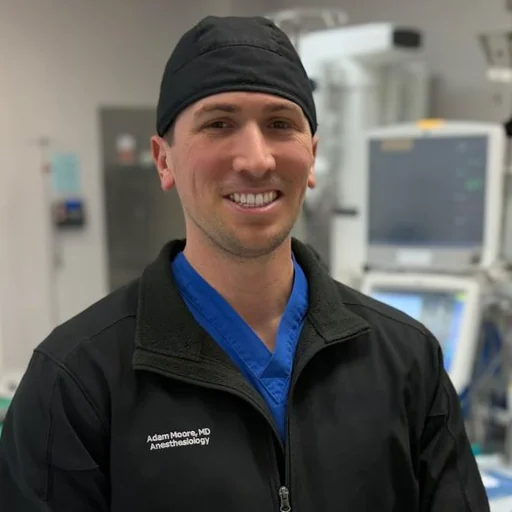
Practicing anesthesiologist with experience across MD-only, medical supervision of CRNAs, and medical direction of CAAs. Founded AnesthesiaJobs.com to help anesthesia professionals find the best job for their personal and professional life.
More about Adam →