Rural Anesthesia Jobs: Higher Pay, Loan Forgiveness & Provider Demand
Key Takeaways
- CRNAs provide more than 80% of anesthesia care in rural counties, making them the backbone of rural surgical access (AANA)
- Federal and state loan forgiveness programs (NHSC, NURSE Corps, state programs) can eliminate $50,000–$100,000+ in student debt for rural providers
- The U.S. faces a projected shortage of 6,300 anesthesiologists by 2026, with rural communities hit hardest (Medicus Healthcare Solutions) - 78% of healthcare facilities reported anesthesia staffing shortages in 2023 — more than double the pre-pandemic rate (THA, 2023)
If you’re an anesthesia provider looking for a career path that combines higher compensation, accelerated loan repayment, exceptional autonomy, and meaningful community impact, rural anesthesia jobs deserve a serious look. Across the country, rural hospitals and surgical centers face a critical shortage of qualified anesthesia providers — and they’re willing to pay a premium for professionals who step up to fill that gap.
This guide explores why rural anesthesia practice is one of the most rewarding opportunities in the field today, covering compensation, loan forgiveness programs, demand projections, and quality-of-life factors for CRNAs, anesthesiologists, and CAAs. Whether you’re a new graduate charting your first career move or an experienced provider considering a change, rural practice offers advantages that are hard to match. Start exploring your options on our anesthesia careers hub.
The numbers paint a clear picture: rural America needs anesthesia providers now more than ever, and the incentives have never been stronger.
📊 Salary Data Sources & Freshness This guide cites data from multiple sources: the U.S. Bureau of Labor Statistics (BLS, May 2024 — latest government data), ZipRecruiter (2026 advertised salaries), Glassdoor, AMN Healthcare, SalaryDr, and other industry reports. Government salary surveys have a 12–18 month reporting lag. Current advertised salaries on job boards typically reflect real-time market conditions and may be higher. Anesthesia provider compensation has risen steadily over the past five years.
Why Rural Anesthesia Jobs Pay More
One of the most compelling reasons to consider rural practice is the financial upside. Rural facilities must compete aggressively to attract anesthesia talent, which translates directly into higher base salaries, signing bonuses, relocation packages, and retention incentives.
Salary Premiums Across All Three Roles
Rural anesthesia compensation consistently exceeds urban and suburban benchmarks. Here’s how the numbers break down by role:
| Role | National Average / Median | Rural Premium Range | Rural Compensation Estimate |
|---|---|---|---|
| CRNA | $223,210 median (BLS, May 2024) / $260,000 advertised avg (ZipRecruiter, 2026) | +10–25% | $270,000–$325,000+ |
| Anesthesiologist | $336,640 mean base (BLS, 2024) / $535,000 total comp median (SalaryDr, 2026) | +10–20% | $370,000–$420,000+ base |
| CAA | $247,000–$253,000 national avg (Becker’s/Marit Health, 2026) | +10–20% | $275,000–$310,000+ |
(Note: Rural premiums vary by geography, facility size, and urgency of need. Some critical-access hospitals offer even higher premiums for hard-to-fill positions.)
What Drives the Rural Pay Premium?
Several factors push rural anesthesia salaries above market averages:
- Supply-demand imbalance: With 78% of healthcare facilities reporting anesthesia staffing shortages (THA, 2023), rural facilities face the steepest competition for talent
- Fewer candidates: Most anesthesia training programs are in metropolitan areas, and many graduates prefer to stay near their training site
- Broader scope of practice: Rural providers often handle a wider variety of cases — from trauma to obstetrics to orthopedics — making these roles more demanding and more highly compensated
- Signing bonuses: Rural positions frequently include $25,000–$75,000+ signing bonuses to attract candidates
- Relocation assistance: Many facilities cover $10,000–$25,000+ in moving costs
- Retention bonuses: Annual retention bonuses of $10,000–$30,000 are common in underserved areas
Locum Tenens in Rural Settings
Rural facilities are among the most active users of locum tenens staffing, which can drive earnings even higher. Locum CRNAs earn $200–$325+ per hour ($400,000–$550,000+ annually), while locum anesthesiologists command $300–$450 per hour ($600,000–$900,000+ annually). Rural locum assignments often come with additional incentives such as housing, travel reimbursement, and premium rates for hard-to-staff facilities.
For anesthesiologists exploring locum work, rural assignments represent some of the highest-paying opportunities in the locum market.
The Rural Anesthesia Provider Shortage: By the Numbers
The demand for anesthesia providers in rural America isn’t just strong — it’s reaching crisis levels. Understanding the scope of the shortage helps explain why rural facilities are so aggressive in recruiting and compensating providers.
Key Shortage Statistics
| Metric | Data Point | Source |
|---|---|---|
| Facilities reporting anesthesia staffing shortages | 78% | THA, 2023 |
| Pre-pandemic shortage rate | 35% | THA |
| Projected anesthesiologist shortage by 2026 | 6,300 | Medicus Healthcare Solutions |
| CRNA workforce retiring by 2027 | ~8,000 (12% of workforce) | Stout/AANA |
| BLS-projected CRNA employment growth (2023–2033) | 10% | BLS |
| Share of rural anesthesia care delivered by CRNAs | 80%+ | AANA |
The shortage is driven by multiple converging factors: an aging population requiring more surgical procedures, a wave of retirements across both the CRNA and anesthesiologist workforces, limited training capacity in graduate programs, and the geographic mismatch between where providers train and where patients need them most.
For a deeper analysis of where demand is most acute, see our guide on anesthesia provider demand by state.
Which Rural Areas Need Providers Most?
The shortage is especially severe in:
- Rural Midwest and Great Plains states (Nebraska, Kansas, Iowa, the Dakotas) — vast geographic areas with few training programs
- Southern states (Mississippi, Alabama, Arkansas, West Virginia) — higher surgical volumes combined with fewer providers per capita
- Mountain West (Wyoming, Montana, Idaho) — remote communities with limited access to tertiary care
- Tribal and Native health facilities — federally qualified health centers serving Indigenous communities
- Critical Access Hospitals (CAHs) — the 1,300+ small hospitals that serve as the sole healthcare lifeline for millions of rural Americans
Loan Forgiveness Programs for Rural Anesthesia Providers
One of the most powerful financial incentives for rural practice is student loan forgiveness. With CRNA graduate programs costing $100,000–$200,000 and medical school debt for anesthesiologists reaching $250,000–$400,000+, loan repayment programs can save rural providers tens of thousands of dollars — sometimes six figures.
Federal Loan Repayment Programs
National Health Service Corps (NHSC) Loan Repayment Program
The NHSC is the largest federal loan repayment program for healthcare providers serving in underserved areas:
- Full-time: Up to $75,000 for primary care providers or $50,000 for other eligible disciplines in exchange for a 2-year service commitment at an NHSC-approved site
- Half-time: Up to $37,500 or $25,000 depending on discipline
- Tax-free: NHSC awards are exempt from federal income and employment taxes
- Renewable: Providers can continue service and receive additional awards beyond the initial commitment
- New in FY 2026: Rural Emergency Hospitals with affiliated outpatient clinics are now eligible sites (HRSA, 2026)
CRNAs working at eligible facilities in Health Professional Shortage Areas (HPSAs) can qualify for this program, making rural practice even more financially attractive.
NHSC Rural Community Loan Repayment Program
This program specifically targets providers serving in rural communities:
- Provides up to $100,000 in loan repayment for a 3-year service commitment (HRSA)
- Available to a broad range of medical, dental, and mental/behavioral health providers
- Focuses on communities with the highest need scores
NURSE Corps Loan Repayment Program
Specifically for nurses (including CRNAs):
- Covers up to 85% of qualifying nursing education loans in exchange for a 3-year service commitment
- Must work at an eligible Critical Shortage Facility
- Many rural hospitals and clinics qualify
Public Service Loan Forgiveness (PSLF)
For providers at nonprofit or government facilities (which includes many rural hospitals):
- Complete loan forgiveness after 120 qualifying payments (10 years) while working for an eligible employer
- Works with income-driven repayment plans to minimize monthly payments during the repayment period
- CRNAs and anesthesiologists at nonprofit rural hospitals both qualify
State-Level Loan Repayment Programs
Many states offer their own incentive programs that can be stacked with federal programs:
| State Program Example | Award | Commitment |
|---|---|---|
| Nebraska CRNA Loan Repayment | Up to $90,000 | Rural service requirement |
| State NHSC Loan Repayment Programs (available in most states) | $25,000–$75,000+ | 2–4 years |
| State-specific rural health initiatives | Varies widely | Varies |
For a comprehensive breakdown of CRNA-specific forgiveness options, read our CRNA student loan forgiveness guide.
Total Financial Impact Example
Consider a new-graduate CRNA with $150,000 in student loans who accepts a rural position:
| Financial Factor | Value |
|---|---|
| Rural salary premium (vs. urban) | +$30,000–$50,000/year |
| Signing bonus | $25,000–$50,000 |
| NHSC Loan Repayment (2-year) | Up to $50,000 (tax-free) |
| State loan repayment program | $25,000–$90,000 |
| Total additional value over 2–3 years | $110,000–$240,000+ |
When you combine the salary premium, signing bonus, and loan repayment, the effective compensation of a rural position can exceed comparable urban roles by $100,000 or more over just the first few years.
Rural Anesthesia Jobs: Scope of Practice & Autonomy
Beyond compensation, rural practice offers a level of clinical autonomy and case variety that many providers find deeply fulfilling.
CRNAs in Rural Practice
CRNAs are the primary anesthesia providers in rural America, delivering more than 80% of anesthesia care in rural counties (AANA). In many rural hospitals, a CRNA is the sole anesthesia provider — which means full-scope, independent practice.
Key advantages of rural CRNA practice:
- Full scope of practice: Rural CRNAs typically manage all anesthesia services — general, regional, obstetric, pediatric, and emergency
- Independent practice: Many rural states grant CRNAs full practice authority, and even states with supervisory requirements often have exemptions for rural areas
- Leadership opportunities: Rural CRNAs frequently serve as anesthesia department heads, quality leaders, and clinical educators
- Case diversity: Exposure to a wide variety of surgical specialties in a single position
Anesthesiologists in Rural Practice
Rural anesthesiologists enjoy a practice model that combines clinical breadth with leadership:
- Broad case mix: General surgery, orthopedics, obstetrics, trauma, and emergency cases
- Team leadership: Often serving as the medical director of anesthesia services, overseeing CRNAs and CAAs in care-team models
- High autonomy: Fewer bureaucratic layers and more direct influence on patient care protocols
- Community impact: Serving as a critical resource for a community that depends on your expertise
CAAs in Rural Practice
In states where CAAs practice (approximately 20 states), rural facilities offer strong opportunities:
- Growing demand: As more states authorize CAA practice, rural facilities gain another option for filling anesthesia staffing gaps
- Competitive compensation: CAAs earn a national average of $247,000–$253,000 (Becker’s/Marit Health, 2026), with rural premiums pushing well above that range
- Team-based care: CAAs work within anesthesia care teams, providing essential coverage in facilities that struggle to recruit enough providers
Quality of Life in Rural Anesthesia Practice
The lifestyle advantages of rural practice deserve serious consideration alongside the financial benefits. Many providers discover that rural communities offer a quality of life that’s difficult to replicate in metropolitan settings.
Professional Quality of Life
- Lower patient volume with broader case mix: Rather than churning through high-volume, repetitive cases, rural providers manage a diverse caseload at a more sustainable pace
- Stronger collegial relationships: Smaller teams foster closer working relationships with surgeons, nurses, and administrators
- Less bureaucracy: Rural facilities tend to have flatter organizational structures with less red tape
- Greater schedule flexibility: Many rural practices offer predictable schedules, shared call coverage, and generous time-off arrangements
Personal Quality of Life
- Lower cost of living: Housing costs in rural areas are typically 30–50% lower than metropolitan equivalents, dramatically increasing the purchasing power of your salary
- Less commute stress: Say goodbye to hour-long commutes — most rural providers live minutes from the hospital
- Outdoor recreation: Rural communities offer unmatched access to hunting, fishing, hiking, skiing, and wide-open spaces
- Community connection: Providers in small towns become valued, known members of their community — a deeply rewarding experience that many urban providers never have
Managing the Challenges
Rural practice isn’t without its considerations. Smart providers plan ahead for:
- Call coverage: Smaller teams may mean more frequent call responsibilities — negotiate call schedules and backup coverage carefully
- Professional isolation: Stay connected through telehealth collaborations, continuing education, and professional organizations
- Family considerations: Research local schools, childcare, and partner employment opportunities before committing
- Distance from tertiary care: Understand the transfer protocols and telemedicine resources available for complex cases

How to Find Rural Anesthesia Jobs
Finding the right rural opportunity requires a strategic approach. Here’s how to maximize your search:
Where to Search
- AnesthesiaJobs.com: Browse dedicated listings for CRNA jobs, anesthesiologist jobs, and CAA jobs — filter by rural and underserved locations
- NHSC Jobs Center: The NHSC maintains a database of approved sites actively seeking providers
- State rural health offices: Most states have a rural health office that connects providers with opportunities
- Locum tenens agencies: Try a rural assignment through locum work before committing long-term — our guide to the best locum tenens agencies for anesthesia can help
What to Look For in a Rural Offer
When evaluating rural anesthesia job offers, pay attention to:
| Factor | What to Negotiate |
|---|---|
| Base salary | Aim for the rural premium (10–25% above market) |
| Signing bonus | $25,000–$75,000+ is common for rural positions |
| Loan repayment assistance | Employer-sponsored and/or NHSC eligibility |
| Relocation package | $10,000–$25,000+ |
| Call schedule | Frequency, backup coverage, call pay rates |
| Scope of practice | Confirm full-scope privileges, especially for CRNAs |
| CME and professional development | Budget, time off, and conference support |
| Contract term | Typical rural contracts run 2–3 years with renewal options |
| Partnership/equity track | For private-practice opportunities |
Tips for New Graduates
If you’re a new graduate considering rural practice, the financial case is especially strong:
- Starting salaries are generous: CRNAs start at $220,000–$260,000 nationally, with rural premiums pushing above that range. Anesthesiologists start at ~$377,000+ (AMN Healthcare, 2025), and CAAs start at $200,000–$250,000 — all with rural upside
- Loan forgiveness compounds the value: Starting your career in a rural setting lets you begin chipping away at loans immediately through NHSC and state programs
- Broad experience accelerates growth: The case diversity of rural practice builds clinical confidence and skills faster than many specialized urban positions
- You can always transition later: A few years of rural practice builds your resume, eliminates debt, and positions you for any future role
For new CRNAs, our new grad CRNA guide covers everything you need to know about launching your career.
The Future of Rural Anesthesia Jobs
The outlook for rural anesthesia providers is overwhelmingly positive. Several trends point to sustained and growing demand:
- Aging rural populations: Rural America skews older than urban areas, driving higher surgical and procedural volumes
- Hospital investment: Federal programs like the Rural Emergency Hospital (REH) designation are stabilizing and expanding rural healthcare infrastructure
- Telehealth integration: Advances in tele-anesthesia consultation allow rural providers to collaborate with specialists remotely, expanding the types of procedures rural facilities can offer
- Expanding CRNA scope: The ongoing expansion of CRNA scope of practice by state removes barriers to rural practice and empowers CRNAs to serve as independent providers
- CAA practice expansion: As more states authorize CAA practice, rural facilities gain additional staffing options
- Growing loan forgiveness: Both federal and state governments are increasing investment in rural healthcare workforce programs
The bottom line: rural anesthesia jobs will remain among the most in-demand, highest-paying, and most rewarding opportunities in the anesthesia field for the foreseeable future.
Related Reading
- Locum Tenens Guide for CRNAs: Rates, Agencies & Getting Started
- Locum Tenens Guide for Anesthesiologists
- CRNA Scope of Practice by State
- CRNA Student Loan Forgiveness Programs
- Anesthesia Provider Demand by State
- Exploring Anesthesia Careers
Ready to explore rural anesthesia opportunities?
Browse CRNA Jobs on AnesthesiaJobs.com →
Browse Anesthesiologist Jobs on AnesthesiaJobs.com →
Browse CAA Jobs on AnesthesiaJobs.com →
Frequently Asked Questions
Do rural anesthesia jobs really pay more than urban positions?
Yes. Rural anesthesia jobs typically offer salary premiums of 10–25% above urban and suburban averages. CRNAs earning the national median of $223,210 (BLS, May 2024) can expect $270,000–$325,000+ in rural settings when factoring in base salary premiums, signing bonuses, and retention incentives. Anesthesiologists and CAAs see similar uplifts. The premium reflects the supply-demand imbalance — 78% of healthcare facilities report anesthesia staffing shortages (THA, 2023), and rural areas are disproportionately affected.
What loan forgiveness programs are available for rural anesthesia providers?
Several programs target rural providers. The National Health Service Corps (NHSC) Loan Repayment Program offers up to $50,000–$75,000 (tax-free) for a 2-year commitment at an eligible site. The NHSC Rural Community Loan Repayment Program provides up to $100,000 for 3 years of rural service. The NURSE Corps program covers up to 85% of nursing education loans. Public Service Loan Forgiveness (PSLF) offers complete loan forgiveness after 10 years at a qualifying nonprofit employer. Many states also offer additional programs — Nebraska, for example, provides up to $90,000 for CRNAs serving in rural areas.
Are CRNAs the main anesthesia providers in rural areas?
Yes. CRNAs provide more than 80% of anesthesia care in rural counties (AANA). In many rural hospitals, a CRNA is the sole anesthesia provider, delivering full-scope services including general, regional, obstetric, and emergency anesthesia. This makes CRNAs the backbone of rural surgical access in the United States. Many rural states also grant CRNAs full practice authority, allowing independent practice without physician supervision.
What types of cases do rural anesthesia providers handle?
Rural anesthesia providers typically manage a broad, diverse caseload — general surgery, orthopedics, obstetrics (including cesarean sections), trauma, emergency cases, and outpatient procedures. This breadth of practice is one of the most appealing aspects of rural work for many providers, as it builds strong clinical skills across multiple specialties rather than focusing on a narrow range of procedures.
How do I find rural anesthesia job openings?
Start with AnesthesiaJobs.com, which offers dedicated listings for CRNA, anesthesiologist, and CAA positions filterable by location. The NHSC Jobs Center maintains a database of approved sites actively recruiting. State rural health offices and locum tenens agencies are also excellent resources. Many providers test rural practice through locum assignments before committing to a permanent position — see our guides on locum tenens for CRNAs and locum tenens for anesthesiologists for more.
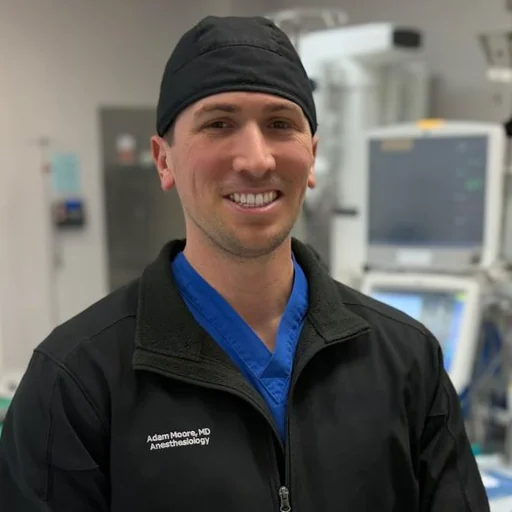
Practicing anesthesiologist with experience across MD-only, medical supervision of CRNAs, and medical direction of CAAs. Founded AnesthesiaJobs.com to help anesthesia professionals find the best job for their personal and professional life.
More about Adam →