Anesthesia Work-Life Balance: Schedules, Burnout & Reality by Provider Type

Key Takeaways
- Anesthesiology burnout rates sit at 39.2% — among the lowest physician specialties — yet 40–67% of anesthesia professionals experience burnout symptoms at some point in their careers (OpenAnesthesia, 2025)
- CRNAs, Anesthesiologists, and CAAs each enjoy flexible scheduling options including 4×10s, 3×12s, 7-on/7-off, PRN, and locum tenens arrangements
- Locum tenens work offers the highest schedule autonomy — CRNAs earn $200–$325+/hr and Anesthesiologists earn $300–$450/hr while choosing when and where they work
- All three provider types rank among healthcare’s most satisfied professionals, with 77% of physicians overall reporting job satisfaction (AMA, 2025)
- Proactive schedule design — not just coping strategies — is the most effective way to build lasting anesthesia work-life balance
Achieving genuine anesthesia work-life balance is one of the most important — and most misunderstood — topics in the profession. Anesthesia providers deliver high-stakes care in fast-paced environments, and the emotional and physical demands of the operating room are real. Yet all three provider types — CRNAs, Anesthesiologists, and CAAs — have access to schedule flexibility, compensation structures, and career models that make sustainable work-life balance not just possible, but common.
This guide breaks down what daily life actually looks like for each anesthesia provider type, examines current burnout data, and offers evidence-based strategies for building a career that supports both professional excellence and personal well-being. Whether you’re exploring anesthesia careers for the first time or a seasoned provider seeking a better fit, this resource is for you.
The conversation around anesthesia work-life balance has shifted dramatically in recent years. Younger providers increasingly prioritize schedule flexibility alongside compensation, and employers are responding with creative staffing models. Understanding how each role approaches work-life balance helps you make the right career decisions from the start.
📊 Salary Data Sources & Freshness This guide cites data from multiple sources: the U.S. Bureau of Labor Statistics (BLS, May 2024 — latest government data), ZipRecruiter (2026 advertised salaries), Glassdoor, AMN Healthcare, SalaryDr, and other industry reports. Government salary surveys have a 12–18 month reporting lag. Current advertised salaries on job boards typically reflect real-time market conditions and may be higher. Anesthesia provider compensation has risen steadily over the past five years.
Anesthesia Work-Life Balance by Provider Type
Every anesthesia career path offers distinct advantages when it comes to lifestyle design. The “best” schedule depends on your personal priorities, family situation, and career stage. Here’s how each role stacks up.
CRNA Schedule & Lifestyle
CRNAs enjoy some of the most flexible scheduling in all of healthcare. Full-time positions typically involve 40 to 60 hours per week spread across four to five days, but the variety of scheduling models available is remarkable:
- 5×8-hour shifts — The traditional Monday-through-Friday model, common in outpatient surgery centers
- 4×10-hour shifts — Compressed weeks with a three-day weekend, increasingly popular
- 3×12-hour shifts — Maximum days off per week, favored by providers who prefer longer stretches away from work
- 24-hour call shifts — Some CRNAs work as few as 10 shifts per month on 24-hour models
- 7-on/7-off or 14-on/14-off — Block scheduling that allows extended time off for travel, family, or side projects
The rise of outpatient surgery centers has been a game-changer for CRNA work-life balance. Many outpatient positions offer Monday-through-Friday schedules with no call, no nights, and no weekends — a rarity in most clinical specialties. CRNAs in these settings earn an average of $263,960 (BLS, May 2024), often with better quality-of-life than hospital-based counterparts earning $234,250 (BLS, May 2024).
PRN (as-needed) and locum tenens positions give CRNAs even greater control. Locum CRNAs earn $200–$325+/hr ($400,000–$550,000+ annually) while choosing their own assignments and schedules. For CRNAs who value autonomy, this model provides an exceptional combination of high income and personal freedom.
Anesthesiologist Schedule & Lifestyle
Anesthesiologists have traditionally worked some of the most demanding schedules in medicine — but that picture has evolved significantly. Today’s Anesthesiologists have access to a wide range of practice models:
- Academic positions — Structured schedules, teaching responsibilities, and predictable hours, though typically at slightly lower total compensation (~$450,000 total comp)
- Private practice — Variable schedules with call responsibilities, but often with partnership income ($500,000–$700,000+ total comp)
- Hospital-employed — Shift-based models increasingly common, with some positions offering no-call options
- Locum tenens — Maximum flexibility at $300–$450/hr ($600,000–$900,000+ annually)
- Outpatient/ambulatory — Growing sector with lifestyle-friendly Monday-to-Friday schedules
The 2025 AMA data shows Anesthesiologists report a burnout rate of 39.2% — notably lower than specialties like emergency medicine (49.8%), general surgery (43.8%), and family medicine (45%). This places anesthesiology among the five lowest-burnout specialties in medicine, a testament to both the nature of the work and the scheduling flexibility available.
With a median total compensation of $535,000 (SalaryDr, 2026) and a BLS mean base salary of $336,640 (BLS, 2024), Anesthesiologists also have the financial resources to design their ideal lifestyle — whether that means working fewer shifts, hiring household help, or investing in wellness activities.
CAA Schedule & Lifestyle
Certified Anesthesiologist Assistants work in anesthesia care team models alongside Anesthesiologists, and their schedules tend to mirror the surgical schedule at their facility. Typical CAA arrangements include:
- Standard OR hours — 4–5 days per week following the surgical schedule
- Call rotations — Shared among the anesthesia care team, often less frequent than physician call
- Cardiac and specialty teams — Premium schedules with cardiac premium pay of $264,000–$328,000 (Emory)
- Locum and travel positions — Growing availability at $200–$275/hr
CAAs practicing in the approximately 20 states with licensure enjoy strong demand and competitive compensation. New graduates start at $200,000–$250,000, with national averages reaching $247,000–$253,000 (Becker’s/Marit Health, 2026). The team-based model often provides built-in schedule coverage, meaning CAAs may experience less unpredictable after-hours demand than solo practitioners.

Burnout in Anesthesia: What the Data Really Shows
Burnout is a real and well-documented challenge across healthcare, but the anesthesia-specific data tells a nuanced story. Understanding the actual numbers helps providers make informed decisions rather than react to fear.
Current Burnout Statistics
| Metric | Data Point | Source |
|---|---|---|
| Overall physician burnout | 41.9% | AMA, 2025 |
| Anesthesiology-specific burnout | 39.2% | AMA, 2025 |
| Anesthesia professionals — career prevalence | 40–67% | OpenAnesthesia, 2025 |
| CRNA disengagement/exhaustion | 80% reported high levels | AANA, 2022 |
| Physician job satisfaction | 77% satisfied | AMA, 2025 |
| Physician burnout trend (2023→2025) | 48.2% → 41.9% (declining) | AMA |
Several important patterns emerge from this data:
- Burnout is declining. Physician burnout dropped from 48.2% in 2023 to 41.9% in 2025 — the third consecutive year of improvement (AMA).
- Anesthesiology ranks favorably. At 39.2%, anesthesiology has one of the lowest burnout rates among all physician specialties.
- Career-long exposure matters. While point-in-time burnout rates are moderate, 40–67% of anesthesia professionals experience burnout symptoms at some point during their careers (OpenAnesthesia, 2025). This highlights the importance of proactive prevention.
- Satisfaction remains high. Despite burnout concerns, 77% of physicians report overall job satisfaction — suggesting that most providers find their careers deeply fulfilling even when challenges arise.
Key Burnout Risk Factors in Anesthesia
Research from the American Society of Anesthesiologists (ASA) and OpenAnesthesia identifies several primary burnout drivers that are specific to anesthesia practice:
- Extended work hours — Consistently working more than 60 hours per week significantly increases burnout risk
- Night and weekend call — Disrupted sleep patterns and unpredictable schedules take a cumulative toll
- High-acuity case exposure — Critical events, adverse outcomes, and the “second victim phenomenon” affect 60–84% of anesthesia professionals at some point (OpenAnesthesia, 2025)
- Production pressure — Volume-driven case scheduling with inadequate recovery time
- Administrative burden — Documentation requirements, prior authorizations, and non-clinical tasks
- Work-life imbalance — Insufficient time for personal relationships, exercise, and recovery
The encouraging news is that every one of these risk factors is modifiable through practice setting selection, schedule negotiation, and proactive career management. The providers who thrive long-term are those who design their careers around sustainability — not just compensation.
How Anesthesia Work-Life Balance Compares to Other Specialties
One of the most compelling aspects of anesthesia careers is how favorably they compare to other high-paying medical specialties when it comes to lifestyle.
| Specialty | Burnout Rate (AMA, 2025) | Typical Schedule | Call Burden |
|---|---|---|---|
| Anesthesiology | 39.2% | Variable — many flexible options | Moderate to low |
| Emergency Medicine | 49.8% | Shift-based, nights/weekends | Built into shifts |
| General Surgery | 43.8% | Long hours, heavy call | Heavy |
| OB/GYN | 45.7% | Unpredictable deliveries | Heavy |
| Family Medicine | 45.0% | Clinic-based, moderate hours | Light but large panels |
| Dermatology | 31.5% | Clinic-based, no call | Minimal |
Anesthesia stands out as a specialty that offers high compensation with above-average lifestyle flexibility. Unlike surgical specialties with heavy call burdens or primary care specialties with large patient panels, anesthesia providers can often “leave work at work” — once the case is done, the clinical responsibility is complete.
This “shift-like” quality of anesthesia work, combined with the ability to choose from multiple scheduling models, makes it one of the most attractive specialties for providers who value both earning power and personal time.
Schedule Strategies That Protect Anesthesia Work-Life Balance
Building sustainable anesthesia work-life balance requires intentional career design. Here are the strategies that experienced providers use to thrive:
1. Choose Your Practice Setting Strategically
Your practice setting has the single greatest impact on your daily schedule and lifestyle:
- Outpatient surgery centers — Predictable hours, no call, early finish times. Ideal for providers with young families or those who value routine.
- Large hospital groups — More providers to share call, block scheduling options, and built-in coverage for time off.
- Academic centers — Structured schedules with teaching variety, though sometimes with fellowship and resident supervision requirements.
- Solo or small-group practice — Maximum autonomy but potentially heavier call burden without coverage partners.
2. Negotiate Your Schedule, Not Just Your Salary
Many anesthesia providers focus exclusively on compensation during contract negotiations and overlook schedule terms that dramatically affect quality of life. Key negotiation points include:
- Call frequency and type — Home call vs. in-house call, weekend frequency, holiday rotation
- Schedule flexibility — Ability to swap shifts, choose preferred days, or adjust hours seasonally
- PTO and CME time — Generous time-off policies are standard in anesthesia, but amounts vary significantly
- Part-time options — Many facilities offer 0.8 or 0.6 FTE positions with pro-rated benefits
For guidance on negotiation tactics, see our CRNA contract negotiation guide.
3. Consider Locum Tenens or PRN Work
For providers who want maximum schedule control, locum tenens and PRN positions offer unmatched flexibility:
| Work Model | Schedule Control | Income Potential | Benefits |
|---|---|---|---|
| Full-time permanent | Moderate | CRNA: $260,000 avg (ZipRecruiter, 2026) | Full benefits package |
| Part-time permanent | High | Pro-rated | Often partial benefits |
| PRN / Per Diem | Very high | Variable, often premium rates | Typically none |
| Locum tenens | Maximum | CRNA: $400K–$550K+ / Anesthesiologist: $600K–$900K+ | Self-funded |
Many experienced providers transition to locum or PRN work specifically to reclaim schedule autonomy. The financial premium — locum CRNAs earning $200–$325+/hr and locum Anesthesiologists earning $300–$450/hr — often more than compensates for self-funded benefits.
4. Build Recovery Into Your Routine
The anesthesia providers with the longest, most satisfying careers are those who treat recovery as seriously as they treat clinical preparation:
- Exercise regularly — Physical activity is one of the most evidence-backed interventions for preventing burnout
- Protect sleep — Especially important for providers working call shifts or night rotations
- Maintain social connections — Research consistently links strong social support to reduced burnout risk and longer, healthier careers
- Use your PTO — The AANA specifically recommends using time off as a burnout prevention strategy
- Seek peer support — Programs providing “emotional first aid” after adverse events are increasingly available and highly effective (OpenAnesthesia, 2025)
5. Know When to Make a Change
Sometimes the most powerful work-life balance strategy is changing your situation entirely. Signs that a change may be needed include:
- Persistent exhaustion that doesn’t resolve with time off
- Dreading the start of every work week
- Feeling detached from patients or colleagues
- Physical symptoms like insomnia, headaches, or appetite changes
These experiences are not character flaws — they’re signals. Anesthesia providers have extraordinary career mobility. Switching from a high-acuity hospital to an outpatient center, transitioning from permanent to locum work, or moving to a new geographic market can all reset your experience. Browse current opportunities on AnesthesiaJobs.com to see what’s available.

The Financial Freedom Factor
Work-life balance isn’t just about schedules — it’s also about financial security. Anesthesia providers across all three roles earn compensation that supports genuine lifestyle flexibility:
| Provider | Starting Salary | National Average | Top Earners |
|---|---|---|---|
| CRNA | $220,000–$260,000 | $260,000 (ZipRecruiter, 2026) | $394,500 — 90th pct (ZipRecruiter, 2026) |
| Anesthesiologist | ~$377,000+ (AMN, 2025) | $535,000 total comp (SalaryDr, 2026) | $569,729 avg total comp (SalaryDr, 2026) |
| CAA | $200,000–$250,000 | $247,000–$253,000 (Becker’s/Marit Health, 2026) | Up to $350,000 (BagMask, Q1 2026) |
This level of compensation opens doors that most professionals never have access to: the ability to work part-time without financial strain, the option to take extended leave between assignments, and the freedom to prioritize quality of life over maximizing income. Many anesthesia providers achieve financial independence years earlier than their peers in other fields — and use that freedom to design careers on their own terms.
For a detailed comparison of how these three roles compare beyond compensation, see our CRNA vs Anesthesiologist career guide.
Anesthesia Work-Life Balance Is What You Make It
The reality of anesthesia work-life balance in 2026 is far more positive than the burnout headlines suggest. Yes, the work is demanding. Yes, call shifts and critical cases take a toll. But the data shows that burnout rates in anesthesiology are declining, job satisfaction remains high, and the profession offers more scheduling flexibility than nearly any other high-compensation healthcare career.
The providers who enjoy the best work-life balance are those who approach their careers intentionally — choosing settings that match their lifestyle priorities, negotiating schedules that protect their well-being, and making changes when their current situation no longer serves them.
Whether you’re a CRNA choosing between outpatient and hospital practice, an Anesthesiologist weighing academic versus private settings, or a CAA evaluating which states offer the best opportunities, the key is the same: design your career around the life you want, not the other way around.
Related Reading
- CRNA vs Anesthesiologist: Career Comparison
- Locum Tenens Guide for CRNAs
- Is Anesthesia Stressful? What Providers Say
- Anesthesiologist Burnout: Causes, Data & Solutions
- Best Anesthesia Jobs for Work-Life Balance
- PRN CRNA Jobs: Flexibility & Pay Guide
CTA: Ready to Find Your Ideal Anesthesia Position?
Browse CRNA Jobs → | Browse Anesthesiologist Jobs → | Browse CAA Jobs →
Find positions that match your lifestyle on AnesthesiaJobs.com — filter by schedule type, call requirements, and practice setting.
Frequently Asked Questions
Is anesthesia a good specialty for work-life balance?
Yes. Anesthesiology consistently ranks among the most lifestyle-friendly high-paying specialties. The 2025 AMA data shows anesthesiology has a burnout rate of just 39.2% — lower than emergency medicine, surgery, OB/GYN, and family medicine. Anesthesia providers benefit from “shift-like” work that doesn’t follow them home, multiple scheduling models (4×10s, 3×12s, 7-on/7-off), and the financial resources to work part-time if desired. CRNAs, Anesthesiologists, and CAAs all have access to outpatient, PRN, and locum positions with no-call schedules.
How many hours per week do anesthesia providers work?
Schedules vary by role and setting. Full-time CRNAs typically work 40 to 60 hours per week across four to five days, with many outpatient positions offering standard 40-hour weeks with no call. Anesthesiologists in academic settings may work 50–60 hours including call, while those in outpatient or locum roles often work fewer clinical hours. CAAs generally follow the surgical schedule at their facility. All three roles offer part-time, PRN, and locum options for providers who want to work fewer hours.
What is the burnout rate for anesthesia providers?
According to the 2025 AMA Organizational Biopsy, the Anesthesiologist burnout rate is 39.2% — one of the lowest among physician specialties. Research from OpenAnesthesia (2025) indicates that 40–67% of anesthesia professionals experience burnout symptoms at some point during their entire careers. The AANA reported in 2022 that 80% of CRNAs experienced high levels of disengagement and exhaustion, highlighting the importance of proactive wellness strategies. Importantly, overall physician burnout has declined for three consecutive years, from 48.2% in 2023 to 41.9% in 2025.
Can anesthesia providers work part-time or PRN?
Absolutely. Part-time, PRN, and locum tenens work are widely available for all three anesthesia provider types. Many CRNAs work PRN shifts at $200+/hr with complete schedule control. Locum tenens CRNAs earn $200–$325+/hr and Anesthesiologists earn $300–$450/hr while choosing their own assignments. The current anesthesia provider shortage means facilities are increasingly willing to accommodate flexible scheduling arrangements to attract and retain talent.
How can I improve my work-life balance as an anesthesia provider?
The most effective strategy is proactive career design: choose a practice setting that matches your lifestyle priorities, negotiate schedule terms (not just salary), and consider alternative work models like PRN or locum tenens. Evidence-based personal strategies include regular exercise, protecting sleep quality, maintaining social connections, using your PTO, and accessing peer support programs after stressful clinical events. If persistent burnout symptoms develop, consider changing practice settings — anesthesia providers have extraordinary career mobility across settings, locations, and work models.
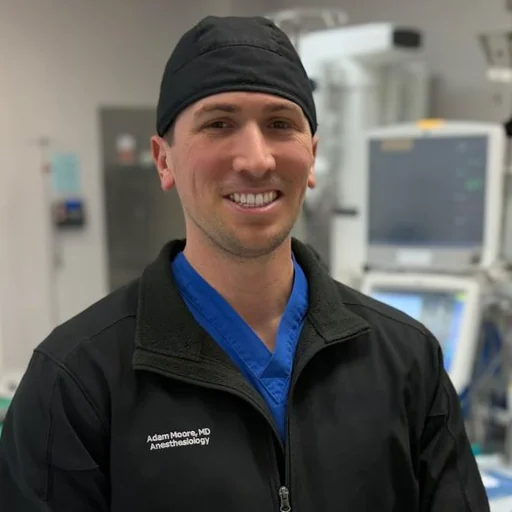
Practicing anesthesiologist with experience across MD-only, medical supervision of CRNAs, and medical direction of CAAs. Founded AnesthesiaJobs.com to help anesthesia professionals find the best job for their personal and professional life.
More about Adam →