Anesthesiologist Burnout: Causes, Data & How to Prevent It

Key Takeaways
- Approximately 42% of all U.S. physicians reported burnout symptoms in 2025 (AMA, 2025), and anesthesiologists face unique specialty-specific risk factors that can push their rate even higher
- A large-scale survey found 59.2% of anesthesiologists were at high risk of burnout (PMC/ASA, 2022), with the specialty’s burnout prevalence jumping from 37.5% to 61.7% during the pandemic peak
- Top causes include administrative burden, operating-room isolation, high-stakes decision fatigue, long hours, and loss of clinical autonomy
- Burnout-related physician turnover costs healthcare systems an estimated $500,000–$1,000,000 per departure (AMA, 2024)
- Evidence-based solutions — from schedule flexibility and locum tenens work to organizational culture change — are proven to reduce burnout and restore professional fulfillment
Anesthesiologist burnout is more than a buzzword — it’s a measurable, well-documented challenge that affects patient safety, career longevity, and personal well-being. While overall physician burnout rates have been declining from their pandemic-era peak, anesthesiologists face a distinct set of workplace pressures that keep burnout a top concern for the specialty in 2026.
Whether you’re a practicing anesthesiologist exploring new opportunities, a resident planning your career, or a department leader trying to retain talent, understanding the data behind burnout — and the strategies that actually work — is essential. This guide compiles the latest research, real-world statistics, and actionable prevention strategies specific to anesthesiology.
For a broader look at stress factors across the specialty, see our companion guide on whether anesthesia is stressful.
📊 Salary Data Sources & Freshness This guide cites data from multiple sources: the U.S. Bureau of Labor Statistics (BLS, May 2024 — latest government data), ZipRecruiter (2026 advertised salaries), Glassdoor, AMN Healthcare, SalaryDr, and other industry reports. Government salary surveys have a 12–18 month reporting lag. Current advertised salaries on job boards typically reflect real-time market conditions and may be higher. Anesthesia provider compensation has risen steadily over the past five years.
What Is Anesthesiologist Burnout? Defining the Problem
Burnout isn’t simply “feeling tired.” The World Health Organization classifies occupational burnout as a syndrome resulting from chronic workplace stress that has not been successfully managed. It’s measured using the Maslach Burnout Inventory (MBI) across three dimensions:
- Emotional exhaustion — feeling drained and depleted by work demands
- Depersonalization — developing a detached, cynical attitude toward patients and colleagues
- Reduced personal accomplishment — a declining sense of competence and meaning in your work
For anesthesiologists, these dimensions play out in a high-stakes clinical environment where vigilance is constant, decisions are life-or-death, and the emotional toll of adverse outcomes can be profound.
How Burnout Differs from Stress
Stress and burnout exist on a continuum, but they’re not the same. Stress is typically characterized by overengagement — too much to do, too many demands. Burnout, by contrast, is characterized by disengagement: a sense that efforts don’t matter, that the system is broken, and that withdrawal is the only coping mechanism left. An anesthesiologist under stress may feel overwhelmed but motivated. An anesthesiologist experiencing burnout may feel empty, detached, and questioning whether the career is still worth it.
Understanding this distinction matters because the solutions are different. Stress responds to rest and recovery. Burnout requires deeper, structural intervention.

Anesthesiologist Burnout by the Numbers: 2024–2026 Data
The data on anesthesiologist burnout paints a complex picture — one of gradual improvement nationally, but persistent vulnerability within the specialty.
Overall Physician Burnout Trends
| Year | Physician Burnout Rate (AMA) |
|---|---|
| 2017 | 43.9% |
| 2020 | 38.2% |
| 2021 | 62.8% (pandemic peak) |
| 2023 | 48.2% |
| 2024 | 43.2% |
| 2025 | 41.9% |
(Source: AMA National Physician Comparison Report, 2025)
The AMA’s 2025 data — drawn from nearly 19,000 responses across 38 states and 106 health systems — shows that burnout has declined for four consecutive years since the pandemic peak of 62.8% in 2021. Job satisfaction has also climbed, reaching 77% in 2025 (AMA, 2025).
Anesthesiology-Specific Burnout Data
Within anesthesiology, the picture has historically been more concerning:
| Study / Source | Burnout Metric | Finding |
|---|---|---|
| PMC/ASA Survey (2022) | High burnout risk | 59.2% of 3,898 anesthesiologists surveyed |
| PMC/ASA Survey (2022) | Met full burnout criteria | 13.8% (539 of 3,898) |
| Permanente Journal (2021) | Burnout prevalence change | Rose 64% — from 37.5% (2020) to 61.7% (2021) |
| Medscape Lifestyle Report (2024) | Anesthesiologist burnout | Approximately 45–50% reported burnout or depression |
| AMA Specialty Data (2025) | Physician burnout by specialty | Anesthesiology in mid-range (~42–48%) |
(Sources: PMC, The Permanente Journal, Medscape, AMA)
The large-scale ASA-affiliated survey is particularly striking: of the 28,677 anesthesiologists contacted, 3,898 completed the survey, and 59.2% were at high risk of burnout. That’s well above the national all-physician average during the same period. A separate study in The Permanente Journal documented a stunning 64% increase in anesthesiologist burnout prevalence during the pandemic — from 37.5% in 2020 to 61.7% in 2021.
Burnout vs. Depression
Burnout and depression overlap but aren’t identical. The Medscape 2025 Physician Mental Health & Well-Being Report found that 47% of physicians reported burnout and 24% experienced depression. Among anesthesiologists specifically, the PMC survey found that 13.8% met full diagnostic criteria for burnout — a clinical threshold that often co-occurs with depressive symptoms. Anesthesiology residents face even higher rates, with studies showing 50% of trainees meeting burnout criteria and elevated rates of suicidal ideation (PMC, 2025).
What Causes Anesthesiologist Burnout? The Top Risk Factors
Research identifies both general physician burnout drivers and anesthesiology-specific risk factors that create a unique pressure environment.
1. Administrative Burden and Documentation Overload
Across all specialties, administrative burden is the number-one cited cause of burnout (AMA, 2025; Medscape, 2025). The average physician spends 1.5–2 hours on documentation for every hour of direct patient care. A study of hospital-based physicians found that a typical 30-minute scheduled interaction generates over 36 minutes of EHR documentation time (AMA, 2025). More than 20% of physicians spend over 8 hours per week on EHR tasks outside normal work hours — so-called “pajama time” that has remained stubbornly unchanged for three years (AMA, 2025).
For anesthesiologists, documentation demands have expanded significantly with quality metrics, compliance requirements, and electronic anesthesia records.
2. Operating Room Isolation
Unlike most physicians who work in team-based settings with ongoing collegial interaction, anesthesiologists often practice behind the ether screen in a semi-isolated environment. Research published in Current Opinion in Anaesthesiology identifies environmental social isolation as a unique risk factor — spending long hours in an OR with limited peer interaction, separated from the broader care team by the surgical drape (Romito et al., PMC, 2021).
This isolation can reduce the natural social buffering that protects against burnout in other specialties. It also means that early signs of burnout may go unnoticed by colleagues.
3. High-Stakes Decision Fatigue
Anesthesiologists make hundreds of rapid, consequential decisions during every case — airway management, hemodynamic control, drug dosing, crisis response. The cognitive load of maintaining constant vigilance over hours of surgery, often with little margin for error, creates a specific form of decision fatigue that compounds over time.
The emotional toll of adverse outcomes adds another layer. When a patient has a complication under anesthesia, anesthesiologists carry that weight — often without the structured debriefing support available to other high-risk professions like aviation.
4. Long and Unpredictable Work Hours
Anesthesiologists frequently work 50–70 hours per week, including overnight call, weekend coverage, and cases that extend well beyond scheduled hours. Unlike office-based specialties where the day ends at a set time, operating room schedules are inherently unpredictable — an “add-on” emergency case at 5 p.m. can turn into a 10 p.m. finish.
This unpredictability erodes work-life boundaries and makes it difficult to maintain the recovery routines (exercise, family time, hobbies) that protect against burnout. For a deeper look at how anesthesia providers navigate these demands, see our guide on anesthesia work-life balance.
5. Loss of Clinical Autonomy
The shift toward hospital-employed practice models and corporate management of anesthesia groups has reduced clinical autonomy for many anesthesiologists. The AMA reports that in 2024, only 42.2% of physicians worked in independent practices — down from 60.1% in 2012 (AMA, 2024). For anesthesiologists, consolidation of anesthesia management groups has further concentrated decision-making away from individual practitioners.
Research in Mayo Clinic Proceedings consistently finds that physicians with greater schedule control and clinical autonomy report lower burnout rates — even when total work hours are similar. Loss of control over scheduling, case assignments, and practice decisions is a potent burnout accelerant.
6. Moral Distress and Ethical Dilemmas
A 2026 study in JAMA Network Open examined moral distress among physicians and found significant associations between moral distress — the feeling of being unable to act according to one’s ethical standards — and burnout (Tutty et al., 2026). Anesthesiologists may experience moral distress when pressured to proceed with cases they deem unsafe, when resource constraints force compromises in care, or when they witness suffering they feel powerless to prevent.
The Cost of Anesthesiologist Burnout
Burnout isn’t just a personal crisis — it has measurable consequences for healthcare systems, patient safety, and the anesthesiology workforce.
Financial Impact
| Cost Metric | Estimate |
|---|---|
| Physician turnover per departure | $500,000–$1,000,000 (AMA, 2024) |
| Annual U.S. burnout-related healthcare costs | $4.6 billion (Harvard/Annals of Internal Medicine) |
| Lost revenue per vacant anesthesiologist FTE | $1.5–$2.5 million annually |
| Recruitment timeline for anesthesiologists | 6–18 months |
When an anesthesiologist leaves a practice due to burnout, the costs ripple outward: recruitment fees, temporary locum tenens coverage, reduced surgical capacity, and disrupted team dynamics. With anesthesiologist mean base salary at $336,640 (BLS, 2024) and total compensation reaching a median of $535,000 (SalaryDr, 2026), replacing a single provider is enormously expensive.
Patient Safety Consequences
Burned-out physicians demonstrate: - Higher rates of medical errors — a landmark study found that burnout was independently associated with a 2x increased risk of self-reported medical errors - Lower patient satisfaction scores — disengagement and depersonalization directly affect the patient experience - Reduced clinical vigilance — particularly dangerous in anesthesiology, where moment-to-moment attention can be the difference between a routine case and a catastrophe - Increased substance use risk — anesthesiologists have historically faced elevated rates of substance use disorders, in part due to occupational access to controlled substances and the self-medication patterns that burnout can trigger
Workforce Pipeline Effects
Burnout doesn’t just push current practitioners out — it discourages the next generation from entering the field. When residents and medical students observe burned-out attending anesthesiologists, it influences their specialty choices and career planning. With anesthesiologist job growth projected at 3.2% (2024–2034) and approximately 45,300 currently employed (BLS, 2024), every practitioner who leaves the profession prematurely affects access to care.
How to Prevent Anesthesiologist Burnout: Evidence-Based Strategies
The good news: burnout is not inevitable. Research consistently shows that the most effective interventions target the system and the structure of work — not just individual resilience. Here are the strategies with the strongest evidence base.
Organizational-Level Interventions
These produce the most durable, measurable improvements:
1. Schedule Flexibility and Autonomy
The AMA identifies lack of schedule control as one of the primary structural drivers of burnout. Practical solutions include: - Offering part-time or reduced-FTE options without career penalties - Giving anesthesiologists meaningful input into their call schedules and case assignments - Implementing self-scheduling or shift-swap systems - Providing telehealth pre-assessment clinics as an alternative to all-OR schedules
Research in Mayo Clinic Proceedings confirms that physicians with greater scheduling flexibility report higher job satisfaction and lower burnout — even when total hours worked are similar.
2. Staffing Adequacy and Workload Distribution
Nearly half of U.S. physicians report working with inadequately staffed teams (AMA, 2023). Solutions include: - Hiring to actual demand, not minimum coverage - Using locum tenens anesthesiologists to fill gaps without overtaxing permanent staff - Implementing realistic OR block scheduling that accounts for turnovers, breaks, and add-on cases - Creating dedicated “administrative days” so that non-clinical work doesn’t pile onto clinical days
3. Reducing Administrative Burden
With documentation being the single most-cited burnout driver, specific interventions include: - AI-assisted documentation and ambient clinical intelligence tools (a 2025 study in JAMA Network Open found that AI scribe adoption reduced clinician burnout from 51.9% to 38.8%) - Team-based EHR inbox triage — routing messages through support staff rather than the physician - Streamlining quality metrics and compliance documentation - Eliminating redundant charting requirements
4. Peer Support and Mental Health Resources
The ASA’s formal Statement on Burnout recognizes burnout as an institutional responsibility and calls for: - Confidential peer support programs - Access to mental health professionals without career stigma - Critical incident stress debriefing after adverse outcomes - Protection of practitioners who seek help from licensure and credentialing penalties
Individual-Level Strategies
While organizational change produces the biggest impact, individual strategies remain important — particularly for anesthesiologists who may not be able to change their institutional environment immediately.
1. Prioritize Recovery, Not Just Rest
Recovery is an active process. Evidence supports: - Regular physical exercise (associated with 25–50% lower burnout risk in physician studies) - Sleep hygiene — especially important for anesthesiologists working variable shift patterns - Dedicated non-work time that is truly protected from clinical obligations - Hobbies and activities that provide mastery and engagement outside of medicine
2. Build Professional Connections
Combating OR isolation requires intentional effort: - Participate in departmental social events and retreats - Join professional communities (ASA sections, state societies, online forums) - Mentor residents and students — teaching is consistently associated with higher professional fulfillment - Cultivate relationships with surgical colleagues to reduce the “behind the drape” isolation
3. Explore Practice Model Flexibility
If your current practice model is driving burnout, consider alternatives: - Locum tenens work — provides schedule control, geographic variety, and the ability to set your own pace. Locum anesthesiologists earn $300–$450/hr ($600,000–$900,000+ gross annually), giving you the financial runway to work fewer weeks per year while maintaining or exceeding your permanent income. Learn more in our locum tenens guide for anesthesiologists. - Part-time or job-sharing arrangements — increasingly available as health systems recognize the retention value of flexibility - Academic or hybrid positions — blending clinical work with teaching, research, or administrative roles can restore a sense of variety and purpose - Practice setting changes — different environments carry different stress profiles. Our guide to the best anesthesia jobs for work-life balance explores which settings offer the most sustainable lifestyles.
4. Set Boundaries Proactively
Burnout often accelerates when work-life boundaries erode gradually: - Negotiate clear call expectations before accepting a position - Protect days off from “just one more case” creep - Use contract negotiation to build in protected time (see the importance of understanding your anesthesiologist employment contract) - Learn to say no to additional committee work and administrative roles when your plate is full

Locum Tenens as a Burnout Prevention Strategy
One of the most effective — and underutilized — strategies for preventing or recovering from anesthesiologist burnout is transitioning to locum tenens work, either temporarily or as a long-term career model.
Why Locum Work Addresses Burnout’s Root Causes
| Burnout Driver | How Locum Tenens Helps |
|---|---|
| Loss of autonomy | You choose assignments, locations, and schedules |
| Long/unpredictable hours | Assignments have defined start and end dates |
| Administrative burden | Minimal committee work, bureaucratic involvement |
| Social isolation | New environments and teams provide fresh connections |
| Financial pressure to overwork | Premium rates ($300–$450/hr) allow fewer working weeks |
Locum anesthesiologists can gross $600,000–$900,000+ annually while working only 40–46 weeks, building in recovery time that permanent positions rarely allow. The financial math creates real flexibility: earning a higher hourly rate means you can choose to work less without sacrificing income.
For a comprehensive overview of how locum tenens works for anesthesiologists — including credentialing, malpractice coverage, tax considerations, and how to get started — read our complete locum tenens guide for anesthesiologists.
When to Seek Help: Recognizing Burnout in Yourself and Colleagues
Burnout often develops gradually, making it difficult to recognize in real time. Watch for these warning signs:
In Yourself
- Dreading going to work on most days
- Feeling emotionally flat or cynical about patient care
- Increasing irritability with colleagues, staff, or family
- Physical symptoms: chronic fatigue, insomnia, headaches, GI issues
- Using alcohol, substances, or other unhealthy coping mechanisms more frequently
- Fantasizing about leaving medicine entirely
- A sense that your work no longer matters
In Colleagues
- Withdrawal from team activities and social interactions
- Uncharacteristic errors, lateness, or absenteeism
- Increased cynicism or negative comments about patients
- Noticeable physical changes (weight loss/gain, fatigue, disheveled appearance)
- Reluctance to take on new cases or responsibilities
If you recognize these signs, act early. The ASA, AMA, and most state medical societies offer confidential support resources. Physician Health Programs (PHPs) in every state provide assessment and treatment referrals without automatic licensure consequences. The Dr. Lorna Breen Heroes’ Foundation and the 988 Suicide & Crisis Lifeline (call or text 988) are also available 24/7.
Related Reading
- Locum Tenens Guide for Anesthesiologists
- Is Anesthesia Stressful? What the Data Says
- Anesthesia Work-Life Balance: A Complete Guide
- Best Anesthesia Jobs for Work-Life Balance
- How Much Do Anesthesiologists Make? 2026 Salary Breakdown
Ready to take control of your career and find a position that supports your well-being?
Browse Anesthesiologist Jobs on AnesthesiaJobs.com →
Frequently Asked Questions
How common is burnout among anesthesiologists?
Burnout is a significant concern in anesthesiology. A large-scale survey published in PMC found that 59.2% of anesthesiologists were at high risk of burnout, and 13.8% met full diagnostic criteria. During the pandemic, anesthesiologist burnout prevalence surged 64% — from 37.5% in 2020 to 61.7% in 2021 (The Permanente Journal). As of 2025, overall physician burnout has declined to 41.9% (AMA), though anesthesiology-specific rates vary by practice setting and work model.
What are the main causes of anesthesiologist burnout?
The top causes include administrative burden and documentation overload, operating room isolation, high-stakes decision fatigue, long and unpredictable work hours, loss of clinical autonomy due to practice consolidation, and moral distress. The AMA consistently identifies excessive bureaucratic tasks and EHR demands as the number-one drivers of physician burnout across all specialties.
Can locum tenens work help prevent anesthesiologist burnout?
Yes. Locum tenens is increasingly recognized as an effective burnout prevention and recovery strategy. It addresses several root causes of burnout by restoring schedule control, eliminating administrative committee obligations, providing geographic variety, and offering premium compensation ($300–$450/hr for anesthesiologists) that allows providers to work fewer total weeks while maintaining strong income.
What should I do if I think I’m experiencing burnout?
Start by acknowledging what you’re feeling — burnout is not a personal failure; it’s a systemic response to chronic workplace stress. Seek confidential support through your state’s Physician Health Program, the ASA’s wellness resources, or the 988 Suicide & Crisis Lifeline. Consider practical changes: explore schedule modifications, take accrued time off, and evaluate whether your current practice model is sustainable. Many anesthesiologists find that even small structural changes — reducing call frequency, shifting to a part-time model, or trying locum tenens assignments — can meaningfully reverse burnout symptoms.
Does anesthesiologist burnout affect patient safety?
Yes. Research consistently shows that burned-out physicians have higher rates of self-reported medical errors, lower patient satisfaction scores, and reduced clinical vigilance. In anesthesiology — where moment-to-moment attention is critical — the patient safety implications of burnout are particularly serious. This is why addressing burnout is not just a wellness initiative; it’s a patient safety imperative.
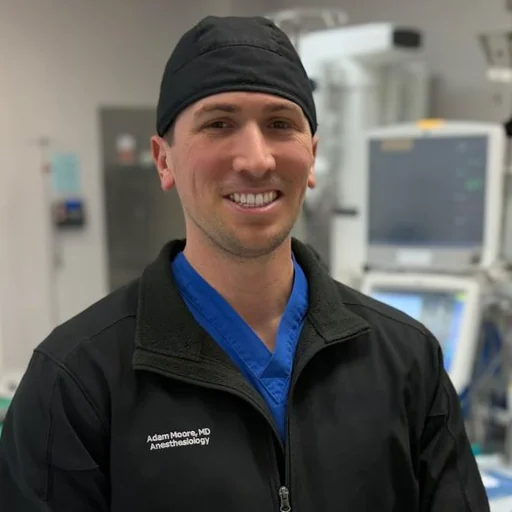
Practicing anesthesiologist with experience across MD-only, medical supervision of CRNAs, and medical direction of CAAs. Founded AnesthesiaJobs.com to help anesthesia professionals find the best job for their personal and professional life.
More about Adam →