Surgery Center CRNA Jobs: Pros, Cons & What to Expect
Key Takeaways
- CRNAs in outpatient settings earn an average of $263,960 (BLS, May 2024), outpacing the hospital average of $234,250
- The U.S. ambulatory surgery center (ASC) market is valued at $48 billion in 2026 and growing rapidly, fueling strong CRNA demand
- ASC case mix is typically lower-acuity (ASA I–II), with 8–12 cases per day and faster turnover than hospital ORs
- While surgery centers offer lifestyle advantages, trade-offs include limited case complexity and fewer benefits at some facilities
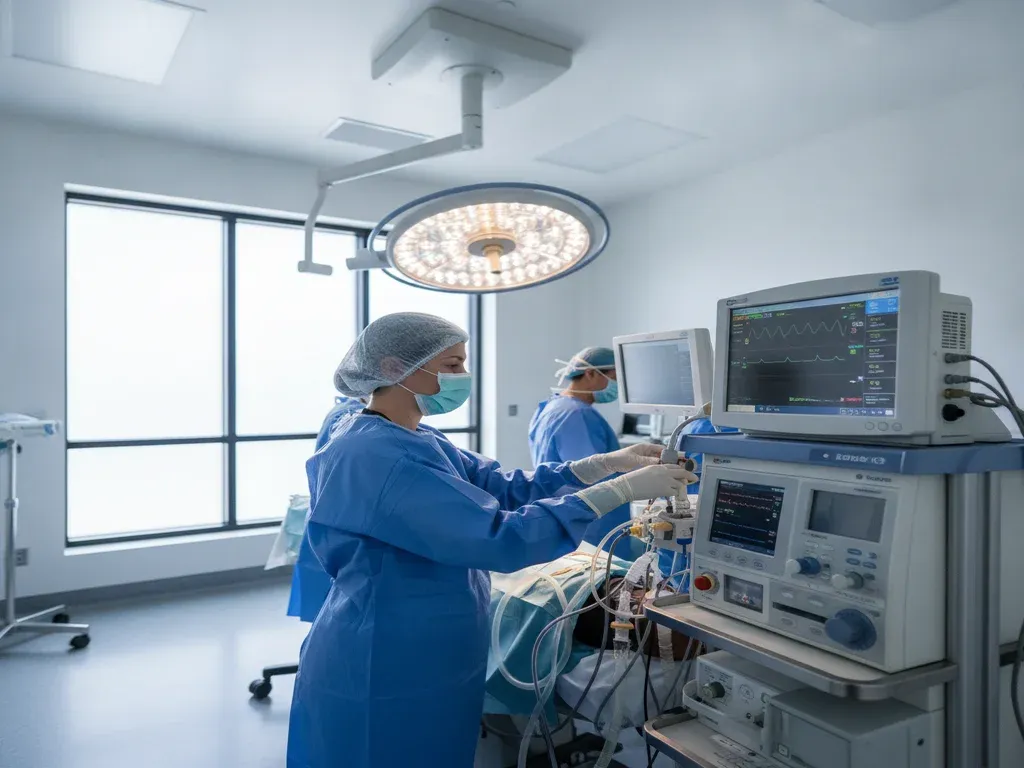
If you’ve been scanning job boards for surgery center CRNA jobs, you’ve probably noticed a pattern: “No call, no weekends, no holidays.” It sounds almost too good to be true — but for thousands of CRNAs working in ambulatory surgery centers across the country, that’s everyday reality. The outpatient surgery boom is reshaping where anesthesia is delivered, and CRNAs are at the center of it.
Ambulatory surgery centers are one of the fastest-growing practice settings in healthcare. With more than 12,000 ASCs operating nationwide and surgical volume expected to grow 23% in the coming years (OR Today, 2026), demand for skilled anesthesia providers in these facilities is surging. For CRNAs weighing their next career move, understanding what ASC practice actually looks like — the pay, the pace, the trade-offs — is essential. Browse current openings on AnesthesiaJobs.com to see what’s available right now.
This guide breaks down everything you need to know about working as a CRNA in a surgery center: compensation, daily workflow, the real pros and cons, and how to decide if this setting is right for you.
📊 Salary Data Sources & Freshness This guide cites data from multiple sources: the U.S. Bureau of Labor Statistics (BLS, May 2024 — latest government data), ZipRecruiter (2026 advertised salaries), Glassdoor, AMN Healthcare, SalaryDr, and other industry reports. Government salary surveys have a 12–18 month reporting lag. Current advertised salaries on job boards typically reflect real-time market conditions and may be higher. Anesthesia provider compensation has risen steadily over the past five years.
What Are Surgery Center CRNA Jobs?
Ambulatory surgery centers — also called outpatient surgery centers or same-day surgery facilities — are freestanding healthcare facilities where surgical procedures that don’t require an overnight hospital stay are performed. They handle everything from orthopedic procedures, ophthalmology, and GI endoscopy to ENT, plastic surgery, podiatry, and pain management.
Surgery center CRNA jobs involve providing anesthesia care — general anesthesia, sedation, and regional blocks — for these outpatient procedures. CRNAs in ASCs typically work with healthy to moderately healthy patients (ASA classification I–III) undergoing planned, elective surgeries with expected same-day discharge.
How ASC Practice Differs from Hospital Practice
| Factor | Ambulatory Surgery Center | Hospital OR |
|---|---|---|
| Patient acuity | Mostly ASA I–II (healthy) | ASA I–V (all acuity levels) |
| Case types | Elective, short-duration | Elective + emergent, variable length |
| Schedule | Weekdays, typically 7 AM–3 PM or 4×10s | Variable shifts, nights, weekends |
| Call requirements | Rarely or never | Common — nights, weekends, holidays |
| Cases per day | 8–12+ (fast turnover) | 3–6 (longer, more complex) |
| Practice autonomy | Often high; many ASCs are CRNA-only | Varies — care team or independent |
| Overnight patients | No — all same-day discharge | Yes |
The pace in a surgery center is brisk but predictable. You know your cases the day before, your patients are generally healthy, and you’re home by mid-afternoon. That consistency is what draws many CRNAs to outpatient anesthesia.
Surgery Center CRNA Salary: How Does ASC Pay Compare?
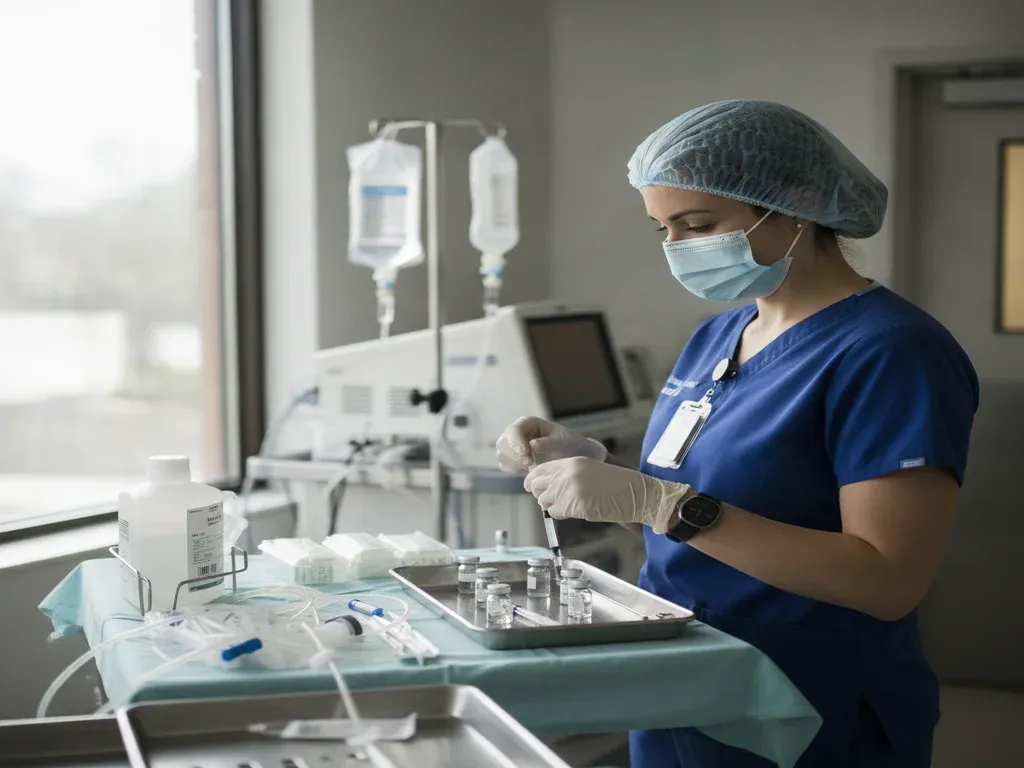
One of the biggest questions CRNAs ask about surgery center positions is whether the pay matches hospital roles. The answer may surprise you — in many cases, ASC compensation is actually higher.
Salary by Setting
| Setting | Average Annual Salary | Source |
|---|---|---|
| Outpatient care centers (ASCs) | $263,960 | BLS, May 2024 |
| Hospitals (state, local, private) | $234,250 | BLS, May 2024 |
| Physician offices | $214,890 | BLS, May 2024 |
| National CRNA median (all settings) | $223,210 | BLS, May 2024 |
| National CRNA advertised average | $260,000 | ZipRecruiter, 2026 |
CRNAs in outpatient settings earn approximately $29,710 more per year than their hospital-based counterparts, according to BLS data. Current job postings for surgery center CRNA positions routinely advertise salaries in the $220,000–$265,000 range for full-time W-2 roles, with some high-volume or specialty ASCs (such as plastic surgery or pain management centers) offering $250/hr or more.
Additional Compensation Factors
Beyond base salary, surgery center compensation packages often include:
- Production bonuses tied to case volume or facility revenue
- Sign-on bonuses of $10,000–$50,000, especially in competitive markets
- Shorter work weeks (some ASCs offer 4×10 schedules, giving you a three-day weekend every week)
- No call pay trade-off: While you won’t collect call stipends, you also won’t work uncompensated call hours
For CRNAs exploring different pay structures, our guide to CRNA contract negotiation covers how to evaluate total compensation in any setting.
How Surgery Center Pay Fits the Broader CRNA Market
| CRNA Compensation Metric | Figure | Source |
|---|---|---|
| BLS Median (all settings) | $223,210 | BLS, May 2024 |
| BLS Mean (all settings) | $231,700 | BLS, May 2024 |
| Advertised Average | $260,000 | ZipRecruiter, 2026 |
| Outpatient Setting Average | $263,960 | BLS, May 2024 |
| Market Hourly Rate (permanent) | ~$200/hr | Industry data, 2026 |
| Top Earners (90th percentile) | $394,500 | ZipRecruiter, 2026 |
| Starting Salary (new grads) | $220,000–$260,000 | Industry data, 2026 |
| Locum Tenens Rate | $200–$325+/hr | Industry data, 2026 |
| Locum Annual Gross | $400,000–$550,000+ | Industry data, 2026 |
Surgery center positions frequently land in the upper half of the national CRNA pay range, particularly when you factor in the lifestyle value of predictable hours and no call. Many CRNAs find that the effective hourly rate — actual take-home divided by actual hours worked — is highest in outpatient settings because you rarely work beyond your scheduled shift.
The Pros of Surgery Center CRNA Jobs
1. Predictable, Family-Friendly Schedule
This is the number-one draw. Most surgery center CRNA jobs operate on a Monday–Friday, daytime-only schedule. Common formats include:
- 5×8s: 7:00 AM–3:00 PM (or 6:30 AM–2:30 PM), Monday through Friday
- 4×10s: Four 10-hour shifts per week with a regular weekday off
- 3×12s: Less common in ASCs, but available at some high-volume centers
No nights. No weekends. No holidays in most cases. For CRNAs with families, pursuing further education, or simply prioritizing work-life balance, this schedule is transformative.
2. Competitive (Often Higher) Compensation
As the BLS data shows, outpatient CRNAs average $263,960 — roughly $30,000 more than hospital-based CRNAs. The combination of strong pay and fewer total hours worked makes ASC positions some of the most financially efficient roles in anesthesia.
3. High Autonomy and Independent Practice
Many ambulatory surgery centers operate as CRNA-only anesthesia practices, particularly in independent practice states. In these settings, CRNAs serve as the sole anesthesia provider — managing pre-op assessments, anesthesia delivery, and post-anesthesia care independently. Even in care team models, ASC CRNAs typically enjoy a high degree of clinical autonomy given the standardized, lower-acuity nature of the cases.
4. Fast-Paced, High-Volume Efficiency
If you thrive on variety and momentum, ASC anesthesia delivers. You may manage 8–12 or more cases per day, cycling through quick turnovers and staying engaged. There’s less waiting around and fewer delays compared to hospital ORs.
5. Lower Stress Environment
Working with predominantly healthy patients (ASA I–II) undergoing elective procedures means fewer emergencies, fewer hemodynamically unstable patients, and more predictable anesthetics. While you must always be prepared for complications, the baseline stress level is generally lower than a busy trauma center or cardiac OR.
6. Growing Job Market
The ASC industry is booming. The U.S. ambulatory surgery center market was valued at $45.3 billion in 2025 and is projected to reach $48 billion in 2026 (Grand View Research). Surgical utilization in ASCs is expected to grow 23% in the coming years, with more complex procedures — cardiovascular, spine, and advanced orthopedics — migrating to outpatient settings (OR Today, 2026). That growth translates directly into more surgery center CRNA jobs.
The Cons of Surgery Center CRNA Jobs
No practice setting is perfect. Here are the real trade-offs CRNAs should consider before committing to outpatient-only practice.
1. Limited Case Complexity and Variety
ASC cases are predominantly elective, short-duration, and low-to-moderate acuity. If you enjoy the challenge of cardiac anesthesia, complex neuro cases, trauma, or pediatric emergencies, surgery center practice may feel repetitive over time. Common ASC case types include:
- GI endoscopy (colonoscopy, upper endoscopy)
- Orthopedic procedures (arthroscopy, carpal tunnel, rotator cuff)
- Ophthalmology (cataracts, retinal procedures)
- ENT (tonsillectomy, septoplasty, ear tubes)
- Plastic surgery (breast augmentation, abdominoplasty, liposuction)
- Pain management (epidural steroid injections, nerve blocks)
- General surgery (hernia repair, cholecystectomy)
- Podiatry and dental
2. Potential for Skill Atrophy
CRNAs who work exclusively in ASCs for extended periods may find their skills with arterial lines, central venous access, advanced airways in difficult patients, and management of critically ill patients declining. If you plan to maintain hospital privileges or return to acute care later, consider keeping up your skills through PRN hospital shifts or simulation training.
3. Benefits May Be Less Comprehensive
Some surgery centers — particularly smaller, physician-owned facilities — offer benefits packages that are less robust than large hospital systems. You may encounter:
- Fewer retirement plan options (no pension)
- Less generous PTO policies
- Smaller employer contributions to health insurance
- Limited or no tuition reimbursement or CE funding
Always evaluate the total compensation package, not just the base salary. Our contract negotiation guide walks you through exactly what to look for.
4. No Call Pay or Overtime Premium
The flip side of “no call” is “no call pay.” Hospital CRNAs who take call can earn substantial additional income — sometimes $50,000–$100,000+ annually in call stipends and overtime. If maximizing gross income is your priority, a hospital position with heavy call or a locum tenens arrangement may yield higher total earnings.
5. Production Pressure
High-volume ASCs run on efficiency. You may feel pressure to turn rooms quickly, keep the schedule moving, and avoid delays. While most CRNAs adapt well to this pace, it can feel relentless on heavy days — especially if support staff is limited or cases back up.
6. Job Stability Varies by Facility
Surgery center employment can be sensitive to fluctuations in surgical volume, payer mix, and ownership changes. A physician-owned ASC that loses a key surgeon may see volume drop significantly. Hospital-affiliated or corporate-owned ASCs tend to offer more stability, but it’s worth understanding the facility’s business model before signing on.
A Typical Day as a Surgery Center CRNA
Here’s what a representative day looks like for a CRNA working in a multi-specialty ambulatory surgery center:
| Time | Activity |
|---|---|
| 6:30 AM | Arrive, review schedule (10–12 cases today), check anesthesia machine and supplies |
| 6:45 AM | Pre-op assessments — interview patients, review charts, confirm NPO status |
| 7:15 AM | First case: arthroscopic knee surgery. Spinal anesthetic + sedation. 35 minutes. |
| 8:00 AM | Second case: cataract extraction. MAC sedation. 20 minutes. |
| 8:30 AM | Third case: hernia repair. General anesthesia with LMA. 45 minutes. |
| 9:30 AM | Quick PACU check-in on patients, then next case |
| 9:45 AM–12:00 PM | Three more cases: colonoscopy, carpal tunnel release, septoplasty |
| 12:00 PM | Lunch break (30–45 minutes — most ASCs provide guaranteed breaks) |
| 12:45–3:00 PM | Afternoon block: 4–5 more cases, similar mix |
| 3:00–3:30 PM | Final PACU checks, charting, handoff. Head home. |
The rhythm is consistent: assess, induce, maintain, emerge, repeat. You develop deep expertise in efficient anesthesia delivery, regional techniques, and rapid-sequence workflows for healthy patients.
Who Thrives in Surgery Center CRNA Jobs?
Surgery center practice isn’t for every CRNA, and that’s perfectly fine. Here’s a quick self-assessment:
An ASC role may be ideal for you if you:
- Prioritize schedule predictability and work-life balance
- Enjoy a fast-paced, high-turnover environment
- Prefer working with healthy patients and standardized case types
- Value autonomy — especially in CRNA-only practices
- Want to eliminate nights, weekends, and call from your life
- Are mid-career or later and ready to reduce physical and emotional demands
An ASC role may not be the best fit if you:
- Crave clinical variety and high-acuity cases
- Want to maintain or build skills in complex anesthesia (cardiac, neuro, trauma)
- Prefer the team dynamics and resources of a large hospital system
- Are a new graduate looking to build a broad clinical foundation first
A Note for New Graduates
Many new CRNAs wonder whether they should start in a surgery center. While ASC positions are absolutely available to new graduates — starting salaries of $220,000–$260,000 are common across settings — most career advisors recommend spending your first 1–3 years in a hospital environment to build confidence with a wide range of cases, patient acuity levels, and emergency scenarios. Once you have that foundation, transitioning to an ASC is seamless — and you’ll bring valuable critical-care skills that make you an even safer outpatient provider. For more guidance on launching your career, check out our new grad CRNA guide.

How to Find the Best Surgery Center CRNA Jobs
What to Look for in an ASC Position
Not all surgery center jobs are created equal. Here’s a checklist for evaluating opportunities:
- Ownership structure: Hospital-affiliated ASCs tend to offer more stability and better benefits. Physician-owned or private-equity-backed centers may offer higher base pay but leaner benefit packages.
- Case volume and mix: Ask about average daily case counts and specialty mix. Higher volume generally means higher income potential, especially with production-based compensation.
- Practice model: Is it CRNA-only, care team, or supervision-required? Know before you sign.
- Schedule details: Confirm start/end times, number of shifts per week, and whether any call is expected (some ASCs have rare after-hours call for post-op issues).
- Benefits package: Evaluate health insurance, retirement contributions, malpractice coverage, PTO, CE allowance, and sign-on/retention bonuses.
- Contract terms: Review non-compete clauses, termination notice requirements, and compensation structure (salary vs. hourly vs. production). See our CRNA contract negotiation guide for detailed advice.
Where to Search
The best place to start is AnesthesiaJobs.com, where you’ll find surgery center CRNA positions updated regularly. You can also explore PRN and per diem roles if you want to test ASC practice before committing full-time, or consider locum tenens assignments at surgery centers for maximum flexibility.
The Future of Surgery Center CRNA Jobs
The trajectory for ambulatory surgery is unmistakably upward. Several trends are expanding CRNA opportunities in this space:
- Procedure migration: CMS continues to approve more procedures for ASC settings, including total joint replacements, spine procedures, and cardiac catheterization. Each new procedure category creates CRNA demand.
- Market growth: The U.S. ASC market is projected to grow from $48 billion in 2026 to $72.7 billion by 2033 (Grand View Research), driven by cost pressures, patient preference, and technological advances.
- Volume surge: ASC surgical volume per Medicare beneficiary rose 5.7% in 2023 alone (MedPAC), and projections call for 21% volume growth from 2025 to 2035.
- CRNA workforce growth: With 38% projected job growth for CRNAs from 2022–2032 (BLS), the profession is expanding rapidly — and a significant share of new positions will be in outpatient settings.
- Corporate investment: Major health systems and private equity firms are investing heavily in ASC networks, building new facilities and hiring anesthesia providers. This corporate backing often means competitive salaries and structured benefits.
For CRNAs, these trends mean more positions, more negotiating power, and more options. Surgery center practice is no longer a niche — it’s becoming one of the dominant settings for anesthesia delivery in the United States.
Related Reading
- Locum Tenens Guide for CRNAs: Everything You Need to Know
- CRNA Contract Negotiation: How to Get the Best Deal
- PRN CRNA Jobs: Flexibility, Pay & How to Find Them
- Anesthesia Work-Life Balance: A Provider’s Guide
- Best Anesthesia Jobs for Work-Life Balance
- CRNA Independent Practice States: 2026 Complete Guide
- New Grad CRNA Guide: Launching Your Career
Ready to find your next surgery center position?
Browse CRNA Jobs on AnesthesiaJobs.com →
Frequently Asked Questions
Do surgery center CRNAs make less than hospital CRNAs?
No — in fact, the opposite is often true. CRNAs in outpatient care centers earn an average of $263,960 per year (BLS, May 2024), compared to $234,250 for hospital-based CRNAs. When you factor in the shorter, more predictable hours and absence of uncompensated call, the effective hourly rate in surgery center positions is often among the highest in the profession.
Do surgery center CRNA jobs require call or weekend shifts?
The vast majority of surgery center CRNA positions offer no call, no nights, and no weekends. Most ASCs operate on a Monday–Friday, daytime schedule (typically 7 AM–3 PM or 4×10-hour shifts). A small number of facilities may have rare after-hours phone call for post-operative patient questions, but overnight or weekend in-house call is extremely uncommon.
Can new grad CRNAs work in surgery centers?
Yes, many surgery centers hire new graduates. Starting salaries for new CRNAs range from $220,000 to $260,000 across settings. However, most career advisors recommend spending 1–3 years in a hospital environment first to build clinical breadth with higher-acuity patients and emergency scenarios before transitioning to outpatient-only practice.
What types of cases do CRNAs handle in surgery centers?
Surgery center CRNAs provide anesthesia for a wide range of elective, outpatient procedures including orthopedic arthroscopy, GI endoscopy, cataract surgery, ENT procedures, plastic surgery, hernia repairs, pain management injections, and podiatric surgery. Patients are typically ASA I–II (healthy to mildly systemic disease), and most cases last 20–90 minutes.
How many surgery centers are there in the United States?
There are more than 12,000 ambulatory surgery centers operating in the U.S. as of 2024, and the number continues to grow. The market is valued at approximately $48 billion in 2026 (Grand View Research) and is projected to reach $72.7 billion by 2033, making it one of the fastest-growing segments in healthcare — and a major source of CRNA employment.
Practicing anesthesiologist with experience across MD-only, medical supervision of CRNAs, and medical direction of CAAs. Founded AnesthesiaJobs.com to help anesthesia professionals find the best job for their personal and professional life.
More about Adam →