CRNA Cover Letter Template (Free Download)
Quick Facts:
- A CRNA cover letter should be 1 page maximum — 3-4 focused paragraphs
- Your cover letter should complement your resume, not repeat it — highlight what numbers can't show
- Personalization is everything — a generic cover letter is worse than no cover letter at all
- Two templates included below: one for experienced CRNAs and one for new grad CRNAs
A well-crafted CRNA cover letter can be the difference between your application landing in the "interview" pile versus the "maybe later" stack. While your resume showcases your credentials, case volumes, and clinical experience, your nurse anesthetist cover letter tells the story behind those numbers — why you're interested in this specific position, what makes you an exceptional fit, and what you'll bring to the team beyond technical skills.
Whether you're an experienced CRNA exploring new opportunities or a new grad CRNA applying for your first position, this guide provides everything you need to write a compelling CRNA application letter — including two ready-to-use templates you can customize today.
When Do You Need a Cover Letter?
Not every application requires a cover letter, but including one is almost always a smart move. Here's when it matters most:
Always include a cover letter when:
- Applying directly to a hospital, anesthesia group, or surgery center
- The job posting specifically requests one
- You're changing practice settings (e.g., moving from hospital to ambulatory, or from care team to independent practice)
- You're relocating to a new area and need to explain your geographic interest
- You're a new graduate and want to compensate for limited experience
- You have a referral or personal connection at the facility
A cover letter is optional when:
- Applying through a recruiter who will present your candidacy verbally
- The application system has no option to upload one
- Applying for locum tenens positions where agencies handle introductions
Even when optional, a strong cover letter shows extra effort and professionalism. Hiring managers notice the candidates who go beyond the minimum.
The 4-Paragraph Structure
Every effective CRNA cover letter follows a clean, logical structure. Keep it to one page — hiring managers won't read a two-page cover letter.
Paragraph 1: The Hook (3-4 sentences)
- State the position you're applying for and how you learned about it
- Include a compelling opening: a referral name, a key achievement, or a specific reason for your interest
- Establish your credentials briefly: years of experience, specialty focus
Paragraph 2: Why You're an Excellent Fit (4-6 sentences)
- Highlight your most relevant clinical experience — connected specifically to this position's requirements
- Mention specialty skills that match the facility's needs (cardiac, pediatric, regional, OB)
- Reference case volumes or achievements that aren't fully captured in your resume
- Show you've researched the facility: "Your Level II trauma center's expansion into robotic surgery aligns with my experience in..."
Paragraph 3: What You Bring Beyond Clinical Skills (3-4 sentences)
- Discuss your professional values: teamwork, mentorship, quality improvement, patient advocacy
- Mention relevant soft skills: communication, adaptability, leadership
- If applicable: committee work, teaching, precepting, quality initiatives
Paragraph 4: The Close (2-3 sentences)
- Express enthusiasm for the opportunity
- Include a clear call to action: "I'd welcome the opportunity to discuss how my experience aligns with your team's needs."
- Thank the reader for their time and consideration
What to Include in Your CRNA Cover Letter
✅ Do Include:
- The hiring manager's name (if you can find it — call the facility if needed)
- The specific position you're applying for (title and reference number if available)
- How you heard about the role — especially if it was a referral
- Relevant specialty experience that matches the position's requirements
- Specific interest in the facility — what attracted you to THIS opportunity
- Case volumes or achievements that highlight your fit (but don't repeat your entire resume)
- Your availability — start date, willingness to relocate
- Professional enthusiasm — genuine, not over-the-top
❌ Don't Include:
- Your entire work history — that's what your resume is for
- Salary expectations — save this for the negotiation phase
- Negative comments about your current or previous employer
- Generic phrases — "I am writing to express my interest in any available positions" kills your application
- Personal information unrelated to the job — family details, hobbies, health status
- Typos or grammatical errors — proofread multiple times or ask a colleague to review
- More than one page — if you're writing more, you're including too much
Sample Cover Letter #1: Experienced CRNA
[Your Full Name], DNP, CRNA [City, State] | [Phone Number] | [Email Address]
[Date]
[Hiring Manager's Name], [Title] [Facility Name] [Facility Address] [City, State, ZIP]
Dear [Mr./Ms./Dr. Last Name],
I am writing to apply for the CRNA position at [Facility Name] as advertised on AnesthesiaJobs.com. With eight years of clinical anesthesia experience across Level I trauma, cardiac surgery, and ambulatory settings — delivering anesthesia for over 10,000 cases — I am confident I would be a strong addition to your anesthesia team. Dr. [Referral Name], one of your current CRNAs, spoke highly of the collaborative practice culture and case diversity at [Facility Name], which strongly aligns with what I'm seeking in my next role.
My clinical background aligns closely with your department's needs. At [Current Facility], I manage a diverse case load of 1,400+ cases annually, including 200+ cardiac cases (on-pump CABG, valve replacements, TAVR), 350+ ultrasound-guided regional blocks, and complex pediatric cases. I have particular expertise in transesophageal echocardiography and advanced hemodynamic monitoring, which I understand would complement your growing structural heart program. Additionally, I've maintained a strong track record in patient safety metrics, contributing to our department's 30% reduction in post-operative nausea and vomiting through an evidence-based protocol I helped develop.
Beyond clinical excellence, I am deeply committed to team collaboration and professional development. I currently serve as a preceptor for SRNA clinical rotations and have mentored three new graduate CRNAs through their first year of practice. I've also served on our facility's Quality and Safety Committee for four years, where I led the implementation of an enhanced recovery after surgery (ERAS) protocol for colorectal procedures. I bring this same commitment to teamwork and quality improvement to every practice I join.
I would welcome the opportunity to discuss how my experience and skills align with [Facility Name]'s anesthesia team goals. I am available to interview at your convenience and can begin within [timeframe]. Thank you for your time and consideration — I look forward to hearing from you.
Sincerely, [Your Full Name], DNP, CRNA
Sample Cover Letter #2: New Grad CRNA
[Your Full Name], MSN, CRNA [City, State] | [Phone Number] | [Email Address]
[Date]
[Hiring Manager's Name], [Title] [Facility Name] [Facility Address] [City, State, ZIP]
Dear [Mr./Ms./Dr. Last Name],
I am excited to apply for the CRNA position at [Facility Name], which I discovered through AnesthesiaJobs.com. As a recent graduate of [CRNA Program Name] at [University], where I completed over 2,000 clinical cases across multiple specialty rotations, I am eager to begin my career in a practice that values mentorship, clinical excellence, and comprehensive anesthesia care. [Facility Name]'s reputation for supporting new graduate development and its diverse surgical case mix make it an ideal environment for my first professional role.
During my clinical training, I gained substantial experience across general surgery, orthopedics, ENT, OB, and pediatric anesthesia. I completed dedicated rotations in cardiac anesthesia (150+ cases including CABG and valve procedures) and regional anesthesia (200+ ultrasound-guided blocks). My capstone project focused on implementing a multimodal analgesia protocol for total joint replacements, which demonstrated a 25% reduction in opioid consumption in our pilot study. I am NBCRNA-certified and hold active state licenses in [State(s)], with ACLS, BLS, and PALS certifications current through [Date].
What sets me apart is my commitment to continuous learning and collaborative practice. During my five years as a critical care nurse at [ICU Name], I developed strong foundations in hemodynamic management, ventilator management, and interprofessional teamwork that translate directly to anesthesia practice. I am eager to contribute to [Facility Name]'s team while continuing to grow under the guidance of your experienced anesthesia providers. I am also interested in quality improvement initiatives and would welcome the opportunity to contribute to departmental projects.
I would love the opportunity to discuss how my training and enthusiasm align with your team's needs. I am available for an interview at your convenience and am prepared to begin [timeframe/date]. Thank you for considering my application — I am truly excited about the possibility of joining [Facility Name].
Sincerely, [Your Full Name], MSN, CRNA
Customization Tips: Making Your Cover Letter Stand Out
A template is a starting point — personalization is what makes it effective. Here's how to customize for different situations:
Applying to a Specific Specialty Practice
- Research the facility's surgical specialties and tailor your experience to match
- Mention procedures, equipment, or protocols specific to that specialty
- Example: "Your department's integration of robotic-assisted surgery aligns with my experience providing anesthesia for over 100 robotic urologic and gynecologic procedures."
Relocating to a New Area
- Address the move proactively and positively
- Mention your connection to the area (family, personal interest, professional goals)
- Example: "My family and I are relocating to the Portland area, and I'm specifically targeting practices that offer the clinical complexity and collaborative culture I've valued throughout my career."
Transitioning Between Practice Settings
- Explain why you're making the change
- Connect transferable skills to the new setting
- Example: "After six rewarding years in a Level I trauma center, I'm drawn to the ambulatory surgery setting for the opportunity to develop deeper expertise in regional anesthesia and ERAS protocols while maintaining an excellent work-life balance."
Applying Through a Referral
- Lead with the referral in your opening paragraph
- Reference specific conversations: "After speaking with Dr. [Name] about the collaborative culture and case diversity at your facility, I knew this was the practice I wanted to pursue."
- A referral name is the single most powerful element you can include in a cover letter
Returning After a Career Break
- Address the gap briefly and positively
- Focus on what you bring now, not what you missed
- Example: "After a two-year hiatus to pursue additional education in pain management, I am eager to return to clinical anesthesia practice with renewed expertise and perspective."
Common Cover Letter Mistakes to Avoid
-
Starting with "To Whom It May Concern" — Find the hiring manager's name. Call the facility's HR department or anesthesia department if needed. "Dear Hiring Manager" is acceptable only as a last resort.
-
Copying your resume into paragraph form — Your cover letter and resume should complement each other, not duplicate content. The cover letter provides context and personality that a resume cannot.
-
Being too generic — "I am a dedicated CRNA seeking a challenging position" could be written by anyone. Specificity is what catches attention.
-
Writing more than one page — Hiring managers are busy. Respect their time with a focused, concise letter.
-
Forgetting to proofread — One typo can undermine your entire application. Read your letter aloud, use spell check, and ask a trusted colleague to review it.
-
Failing to customize — Sending the same cover letter to every application is obvious and off-putting. At minimum, change the facility name, position details, and the paragraph explaining your specific interest.
Pair Your Cover Letter with a Strong Application
Your cover letter is one piece of a complete application package. Make sure every element works together:
- Build your CRNA resume — Your resume and cover letter should tell a cohesive story
- Write a tailored cover letter using the templates above
- Prepare for the interview — A great application leads to interviews you need to ace
- Negotiate your offer — The final step to securing the best deal
- Know your market value — Review CRNA salary data before applying
Find Your Next CRNA Opportunity
Your cover letter is ready. Your resume is polished. It's time to find the CRNA position that's the perfect fit for your skills and career goals.
Browse CRNA Jobs on AnesthesiaJobs.com →
Looking for positions in specific locations? Explore CRNA jobs in California, Texas, New York, Florida, and all 50 states. Sign up for job alerts and never miss an opportunity.
Related Reading
- CRNA Resume Template & Writing Guide — Build the resume that goes with your cover letter
- 15 CRNA Interview Questions (And How to Answer Them) — Prepare for what comes after your application
- New Grad CRNA Guide: First Job Tips & Mistakes to Avoid — Complete guide for new graduates entering the job market
- CRNA Contract Negotiation: 10 Tips to Get the Best Deal — Negotiate the offer you deserve
Frequently Asked Questions
Do CRNAs really need a cover letter?
While not always required, a well-written cover letter strengthens your application significantly. It allows you to explain your interest in a specific facility, highlight relevant experience that might not stand out in a resume alone, and demonstrate your communication skills. For competitive positions, career changes, relocations, or new graduate applications, a cover letter is particularly valuable. When in doubt, include one — it shows extra effort and professionalism.
How long should a CRNA cover letter be?
A CRNA cover letter should be one page maximum, consisting of 3-4 focused paragraphs. Aim for 250-400 words total. Hiring managers spend limited time reviewing each application, so every sentence should add value. If your cover letter is approaching a second page, you're including too much detail — save the specifics for your resume and the interview.
What's the biggest mistake CRNAs make in cover letters?
The biggest mistake is being too generic. Sending the same cover letter to every facility with only the name changed is immediately obvious to hiring managers and suggests you're not genuinely interested in their specific practice. The most effective cover letters reference specific details about the facility — their surgical specialties, practice model, reputation, or recent developments — that show you've done your research and have a genuine reason for applying.
Should a new grad CRNA's cover letter differ from an experienced CRNA's?
Yes. A new grad CRNA cover letter should emphasize clinical rotation experience, case volumes from training, specialty rotations, academic achievements, and eagerness to learn and grow. An experienced CRNA's cover letter focuses more on career accomplishments, leadership, specialty expertise, and what they bring from their professional track record. Both should be specific to the facility and position. See our New Grad CRNA Guide for additional advice.
Can I use the same cover letter for multiple CRNA job applications?
You can use the same structure and template, but you must customize the content for each application. At minimum, personalize: the facility name and position, why you're interested in that specific practice, how your experience matches their particular needs, and the hiring manager's name. The second paragraph (your fit with the role) should be substantially rewritten for each application. Generic cover letters are easy to spot and significantly reduce your chances of getting an interview.
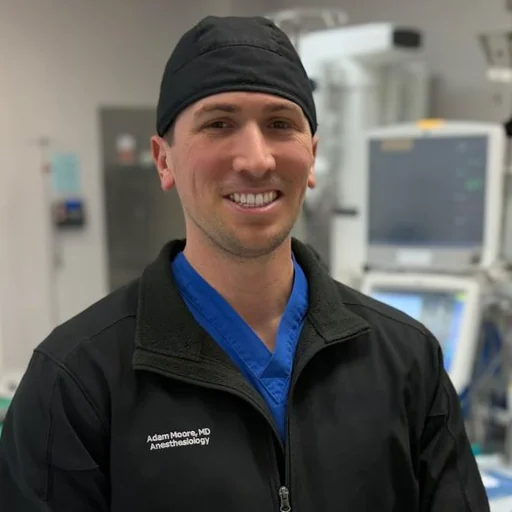
Practicing anesthesiologist with experience across MD-only, medical supervision of CRNAs, and medical direction of CAAs. Founded AnesthesiaJobs.com to help anesthesia professionals find the best job for their personal and professional life.
More about Adam →