Continuing Education for Anesthesia Providers: CE by Role

Quick Facts
- CRNA recertification: 100 total credits per 4-year cycle — 60 Class A (MAC Ed) + 40 Class B (MAC Dev), plus core modules and assessment (NBCRNA, 2026)
- CRNA program transition: NBCRNA is moving from the CPC program to the Maintaining Anesthesia Certification (MAC) Program for 2026 cycles (NBCRNA, 2026)
- CAA recertification: 50 CME hours every 2 years — 40 Category I (anesthesia-specific) + 10 Category II — plus a periodic recertification exam (NCCAA, 2026)
- Anesthesiologist (MOCA 2.0): 250 CME credits over 10 years (125 by year 5), including 20 patient-safety credits, plus MOCA Minute and QI points (ABA, 2026)
- MOCA Minute: 120 questions/year (30 per quarter), worth up to 10 AMA PRA Category 1 credits annually (ABA/ASA, 2026)
- Top 2026 conferences: AANA Annual Congress (Boston, Aug 21–25), ASA ANESTHESIOLOGY (San Diego, Oct 16–20), AAAA Annual Conference (Denver, Apr 9–11)
If you work in anesthesia, continuing education in anesthesia isn't optional paperwork — it's the ongoing requirement that keeps your certification and license active, and each of the three provider roles runs on a completely different system. CRNAs recertify through the NBCRNA on a four-year cycle, CAAs register CME every two years with the NCCAA, and anesthesiologists maintain board certification through the ABA's MOCA 2.0 program over a rolling ten-year horizon. Knowing exactly what your role requires — and where the credits come from — saves you money, time, and last-minute panic. Whether you're mapping a career or already practicing, our exploring anesthesia careers hub frames how these roles fit together; this guide covers the CE that keeps each one current.
Below is a role-by-role breakdown of requirements, the best sources for credits, the top conferences to earn them, and how license renewal differs from board or certification maintenance.

Continuing Education Requirements by Role
Each credential has its own governing body, cycle length, and credit structure. Here's the side-by-side view.
| Role | Governing Body | Cycle | Core Requirement |
|---|---|---|---|
| CRNA | NBCRNA | 4 years | 100 credits: 60 Class A (MAC Ed) + 40 Class B (MAC Dev), core modules + assessment |
| CAA | NCCAA | 2 years (+ periodic exam) | 50 CME hours: 40 Category I + 10 Category II |
| Anesthesiologist | ABA (MOCA 2.0) | 10 years | 250 CME (125 by yr 5), 20 patient-safety credits, MOCA Minute, 50 QI points |
(Sources: NBCRNA, 2026; NCCAA, 2026; ABA, 2026)
CRNAs: The CPC/MAC Program
CRNAs recertify through the NBCRNA's Continued Professional Certification (CPC) program, which is transitioning to the Maintaining Anesthesia Certification (MAC) Program for 2026 cycles (NBCRNA, 2026). The four-year requirement totals 100 credits: 60 Class A credits (now branded MAC Ed) — assessed, anesthesia-specific education — plus 40 Class B credits (MAC Dev) for broader professional development. The cycle also includes core modules and an assessment component, and NBCRNA runs a two-year mid-cycle check-in to validate licensure and active practice status. NBCRNA typically opens the renewal window about five months before your cycle ends. CRNAs renewing in 2026 and 2027 still complete their CPC renewal requirements during the phased transition to MAC.
CAAs: NCCAA Recertification
CAAs maintain certification through the National Commission for Certification of Anesthesiologist Assistants (NCCAA). The core requirement is 50 hours of CME every two years, split into 40 hours of Category I anesthesia-specific CME and 10 hours of Category II general medicine or professional development (NCCAA, 2026). On top of the biennial CME, CAAs must periodically pass a recertification examination to demonstrate continued qualifications. Registration deadlines and fees apply each CME cycle, so calendar management matters. Because your scope is tied to certification, staying current is inseparable from staying employable — see our CAA scope of practice guide for how the two connect.
Anesthesiologists: ABA MOCA 2.0
Board-certified anesthesiologists maintain certification through the ABA's MOCA 2.0 program, built on four parts: an active state license, CME, the MOCA Minute, and quality-improvement (QI) activities (ABA, 2026). Over the 10-year cycle, you need 250 CME credits — with 125 earned by year five and the total evenly distributed — including 20 ABA-approved patient-safety credits. The MOCA Minute requires answering 120 questions per year (30 per quarter, capped at 30 per day), which itself yields up to 10 AMA PRA Category 1 credits annually — 2.5 per quarter for completing all 30 questions in the intended quarter. You also complete 50 QI points across the cycle. ASA members participate in MOCA Minute at no additional cost; non-members pay a $40 processing fee per completed quarter (ABA/ASA, 2026).
Where the Credits Come From
Regardless of role, your credits come from the same general menu — the trick is matching the source to the credit type your program requires:
- Conferences: The fastest way to bank a large block of credits and network at once (details below).
- Online courses & modules: Flexible, on-demand credit — ideal for Class B / Category II / general CME between conferences.
- Simulation training: High-value, hands-on education; often counts toward assessed/Category I requirements and patient-safety credits.
- Journal-based CME: Read-and-quiz articles from society journals — convenient for steady, low-cost credit accumulation.
- Quality improvement (QI): Required specifically for anesthesiologists (50 MOCA QI points), and increasingly valued across roles as practices emphasize measurable outcomes.
Because programs distinguish assessed/anesthesia-specific credits from general professional-development credits, always confirm a given activity's credit category before you count on it.
Best Conferences for Anesthesia CE in 2026
National meetings are the anchor of most providers' CE plans — dense credit, hands-on workshops, and the year's best networking:
- AANA Annual Congress — August 21–25, 2026, in Boston, MA. The premier CRNA event, with sessions and workshops built around CPC/MAC credit (AANA, 2026).
- ASA ANESTHESIOLOGY 2026 — October 16–20, 2026, at the San Diego Convention Center. The largest anesthesiologist meeting, offering deep CME and MOCA-relevant content (ASA, 2026).
- AAAA Annual Conference — April 9–11, 2026, at the Sheraton Denver Downtown. The premier CAA event, with lectures and hands-on workshops for NCCAA CME (AAAA, 2026).
State and regional society meetings supplement these, and many providers mix one national conference with online and journal CME to hit their totals efficiently.
How Employers Handle CME Time & Budget
CE is a real cost, and where you work shapes how much of it lands on you. Employed positions — especially at hospitals and academic centers — typically include a dedicated CME budget (often a set annual dollar amount) plus paid CME days, so conference registration, travel, and time off are covered. Private groups vary: some partners fund their own CME as a business expense, trading turnkey benefits for control. When you evaluate an offer, the CME allowance and CME days are negotiable line items worth quantifying — a point we cover in the context of total compensation across licensing and credentialing.
License Renewal vs. Board/Certification Maintenance
A common point of confusion: your state license and your certification/board status are separate obligations with separate CE rules.
- State license renewal is governed by your state board (of nursing for CRNAs, of medicine for anesthesiologists and CAAs) and usually carries its own periodic CE requirement — often in contact hours, sometimes with mandated topics like controlled substances, pain management, or human trafficking, which vary by state.
- Certification/board maintenance is governed by your national body (NBCRNA, NCCAA, or ABA) and follows the credit structures above.
The two overlap but aren't identical — a credit that satisfies your national recertification may or may not satisfy a state-specific mandate, and vice versa. This matters most for multi-state practitioners: if you're licensed in several states (common for locums and PRN providers), you must meet each state's individual CE mandates on top of your national requirement. CRNAs practicing across state lines should map these obligations carefully; our CRNA scope of practice by state guide is a useful starting point for state-by-state differences. Malpractice and risk education can also count toward some CE requirements — see our CRNA malpractice insurance guide for how coverage and continuing education intersect.
Staying ahead of CE isn't just compliance — it's how you sustain a long, healthy career and avoid the credential lapses that create unnecessary stress. For more on protecting your longevity in the field, our guide to anesthesiologist burnout covers the bigger picture.
Related Reading
- Licensing and Credentialing for Anesthesia Providers
- CRNA Scope of Practice by State
- CAA Scope of Practice Explained
- CRNA Malpractice Insurance Guide
Ready to find a role with a strong CME budget and CE support?
Browse Anesthesia Jobs on anesthesiajobs.com →
Employers differ widely in how they fund continuing education — compare openings on our exploring anesthesia careers hub, review the licensing and credentialing essentials, sign up for job alerts to catch roles with the best benefits first, or read more about Adam →
Frequently Asked Questions
How much continuing education do anesthesia providers need?
It depends on the role. CRNAs need 100 credits per four-year cycle through the NBCRNA (60 Class A/MAC Ed + 40 Class B/MAC Dev). CAAs register 50 CME hours every two years with the NCCAA (40 Category I + 10 Category II). Anesthesiologists complete 250 CME credits over 10 years under ABA MOCA 2.0, plus the MOCA Minute and 50 QI points. Each also has separate state license CE requirements.
What is the difference between the CPC and MAC programs for CRNAs?
The Continued Professional Certification (CPC) program is the NBCRNA's long-standing CRNA recertification framework, and it's transitioning to the Maintaining Anesthesia Certification (MAC) Program for 2026 cycles. The credit totals stay familiar — 100 credits per four-year cycle — with Class A credits rebranded as MAC Ed and Class B as MAC Dev. CRNAs renewing in 2026–2027 still complete their CPC renewal requirements during the phased transition.
Does continuing education for anesthesia count toward both my license and my board certification?
Not always. Your state license renewal and your national certification (NBCRNA, NCCAA, or ABA) are separate obligations. A credit may satisfy one but not the other, and states often mandate specific topics — like controlled substances or pain management — that national programs don't. Multi-state practitioners must meet each state's CE rules on top of their national recertification requirement.
What are the best conferences to earn anesthesia CE credits?
The top 2026 national meetings are the AANA Annual Congress (Boston, August 21–25) for CRNAs, ASA ANESTHESIOLOGY 2026 (San Diego, October 16–20) for anesthesiologists, and the AAAA Annual Conference (Denver, April 9–11) for CAAs. Each offers dense CME, hands-on workshops, and strong networking. Many providers pair one national conference with online and journal-based CME to reach their totals.
How do employers handle CME time and budget?
Employed roles — especially at hospitals and academic centers — usually include a set annual CME budget plus paid CME days, covering registration, travel, and time off. Private-group arrangements vary, with some partners funding CME as a business expense. When comparing offers, treat the CME allowance and CME days as negotiable line items and factor them into total compensation.
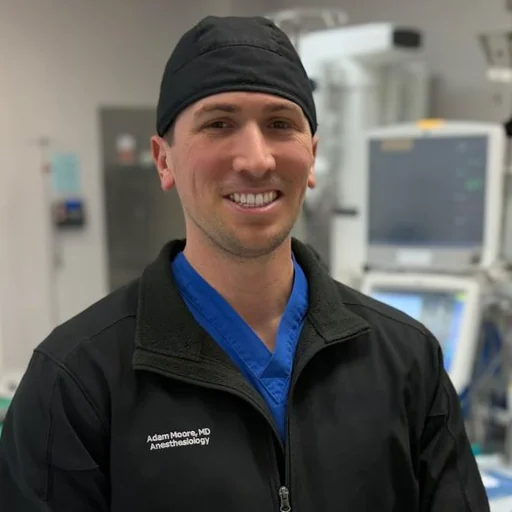
Practicing anesthesiologist with experience across MD-only, medical supervision of CRNAs, and medical direction of CAAs. Founded AnesthesiaJobs.com to help anesthesia professionals find the best job for their personal and professional life.
More about Adam →