CAA Scope of Practice: Where Can CAAs Practice in 2026?

Key Takeaways
- CAAs can currently practice in 24 jurisdictions — 22 states, Washington D.C., and Guam — plus all VA facilities nationwide - CAA scope of practice includes pre-anesthetic assessment, airway management, invasive monitoring, regional anesthesia, and emergency resuscitation — all under physician anesthesiologist direction - Four states added CAA practice authority since 2023: Nevada, Washington, Tennessee, and Virginia — with California and Kansas legislation pending in 2026
- CAAs earn a national average of $247,000–$253,000 (Becker’s/Marit Health, 2026), with top earners reaching $350,000+
- The profession is expanding rapidly, with 21+ accredited training programs and growing demand across hospitals, ASCs, and cardiac centers
If you’re exploring a career as a Certified Anesthesiologist Assistant — or you’re already a practicing CAA looking at your next opportunity — understanding CAA scope of practice is essential. Where you can work, what clinical duties you can perform, and how your practice is regulated all vary by state. The good news: the CAA profession is expanding faster than ever, with four new states authorizing practice since 2023 and additional legislation moving forward in 2026.
This comprehensive guide breaks down the current CAA scope of practice, maps every state where CAAs can practice, explains the difference between licensure and delegatory authority, and highlights the legislative momentum shaping the profession’s future. For a complete overview of CAA career opportunities, visit our CAA Jobs hub.
📊 Salary Data Sources & Freshness This guide cites data from multiple sources: the U.S. Bureau of Labor Statistics (BLS, May 2024 — latest government data), ZipRecruiter (2026 advertised salaries), Glassdoor, AMN Healthcare, SalaryDr, and other industry reports. Government salary surveys have a 12–18 month reporting lag. Current advertised salaries on job boards typically reflect real-time market conditions and may be higher. Anesthesia provider compensation has risen steadily over the past five years.
What Is CAA Scope of Practice?
CAA scope of practice defines the clinical duties, procedures, and responsibilities that Certified Anesthesiologist Assistants are authorized to perform. Unlike CRNAs — who can practice independently in many states — CAAs always work within the physician-led Anesthesia Care Team (ACT) model, under the medical direction of a licensed anesthesiologist.
This distinction is fundamental to understanding the CAA role. CAAs are not seeking independent practice; they are trained specifically to function as highly skilled extensions of the directing anesthesiologist. The Centers for Medicare and Medicaid Services (CMS) treats CAAs and CRNAs equivalently for reimbursement purposes, reflecting the comparable patient care responsibilities both roles carry within the care team.
Clinical Duties Within CAA Scope of Practice
According to the American Academy of Anesthesiologist Assistants (AAAA) and the American Society of Anesthesiologists (ASA), the CAA scope of practice includes but is not limited to:
| Clinical Responsibility | Description |
|---|---|
| Pre-anesthetic assessment | Obtain patient health history, perform physical examination, and document findings |
| Diagnostic studies | Draw arterial and venous blood samples; conduct and interpret lab work |
| Non-invasive monitoring | Establish standard monitoring (ECG, pulse oximetry, blood pressure, capnography) |
| Invasive monitoring | Place and interpret arterial lines, central venous catheters, and pulmonary artery catheters |
| Advanced monitoring | Apply and interpret BIS (bispectral index), transesophageal echocardiography, and other advanced modalities |
| Airway management | Perform mask ventilation, laryngeal mask airway placement, and endotracheal intubation |
| Regional anesthesia | Perform spinal, epidural, IV regional, nerve blocks, and local infiltration under direct physician supervision |
| Emergency resuscitation | Evaluate and treat life-threatening situations using BLS, ACLS, and PALS protocols |
| Anesthesia administration | Administer all forms of anesthetic medications, IV fluids, and blood products |
| Administrative duties | Manage personnel, supplies, and equipment in the anesthesiology department |
| Clinical instruction | Participate in training and mentoring CAA students |
The exact scope may vary based on the directing anesthesiologist’s preferences, the facility’s clinical protocols, and individual state regulations. However, the core clinical competencies are consistent across all practice states.
How CAA Scope of Practice Compares to CRNAs
Both CAAs and CRNAs perform similar clinical duties in the operating room — from pre-anesthetic assessment and airway management to administering anesthetics and monitoring patients throughout surgery. The key structural difference is the practice model:
| Factor | CAA | CRNA |
|---|---|---|
| Practice model | Always physician-directed (ACT model) | Independent practice in many states; also works in ACT model |
| Regulatory authority | State Board of Medicine | State Board of Nursing |
| Education pathway | Pre-med bachelor’s + master’s (24–28 months) | BSN + ICU experience + DNP/master’s (3–4 years) |
| Practice states | ~22 states + D.C. + Guam | All 50 states + D.C. |
| Certification body | NCCAA (National Commission for Certification of Anesthesiologist Assistants) | NBCRNA |
| CMS reimbursement | Equivalent to CRNA | Equivalent to CAA |
For a detailed comparison of these two rewarding careers, see our CAA vs CRNA guide.
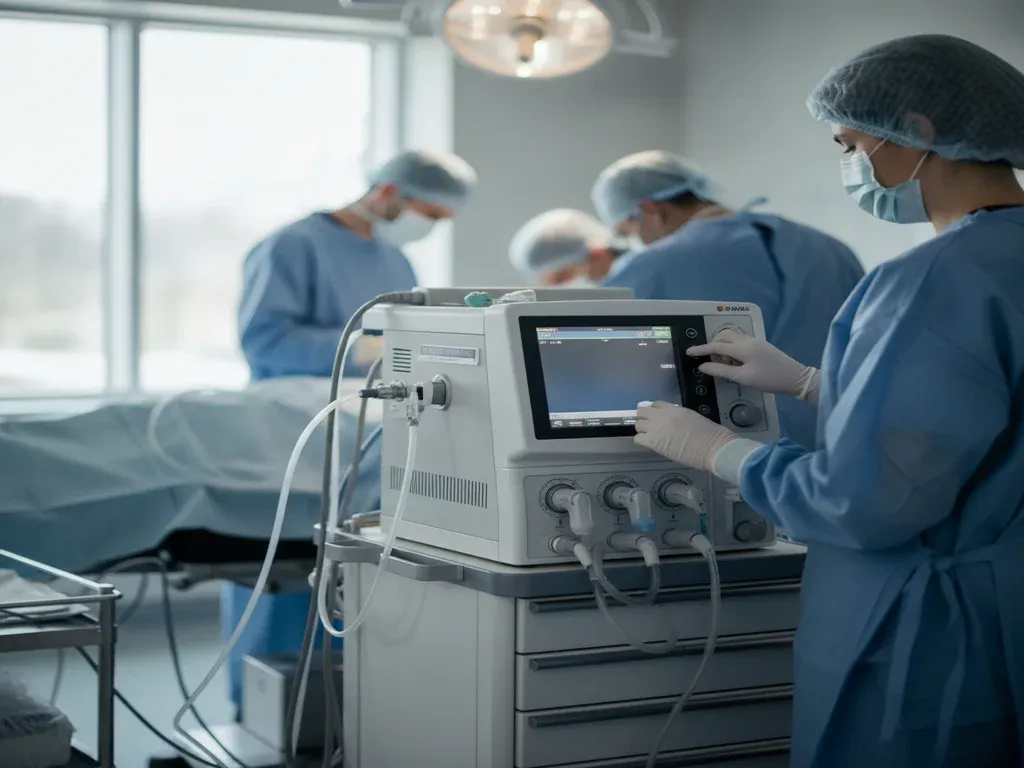
Where Can CAAs Practice in 2026? Complete State Map
As of 2026, CAAs are authorized to practice in 24 jurisdictions — 22 states, Washington D.C., and the U.S. territory of Guam. In addition, CAAs can work at any Veterans Affairs (VA) facility nationwide, regardless of state licensure laws.
States with CAA Licensure
The majority of CAA-authorizing states have enacted formal licensure laws, meaning CAAs are licensed and regulated through the state’s Board of Medicine:
| State | Authorization Type | Notable Details |
|---|---|---|
| Alabama | Licensure | Home to Bluefield University’s CAA program at VCOM-Auburn |
| Colorado | Licensure | Nova Southeastern University program in Centennial |
| District of Columbia | Licensure | Case Western Reserve University program based here |
| Florida | Licensure | Major CAA employment hub; multiple NSU program campuses (Fort Lauderdale, Tampa, Jacksonville, West Palm Beach) |
| Georgia | Licensure | Home to Emory University — one of the original CAA programs (est. 1969); strong cardiac anesthesia market |
| Indiana | Licensure | Indiana University School of Medicine program |
| Kentucky | Licensure | Requires CAA to also hold PA-C certification |
| Missouri | Licensure | UMKC program; Kansas City University opening new program in 2026 |
| Nevada | Licensure | New — authorized 2023 |
| New Mexico | Licensure | University of New Mexico program (est. 2023); expanded geographic and supervision ratios in 2023 |
| North Carolina | Licensure | Strong hospital system demand |
| Ohio | Licensure | Case Western Reserve and Ohio Dominican and NEOMED programs |
| Oklahoma | Licensure | Growing CAA demand |
| South Carolina | Licensure | Updated 2025 — supervision ratio expanded to 1:4 |
| Tennessee | Licensure | New — authorized May 2025; Lipscomb University launching state’s first CAA program |
| Utah | Licensure | New — authorized 2024 |
| Vermont | Licensure | Smaller market with growing access needs |
| Virginia | Licensure | New — authorized March 2025, effective July 2025 |
| Washington | Licensure | New — authorized 2024 |
| Wisconsin | Licensure | Medical College of Wisconsin program |
States with Delegatory Authority
In four states, CAAs practice through physician delegation rather than formal licensure. Under delegatory authority, the state’s Board of Medicine or medical practice act grants anesthesiologists the legal right to delegate specific anesthesia tasks to qualified CAAs:
| State | Authorization Type | How It Works |
|---|---|---|
| Kansas | Delegatory authority | Licensing bill introduced in 2025 — formal licensure framework may be coming |
| Michigan | Delegatory authority | Practice authorized through Board of Medicine delegation |
| Pennsylvania | Delegatory authority | Practice authorized through Board of Medicine delegation |
| Texas | Delegatory authority | Large market with multiple Case Western Reserve program sites (Houston, Austin) |
Federal Practice: VA Facilities Nationwide
CAAs are classified as GS-0601 (General Health Science Series) employees under the U.S. Office of Personnel Management and are authorized to work at all Veterans Affairs (VA) hospitals and Department of Defense facilities under the TRICARE health system. This means a CAA can practice at a VA facility in any state — even states that haven’t yet enacted CAA licensure legislation.
This federal authorization provides an important practice pathway for CAAs who want to serve veterans and military families while building clinical experience in states that are still working toward formal licensure.
CAA Scope of Practice by Setting
CAA scope of practice remains consistent in its core functions, but the day-to-day clinical experience varies significantly depending on the work setting.
Hospitals and Academic Medical Centers
The majority of CAAs work in hospital environments, including large academic medical centers and community hospitals. In these settings, CAAs typically:
- Provide anesthesia for a full spectrum of surgical specialties
- Participate in trauma call and emergency coverage
- Work alongside anesthesiology residents and fellows
- Manage complex cases including cardiac, neuro, and transplant surgery
- Contribute to quality improvement and safety initiatives
Academic medical centers — particularly those affiliated with CAA training programs like Emory University, Case Western Reserve, and Indiana University — offer structured mentorship and exposure to the most complex cases.
Ambulatory Surgery Centers (ASCs)
The ambulatory surgery market is one of the fastest-growing segments in healthcare, and CAAs are increasingly part of ASC anesthesia teams. In outpatient settings, CAAs typically handle:
- High-volume, same-day procedures (orthopedics, GI, ophthalmology, pain management)
- Efficient room turnover and case management
- Sedation and general anesthesia for procedures of shorter duration
- Pre-operative and post-operative patient management
Cardiac Surgery Centers
CAAs have a strong legacy in cardiac anesthesia — the profession originated at Emory University, one of the nation’s premier cardiac surgery programs. Cardiac-focused CAAs manage:
- Cardiopulmonary bypass monitoring and management
- Transesophageal echocardiography (TEE)
- Complex invasive hemodynamic monitoring
- High-acuity patients with multiple comorbidities
Cardiac subspecialty work also tends to come with a salary premium. CAAs in cardiac anesthesia settings earn approximately $264,000–$328,000 (Emory, 2026), well above the national average.
For a deeper dive into CAA work environments, see our guide to CAA work settings.
CAA Scope of Practice: Recent Legislative Expansion
The CAA profession has experienced remarkable legislative momentum in recent years. Between 2023 and 2025, four states authorized CAA practice for the first time, and several existing states expanded supervision ratios or practice parameters.
2023–2025 Legislative Wins
| Year | State | Action |
|---|---|---|
| 2023 | Nevada | New CAA licensure enacted |
| 2023 | New Mexico | Expanded geographic scope and supervision ratios |
| 2024 | Utah | New CAA licensure enacted |
| 2024 | Washington | New CAA licensure enacted |
| 2025 | Tennessee | New CAA licensure signed by Gov. Bill Lee (May 2025) |
| 2025 | Virginia | CAA practice authority enacted (effective July 2025) |
| 2025 | South Carolina | Supervision ratio expanded from 1:3 to 1:4 |
Pending Legislation in 2026
Several states have active legislation that could further expand CAA practice:
- California — Assembly Bill 985 was introduced in April 2025 to authorize CAA practice. If passed, California would represent the single largest new market for CAAs in the country.
- Kansas — A bill to create a formal licensing and regulation framework for CAAs (replacing the current delegatory authority model) was introduced in 2025 and referred to the Health and Human Services Committee.
- New York — Assembly Bill A1072 was introduced in 2025 to establish CAA licensure and a state committee for anesthesiologist assistants.
- Maryland — Testimony in support of CAA practice authority was presented in the 2026 legislative session.
The American Society of Anesthesiologists (ASA) and the American Academy of Anesthesiologist Assistants (AAAA) continue to advocate for CAA practice authorization in all 50 states. In 2025 alone, 13 states considered CAA licensure or ratio expansion legislation (ASA Monitor, 2025).
Why States Are Expanding CAA Scope of Practice
The rapid expansion reflects several converging factors:
- Anesthesia workforce shortage: Demand for anesthesia services is outpacing the supply of both physician anesthesiologists and CRNAs, driven by an aging population and growing surgical volumes.
- Proven safety record: Research published in Anesthesiology (ASA’s official journal) demonstrates that Anesthesia Care Team composition — including teams with CAAs — does not negatively impact surgical outcomes.
- Cost-effective care delivery: CAAs provide high-quality anesthesia within the ACT model, enabling anesthesiologists to medically direct multiple rooms and increase access to care.
- Growing training pipeline: With 21+ accredited programs (and new programs launching at Kansas City University, Lipscomb University, and others), the CAA workforce is scaling to meet demand.
CAA Compensation Across Practice States
Understanding where CAAs can practice is closely tied to understanding where the best compensation opportunities exist. Salaries vary by state, setting, and experience level.
National CAA Salary Overview
| Source | Reported Figure | Year |
|---|---|---|
| Becker’s / Marit Health | $247,000–$253,000 (national average) | 2026 |
| AAAA Compensation Survey | $158,000–$240,000 (range) | 2025 |
| Glassdoor | ~$291,000 (average) | 2026 |
| ZipRecruiter (90th percentile) | $333,500 | 2026 |
| Top earners / ceiling | Up to $350,000 | BagMask, Q1 2026 |
| Cardiac anesthesia premium | $264,000–$328,000 | Emory, 2026 |
| Market hourly rate (permanent) | $200–$275/hr | 2026 |
| New grad starting salary | $200,000–$250,000 | 2026 |
| Locum tenens rate | $200–$275/hr | 2026 |
Compensation by State Characteristics
While state-by-state CAA salary data is more limited than CRNA data (due to the smaller workforce), several patterns emerge:
- High-volume surgical states (Florida, Georgia, Ohio, Texas) offer strong demand and competitive base salaries
- Newly authorized states (Tennessee, Virginia, Washington) may offer signing bonuses and premium rates to attract the first wave of CAAs
- Cardiac surgery hubs (Georgia/Emory, Ohio/Cleveland Clinic corridor) offer the highest compensation ceilings
- States with CAA training programs tend to have the deepest employment markets and established career pathways
For detailed state-by-state salary data, see our CAA salary by state guide.
How to Become a CAA: Education and Certification
To practice within the CAA scope of practice, you must complete a specific educational and certification pathway. Here’s a quick overview:
Education Requirements
| Step | Details |
|---|---|
| Bachelor’s degree | Any field; pre-med prerequisites required (biology, chemistry, physics, organic chemistry, math) |
| Entrance exam | GRE or MCAT (MCAT preferred by most programs) |
| CAA master’s program | 24–28 months; accredited by CAAHEP |
| Clinical hours | 2,000–2,700+ hours during program |
| Program base | Must be affiliated with a medical school |
Certification
Upon completing an accredited program, graduates sit for the certifying examination administered by the National Board of Medical Examiners (NBME) through the National Commission for Certification of Anesthesiologist Assistants (NCCAA). To maintain certification, CAAs must:
- Complete 40 hours of anesthesia-specific CME every two years
- Pass the Continued Demonstration of Qualifications (CDQ) examination every six years
There are currently 21+ accredited CAA programs across the United States, with new programs launching regularly to meet growing demand. For the full pathway breakdown, see our how to become a CAA guide.

CAA Job Outlook and Future of Scope of Practice
The trajectory for CAA scope of practice is decidedly positive. With the profession going from 17 practice states just a few years ago to 22+ states in 2026 — and with active legislation in California, New York, Kansas, and Maryland — the geographic footprint is expanding rapidly.
Key Trends Shaping CAA Scope of Practice
- State-by-state expansion continues: The ASA is actively lobbying for CAA authorization in all 50 states. The pace of new state authorizations has accelerated, with four states added in just two years (2023–2025).
- Supervision ratios are increasing: South Carolina’s expansion to a 1:4 ratio in 2025 signals a broader trend toward trusting CAAs with greater autonomy within the ACT model.
- Program growth feeds workforce growth: New CAA training programs at Kansas City University (2026), Lipscomb University (2025), and others ensure a growing pipeline of qualified graduates entering the workforce.
- Federal recognition strengthens the profession: CAA eligibility at all VA and DoD facilities provides a nationwide floor of practice opportunity regardless of individual state laws.
For a complete analysis of CAA career growth projections, see our CAA job outlook guide.
How to Find CAA Jobs in Your State
Whether you’re a new graduate or an experienced CAA looking to relocate, here are practical steps to find positions in CAA-authorized states:
- Browse CAA-specific job listings on AnesthesiaJobs.com — our dedicated CAA jobs page aggregates opportunities across all practice states.
- Target high-demand markets: Florida, Georgia, Ohio, and Texas have the largest established CAA workforces and the most consistent openings.
- Watch newly authorized states: Tennessee, Virginia, and Washington are actively recruiting CAAs as their licensure frameworks take effect. Early movers may benefit from signing bonuses and premium compensation.
- Consider locum tenens: Locum CAA positions pay $200–$275/hr and offer the flexibility to practice in multiple states while building your clinical experience. See our guide to CRNA scope of practice by state for a comparison of how scope varies for different anesthesia providers.
- Leverage VA opportunities: If you’re in a non-CAA state, VA facilities offer a practice pathway while you wait for state legislation to pass.
Related Reading
- How to Become a CAA: Complete Career Guide
- CAA vs CRNA: Career Comparison
- CAA Job Outlook: Growth, Demand & Opportunities
- CAA Work Settings: Where Do CAAs Practice?
- CRNA Scope of Practice by State
- Exploring Anesthesia Careers
CTA: Browse CAA Jobs on AnesthesiaJobs.com Browse CAA Jobs →
Frequently Asked Questions
What states can CAAs practice in as of 2026?
CAAs can practice in 24 jurisdictions: Alabama, Colorado, District of Columbia, Florida, Georgia, Indiana, Kansas (delegatory authority), Kentucky, Michigan (delegatory authority), Missouri, Nevada, New Mexico, North Carolina, Ohio, Oklahoma, Pennsylvania (delegatory authority), South Carolina, Tennessee, Texas (delegatory authority), Utah, Vermont, Virginia, Washington, and Wisconsin. CAAs can also practice in the U.S. territory of Guam and at any Veterans Affairs facility nationwide.
What is included in CAA scope of practice?
CAA scope of practice includes pre-anesthetic patient assessment, airway management, establishment of invasive and non-invasive monitoring, administration of all forms of anesthesia medications, regional anesthesia procedures (spinal, epidural, nerve blocks) under direct physician supervision, advanced monitoring interpretation, and emergency resuscitation using BLS, ACLS, and PALS protocols. All duties are performed under the medical direction of a licensed physician anesthesiologist.
Can CAAs practice independently without an anesthesiologist?
No. CAAs are trained and licensed to practice exclusively within the physician-led Anesthesia Care Team (ACT) model. A directing anesthesiologist must be present and available to medically direct the CAA’s work. This is a defining feature of the CAA profession and is consistent across all practice states.
How much do CAAs earn in 2026?
CAAs earn a national average of $247,000–$253,000 (Becker’s/Marit Health, 2026), with Glassdoor reporting approximately $291,000. New graduates typically start at $200,000–$250,000, while top earners can reach $333,500 (ZipRecruiter 90th percentile, 2026) to $350,000+ (BagMask, Q1 2026). Cardiac anesthesia specialists at institutions like Emory earn $264,000–$328,000. Locum tenens CAAs earn $200–$275/hr.
Is CAA scope of practice expanding?
Yes. The CAA profession has experienced significant expansion, with four new states (Nevada, Washington, Tennessee, and Virginia) authorizing practice between 2023 and 2025. Active legislation in California, New York, Kansas, and Maryland could add additional states in the near future. South Carolina also expanded its supervision ratio to 1:4 in 2025. The ASA and AAAA continue to advocate for CAA practice authorization in all 50 states.
Practicing anesthesiologist with experience across MD-only, medical supervision of CRNAs, and medical direction of CAAs. Founded AnesthesiaJobs.com to help anesthesia professionals find the best job for their personal and professional life.
More about Adam →