CAA Job Outlook 2026: Growth, Demand & Salary Trends

Key Takeaways
- CAA employment is projected to grow 26.6% over the next decade — far outpacing the national average for all occupations - 22 states plus D.C. and Guam now authorize CAA practice, with California, Maryland, New York, and Minnesota pursuing legislation
- National average CAA compensation ranges from $247,000–$253,000 (Becker’s/Marit Health, 2026), with top earners reaching $350,000+
- The AAMC projects a shortfall of 8,000–12,000 anesthesiologists by the mid-2030s, driving unprecedented demand for CAAs in the anesthesia care team model
- New CAA programs are opening across the country, expanding the pipeline to meet surging demand
If you’re researching the CAA job outlook, the short answer is remarkably promising. Certified Anesthesiologist Assistants are riding a wave of legislative momentum, workforce shortages, and growing recognition of the anesthesia care team model. Whether you’re a pre-med student considering the profession, a current CAA evaluating your market value, or a healthcare administrator exploring staffing solutions, this guide delivers the data you need. Start by browsing current openings on our CAA Jobs board to see what the market looks like right now.
The demand for anesthesia services has never been higher — and supply simply cannot keep up. As surgical volumes climb and an aging physician workforce heads toward retirement, hospitals and ambulatory surgery centers are turning to team-based care models that rely heavily on CAAs. This creates a career landscape that’s extraordinarily favorable for current and future Certified Anesthesiologist Assistants.
This guide covers everything shaping the CAA job outlook in 2026 and beyond: projected job growth, the anesthesia workforce shortage, state-by-state licensure expansion, salary trends, and practical advice for positioning yourself in this accelerating market.
📊 Salary Data Sources & Freshness This guide cites data from multiple sources: the U.S. Bureau of Labor Statistics (BLS, May 2024 — latest government data), ZipRecruiter (2026 advertised salaries), Glassdoor, AMN Healthcare, SalaryDr, and other industry reports. Government salary surveys have a 12–18 month reporting lag. Current advertised salaries on job boards typically reflect real-time market conditions and may be higher. Anesthesia provider compensation has risen steadily over the past five years.
CAA Job Outlook: Growth Projections Through 2032
The numbers paint a clear picture. Market data projects that CAA employment will grow by 26.6% over the next decade (CareerExplorer, 2026) — a growth rate that dramatically exceeds the national average for all occupations. CollegeBoard’s BigFuture projects roughly 188,300 anesthesiologist assistant positions within five years, reflecting a 12.25% near-term growth rate.
Several converging forces are fueling this expansion:
- Surgical volume growth: Demand for surgeries is projected to increase 2–3% per year over the next decade (ScienceDirect, 2024), driven by an aging population, expanding outpatient procedures, and new surgical technologies.
- Anesthesiologist workforce contraction: Nearly 30% of practicing anesthesiologists are expected to leave the workforce by 2033 (Becker’s, 2025), creating massive gaps that team-based models must fill.
- Legislative momentum: Every year, additional states pass CAA licensure legislation, expanding the geographic footprint of the profession.
- Cost-effective care delivery: Hospitals recognize that anesthesia care teams — an anesthesiologist supervising CAAs — deliver high-quality, cost-efficient anesthesia services that support growing surgical caseloads.
How CAA Growth Compares to Other Anesthesia Providers
| Provider | Projected Growth | Time Frame | Current Workforce |
|---|---|---|---|
| CAA | ~26.6% | Next decade | Growing rapidly |
| CRNA | 38% | 2022–2032 | ~47,810 (BLS) |
| Anesthesiologist | 3.2–4% | 2024–2034 | ~45,300 (BLS) |
All three anesthesia provider roles enjoy positive job growth, but CAAs and CRNAs are experiencing the most dramatic expansion. The slower physician growth rate reflects the lengthy training pipeline (12+ years) and retirement trends — which only amplifies the need for non-physician anesthesia providers. For a broader look at the entire field, see our anesthesia job outlook guide.

The Anesthesia Workforce Shortage: Why CAA Demand Is Surging
The CAA job outlook cannot be understood without grasping the scale of the anesthesia workforce shortage. Consider these data points:
- 78% of healthcare facilities reported an anesthesia staffing shortage in 2023 — more than double the pre-pandemic figure of 35% (Texas Hospital Association)
- The AAMC estimates a shortfall of 8,000–12,000 anesthesiologists by the mid-2030s, representing roughly 20–30% of the current physician anesthesiologist workforce (ASA Monitor, 2026)
- A 2025 Medicus Healthcare Solutions white paper projects a shortage of 6,300 anesthesiologists by 2036
- 59% of anesthesiologists surveyed expressed concern about workforce sustainability
“We’re seeing the care team model approach becoming more widely adopted, and CAAs play a crucial role in that approach,” explains Teresa Thompson, Vice President of Sales at Hayes Locums. “They function as a right-hand person of the anesthesiologist, by taking on some of the caseloads that enable the anesthesiologist to focus on more complex cases” (Hayes Locums, 2026).
What This Means for CAAs
The shortage creates a seller’s market for qualified CAAs:
- Multiple job offers upon graduation are increasingly common
- Signing bonuses and relocation packages are standard in competitive markets
- Salary growth continues to outpace inflation as facilities compete for talent
- Negotiating leverage is strong for both permanent and locum tenens positions
This dynamic is expected to intensify through at least the mid-2030s as the anesthesiologist shortage deepens. For current CAA students, this means graduating into one of the strongest job markets any healthcare profession has ever seen.
State Licensure Expansion: Opening New Markets for CAAs
One of the most exciting dimensions of the CAA job outlook is the ongoing expansion of state licensure. As of mid-2026, 22 states plus the District of Columbia and Guam authorize CAA practice — and the list continues to grow.
States Where CAAs Can Currently Practice
| Category | States |
|---|---|
| Full licensure | Alabama, Colorado, Florida, Georgia, Indiana, Missouri, Nevada, New Mexico, North Carolina, Ohio, Oklahoma, South Carolina, Tennessee, Utah, Vermont, Virginia, Washington, Wisconsin |
| Delegatory authority | Kansas, Michigan, Texas |
| Requires additional licensure | Kentucky (PA licensure also required) |
| Territory | Guam, District of Columbia |
Recent Legislative Wins (2025–2026)
The pace of CAA licensure expansion has accelerated dramatically:
- Tennessee — Governor Bill Lee signed CAA licensure legislation in May 2025, authorizing practice in physician-led anesthesia care teams
- Virginia — CAAs were granted practice authority in March 2025, effective July 2025, becoming the 22nd state
- South Carolina — Updated its practice ratio to 1:4 for CAAs, expanding capacity
Pending Legislation
Several high-impact states are actively pursuing CAA authorization:
- California — Legislators introduced a bill in April 2025 to allow CAA practice, which would represent a massive expansion of the profession’s geographic reach
- Maryland — A 2026 bill seeks to add Maryland to the growing list of CAA-licensing states
- New York — Assembly Bill A1072 would establish licensure of anesthesiologist assistants
- Minnesota — The Minnesota Medical Association has publicly supported CAA licensure to address workforce shortages
- Kansas — A bill introduced in February 2025 would create a formal licensing and regulation system for CAAs
If California — the nation’s largest state by population — passes CAA licensure, it would represent a transformative moment for the profession. Each new state that authorizes practice opens hundreds of potential positions for CAAs.
To learn more about what CAA practice looks like in each state, explore our CAA scope of practice guide.
CAA Salary Trends: Compensation Keeps Climbing
Strong demand and limited supply mean one thing for compensation: upward pressure. The CAA job outlook for salary growth is as encouraging as the employment projections.
Current CAA Compensation Snapshot (2025–2026)
| Source | Compensation Figure |
|---|---|
| National Average | $247,000–$253,000 (Becker’s/Marit Health, 2026) |
| AAAA Survey Range | $158,000–$240,000 (2025) |
| Glassdoor Average | ~$291,000 (2026) |
| ZipRecruiter 90th Percentile | $333,500 (2026) |
| Top Earners / Ceiling | Up to $350,000 (BagMask, Q1 2026) |
| Cardiac Anesthesia Premium | $264,000–$328,000 (Emory, 2025) |
| Market Hourly Rate | $200–$275/hr (permanent, 2026) |
| New Graduate Starting Salary | $200,000–$250,000 |
| Locum Tenens Rate | $200–$275/hr |
The wide range across sources reflects differences in methodology — the AAAA survey captures base salary self-reports while Glassdoor and job board data include total compensation and advertised rates. What matters is the trend: CAA compensation has risen consistently and shows no signs of plateauing.
Key Salary Trends
- The new salary ceiling is $350,000. BagMask’s Q1 2026 analysis of advertised CAA positions found salaries reaching this level — up significantly from just a few years ago.
- Cardiac anesthesia commands a premium. Emory’s cardiac anesthesia team was advertising $264,000–$328,000 in 2025, reflecting the complexity and specialized demand of cardiac cases.
- Rising pay floors. States like Missouri and Nevada are seeing higher minimum advertised salaries, suggesting that competition for CAAs is tightening the bottom of the pay range.
- Locum tenens is lucrative. CAAs earning $200–$275/hr on locum assignments can gross well over $300,000 annually while enjoying geographic flexibility.
For a complete state-by-state breakdown of CAA compensation, see our CAA Salary by State guide.
New CAA Programs: Expanding the Pipeline
The educational pipeline for CAAs is growing to meet demand, with several new programs launching in 2025–2026:
- Kansas City University — Officially opened admissions for its Master of Health Science in Anesthesiologist Assistant program in September 2025, with a January 2026 launch at the Farber-McIntire Campus in Joplin, Missouri
- Lipscomb University — Announced Nashville’s first CAA master’s program in April 2025, ahead of Tennessee’s authorization of CAA practice
- Existing programs continue to expand class sizes at institutions like Emory University, Case Western Reserve, South University, and Nova Southeastern University
The expansion of training programs is a strong signal that educational institutions see long-term demand for CAAs. For prospective students, the growing number of programs means more options — and more geographic diversity in training locations.
To learn about the path to becoming a CAA, read our how to become a CAA guide. For a comparison of available training programs, see our CAA programs overview.
CAA Job Outlook by Practice Setting
Where you practice as a CAA significantly affects both your daily experience and your earning potential. Here’s how the job outlook varies across settings:
Hospital-Based Positions
Hospitals remain the largest employer of CAAs, particularly in surgical departments and cardiac programs. The shortage of anesthesiologists has pushed hospitals to adopt the anesthesia care team model aggressively, creating robust demand for CAAs in:
- Academic medical centers — Teaching hospitals with complex cases and training programs
- Community hospitals — Growing need in both urban and suburban facilities
- Cardiac surgery programs — Among the highest-compensating settings, with salaries of $264,000–$328,000 (Emory, 2025)
Ambulatory Surgery Centers (ASCs)
The rapid growth of outpatient surgery is creating new opportunities for CAAs. ASCs perform an increasing share of procedures that once required hospital stays, and they need skilled anesthesia providers to maintain throughput.
Rural and Underserved Communities
Rural hospitals face some of the most acute anesthesia shortages. CAAs who are willing to work in rural or underserved areas often find:
- Higher compensation to offset geographic disadvantages
- Greater autonomy within the care team structure
- Signing bonuses and student loan assistance as recruitment incentives
“There are locum assignments available across all of the states where CAAs can practice. Many of those assignments tend to be in more rural communities, but if you’re willing to travel, there are a lot of opportunities out there,” notes Hayes Locums’ Teresa Thompson.
Locum Tenens
The locum tenens market for CAAs is booming. With rates of $200–$275/hr and assignments typically running six months or longer, locum work offers:
- Premium compensation above permanent positions
- Geographic flexibility to explore different states and practice environments
- Work-life balance with the ability to schedule time off between assignments
Hayes Locums reports that anesthesia is their single highest-demand APP specialty, with half their entire APP team dedicated to anesthesia placements (Hayes Locums, 2026).

How to Position Yourself in This Growing Market
With the CAA job outlook so favorable, smart positioning can help you maximize your opportunities and compensation.
For Current CAA Students
- Build cardiac and subspecialty experience during clinical rotations — these skills command the highest compensation premiums
- Network with anesthesiologist mentors who work in team-based practices
- Research state licensure trends and target states with strong demand and favorable practice environments
- Start exploring opportunities early — many employers recruit 6–12 months before graduation
For Practicing CAAs
- Evaluate your market value against current compensation benchmarks — if you’re earning below $247,000–$253,000 (the national average per Becker’s/Marit Health, 2026), it may be time to negotiate or explore new positions
- Consider locum tenens assignments to boost income or test new practice settings
- Stay informed about legislative developments — newly licensed states represent first-mover opportunities with potentially higher compensation
- Pursue cardiac or specialized training to access premium-paying positions
For Pre-Med Students Considering the CAA Path
The CAA profession offers an attractive combination of strong compensation ($200,000–$250,000+ starting), excellent job security, and a faster path to practice compared to the physician anesthesiologist route. With new grad starting salaries of $200,000–$250,000 and a master’s-level training program of approximately 24–28 months, the return on investment is compelling.
Learn more about the educational pathway in our how to become a CAA guide.
CAA Job Outlook Compared to CRNA and Anesthesiologist Careers
All three anesthesia provider roles offer outstanding career prospects. Here’s how they compare:
| Factor | CAA | CRNA | Anesthesiologist |
|---|---|---|---|
| Job Growth | ~26.6% (next decade) | 38% (2022–2032) | 3.2% (2024–2034) |
| National Avg Salary | $247,000–$253,000 (Becker’s/Marit Health, 2026) | $223,210 median (BLS, 2024) / $260,000 advertised (ZipRecruiter, 2026) | $336,640 mean base (BLS, 2024) / $535,000 total comp median (SalaryDr, 2026) |
| Starting Salary | $200,000–$250,000 | $220,000–$260,000 | ~$377,000+ (AMN Healthcare, 2025) |
| Top Earners | $333,500–$350,000 | $394,500 (ZipRecruiter, 2026) | $569,729 avg total comp (SalaryDr, 2026) |
| Locum Rates | $200–$275/hr | $200–$325+/hr | $300–$450/hr |
| Practice States | ~20 states + D.C. | All 50 states | All 50 states |
| Training Duration | ~6–7 years total (post-high school) | ~7–8 years total | 12+ years total |
| Practice Model | Physician-led anesthesia care team | Independent or care team (varies by state) | Independent or care team lead |
Each role has unique strengths. CAAs benefit from strong compensation, rapid job growth, and an expanding geographic footprint. CRNAs offer practice in all 50 states and growing independent practice authority. Anesthesiologists command the highest total compensation and lead care teams.
The right choice depends on your educational background, career goals, and personal preferences — not on which role is “better.” All three are essential to solving the anesthesia workforce challenge.
Related Reading
- How to Become a CAA: Complete Guide
- CAA Salary by State: 2026 Complete Guide
- Anesthesia Job Outlook: 2026 Market Overview
- CAA Scope of Practice by State
- CAA Programs: Where to Train
CTA: Browse CAA Jobs on AnesthesiaJobs.com Browse CAA Jobs →
Frequently Asked Questions
What is the job outlook for CAAs in 2026?
The CAA job outlook is exceptionally strong. Employment is projected to grow approximately 26.6% over the next decade, far exceeding the national average for all occupations. The combination of an anesthesiologist shortage (an estimated 8,000–12,000 shortfall by the mid-2030s), expanding state licensure, and growing surgical volumes ensures robust demand for CAAs through at least the 2030s.
How much do CAAs make in 2026?
CAAs earn a national average of $247,000–$253,000 (Becker’s/Marit Health, 2026). Glassdoor reports an average of approximately $291,000, while top earners reach $333,500 (ZipRecruiter 90th percentile) to $350,000 (BagMask, Q1 2026). Cardiac anesthesia specialists at institutions like Emory earn $264,000–$328,000. New graduate starting salaries range from $200,000–$250,000.
How many states allow CAAs to practice?
As of mid-2026, 22 states plus the District of Columbia and Guam authorize CAA practice. Recent additions include Tennessee and Virginia (both 2025). Several high-impact states — including California, Maryland, New York, and Minnesota — are actively pursuing CAA licensure legislation, which would significantly expand the profession’s geographic reach.
Is the CAA profession growing faster than CRNA or anesthesiologist careers?
All three roles are growing, but at different rates. CAA employment is projected to grow ~26.6% over the next decade, CRNAs are projected to grow 38% from 2022–2032, and anesthesiologist employment is expected to grow 3.2% from 2024–2034. The slower physician growth rate reflects the lengthy training pipeline and retirement trends, which only amplifies the need for non-physician anesthesia providers like CAAs and CRNAs.
What is driving the demand for CAAs?
Several factors are driving CAA demand: a critical anesthesia workforce shortage (78% of facilities reported shortages in 2023), surgical volume growth of 2–3% per year, rapid expansion of outpatient surgery centers, legislative momentum for CAA licensure in new states, and the cost-effectiveness of the physician-led anesthesia care team model. As more anesthesiologists approach retirement — nearly 30% are expected to leave the workforce by 2033 — CAAs become essential to maintaining surgical capacity.
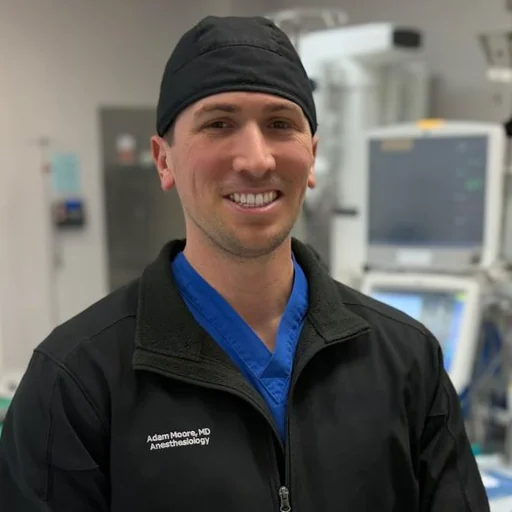
Practicing anesthesiologist with experience across MD-only, medical supervision of CRNAs, and medical direction of CAAs. Founded AnesthesiaJobs.com to help anesthesia professionals find the best job for their personal and professional life.
More about Adam →