CAA Programs: Complete List of Accredited Schools in 2026

Key Takeaways
- There are 18+ universities offering approximately 30 accredited CAA programs across 14 states and Washington, D.C. — with new programs launching in 2026 and beyond
- All CAA programs are accredited (or seeking accreditation) through the Commission on Accreditation of Allied Health Education Programs (CAAHEP)
- Most programs award a Master of Science degree and take 24–28 months to complete
- Typical admission requirements include a bachelor’s degree, 3.2+ GPA, GRE or MCAT scores, prerequisite science coursework, and clinical shadowing hours
- CAA graduates enjoy a national average salary of $247,000–$253,000 (Becker’s/Marit Health, 2026) with top earners reaching $350,000 (BagMask, Q1 2026) — and the job market is projected to grow 26.6% by 2032
Choosing the right school is one of the most important decisions you’ll make on your path to becoming a Certified Anesthesiologist Assistant. The number of CAA programs has expanded rapidly in recent years — growing from just a handful of schools a decade ago to roughly 30 program tracks across the country in 2026. That growth reflects surging demand for anesthesia providers and an increasingly bright outlook for the profession.
This guide provides the most comprehensive and up-to-date list of every accredited anesthesiologist assistant program available in 2026, organized by state. Whether you’re a pre-med student weighing your options or a career-changer exploring anesthesia careers, you’ll find everything you need to compare programs and start your application. For a step-by-step breakdown of the full career pathway, see our How to Become a CAA guide.
📊 Salary Data Sources & Freshness This guide cites data from multiple sources: the U.S. Bureau of Labor Statistics (BLS, May 2024 — latest government data), ZipRecruiter (2026 advertised salaries), Glassdoor, AMN Healthcare, SalaryDr, and other industry reports. Government salary surveys have a 12–18 month reporting lag. Current advertised salaries on job boards typically reflect real-time market conditions and may be higher. Anesthesia provider compensation has risen steadily over the past five years.
How CAA Programs Are Accredited
Before diving into the full list, it’s important to understand how accreditation works for CAA programs — because it directly impacts your ability to sit for the national certifying exam and practice as a CAA.
All legitimate anesthesiologist assistant programs are accredited by the Commission on Accreditation of Allied Health Education Programs (CAAHEP) upon the recommendation of the Accreditation Review Committee for the Anesthesiologist Assistant (ARC-AA). Accreditation status falls into two categories:
- Awarded CAAHEP Accreditation — The program has completed the full accreditation review and is fully approved.
- Letter of Review / Seeking CAAHEP Accreditation — The program is in the process of earning accreditation. Students who enroll in these programs can still sit for the certifying exam upon graduation, provided accreditation is granted before or during their enrollment.
Most CAA programs participate in the CASAA (Centralized Application Service for Anesthesiologist Assistants), a common application portal managed by Liaison International. A few programs handle applications independently, so always check each school’s admissions page.
After completing an accredited program, graduates take the Certifying Examination for Anesthesiologist Assistants administered by the NCCAA in collaboration with the National Board of Medical Examiners (NBME). Recertification requires 40 hours of CME every two years and passage of a qualifying exam every six years.

Complete List of Accredited CAA Programs in 2026
The table below lists every CAAHEP-accredited (or accreditation-seeking) anesthesiologist assistant program participating in the 2026–2027 application cycle. Programs are listed alphabetically by university.
| University | Campus Location(s) | Degree | CAAHEP Status | Application |
|---|---|---|---|---|
| Case Western Reserve University | Cleveland, OH · Houston, TX · Washington, D.C. | Master of Science in Anesthesia (MSA) | Accredited | CASAA |
| Emory University School of Medicine | Atlanta, GA | Master of Medical Science (MMSc) | Accredited | CASAA |
| Indiana University School of Medicine | Indianapolis, IN | Master of Science (MS) | Accredited | CASAA |
| Kansas City University | Joplin, MO | Master of Health Science (MHS) | Accredited | CASAA |
| Lipscomb University | Nashville, TN | Master of Science (MS) | Accredited | CASAA |
| Medical College of Wisconsin | Milwaukee, WI | Master of Science (MS) | Accredited | CASAA |
| Northeast Ohio Medical University (NEOMED) | Rootstown, OH | Master of Science (MS) | Accredited | CASAA |
| Nova Southeastern University (NSU) | Fort Lauderdale, FL · Jacksonville, FL · Orlando, FL · Denver, CO · Las Vegas, NV | Master of Health Science (MHS) | Accredited | CASAA |
| Ohio Dominican University | Columbus, OH | Master of Science (MS) | Accredited | CASAA |
| Saint Louis University School of Medicine | St. Louis, MO | Master of Science (MS) | Accredited | CASAA |
| South University | Orlando, FL · West Palm Beach, FL · Savannah, GA | Master of Science (MS) | Accredited | CASAA |
| University of Colorado Anschutz | Aurora, CO | Master of Science (MS) | Accredited | CASAA |
| University of Missouri–Kansas City (UMKC) | Kansas City, MO | Master of Science (MS) | Accredited | CASAA |
| University of New Mexico | Albuquerque, NM | Master of Science in Anesthesia (MSA) | Accredited | CASAA |
| University of Texas Health Science Center–Houston | Houston, TX | Master of Science in Anesthesia (MSA) | Accredited | CASAA |
| VCOM–Bluefield University | Blacksburg, VA · Auburn, AL · Spartanburg, SC | Master of Health Science in Anesthesia (MHSA) | Accredited | CASAA |
Upcoming programs (seeking accreditation or planned launch):
| University | Campus Location | Target Launch | Status |
|---|---|---|---|
| University of Mary Hardin-Baylor (UMHB) | Belton, TX | Winter 2027 | Seeking CAAHEP Accreditation |
| Burrell College of Osteopathic Medicine | Melbourne, FL | Fall 2026 | Planned |
Note: Program details, campus locations, and accreditation statuses are current as of early 2026. Always verify directly with CAAHEP and the individual program before applying, as new programs are being added regularly.
CAA Programs by State
One of the most common questions prospective students ask is “Is there a CAA program near me?” Here’s a detailed breakdown of every state with at least one accredited program.
Ohio — The Birthplace of the CAA Profession
Ohio remains the profession’s stronghold with three programs: Case Western Reserve University (Cleveland) — widely regarded as the top-ranked CAA program in the nation, with additional satellite campuses in Houston, TX and Washington, D.C.; Northeast Ohio Medical University (NEOMED) in Rootstown; and Ohio Dominican University in Columbus.
Florida — Largest Concentration of CAA Programs
Florida leads all states in program density. Nova Southeastern University operates three Florida campuses (Fort Lauderdale, Jacksonville, and Orlando) and also offers a Post-Baccalaureate Certificate for students needing prerequisite preparation. South University has campuses in Orlando and West Palm Beach. Burrell College of Osteopathic Medicine in Melbourne is targeting a Fall 2026 launch.
Georgia — Home to Emory’s Elite Program
Emory University School of Medicine in Atlanta is one of the most prestigious CAA programs in the country, boasting a 98% first-time pass rate on the national certifying exam and 100% job placement. Emory graduates specializing in cardiac anesthesia earn a premium of $264,000–$328,000 (Emory, 2026). South University in Savannah provides a second Georgia option.
Missouri — Three Program Options
Missouri offers strong program density: Kansas City University (Joplin) launched in January 2026; Saint Louis University School of Medicine is well-established in St. Louis; and the University of Missouri–Kansas City (UMKC) rounds out the metro area offerings.
Texas — Rapidly Expanding
Case Western Reserve University operates a Houston satellite, and UTHealth Houston runs a well-regarded program (minimum 3.0 GPA, MCAT preferred). University of Mary Hardin-Baylor (UMHB) in Belton is targeting a Winter 2027 launch with a cohort of 25.
Colorado, Indiana, Nevada, New Mexico, Tennessee, Wisconsin
- University of Colorado Anschutz (Aurora, CO) — 28-month program; 2026–2027 applications open April 15, 2026.
- Nova Southeastern University (Denver, CO and Las Vegas, NV) — Extends NSU’s multi-campus model westward.
- Indiana University School of Medicine (Indianapolis) — GRE/MCAT scores must be at or above the 40th percentile.
- University of New Mexico (Albuquerque) — Emphasis on underserved populations; requires 3.2 cumulative GPA and 3.4 prerequisite GPA.
- Lipscomb University (Nashville, TN) — Tennessee’s first CAA program, launched after the state authorized CAA practice in 2025.
- Medical College of Wisconsin (Milwaukee) — Wisconsin’s sole program with strong Midwest clinical partnerships.
Multi-State Programs
- VCOM–Bluefield University — Operates across Blacksburg, VA; Auburn, AL; and Spartanburg, SC. Virginia authorized CAA practice in March 2025 (effective July 1, 2025).
- Case Western Reserve University — Cleveland, OH (flagship); Houston, TX; and Washington, D.C.
New and Upcoming CAA Programs in 2026
The CAA profession is in a period of rapid expansion, with several new programs either launching or in development:
| Program | Location | Status | Launch |
|---|---|---|---|
| Kansas City University | Joplin, MO | Accredited — accepting students | January 2026 |
| Burrell College of Osteopathic Medicine | Melbourne, FL | Planned | Fall 2026 |
| University of Mary Hardin-Baylor | Belton, TX | Seeking accreditation via CASAA | Winter 2027 |
In addition, California legislators introduced a bill in April 2025 to grant practice authority to CAAs — a move that could eventually open the door to programs in the nation’s most populous state. With legislative wins in Tennessee and Virginia in 2025 adding new practice states, the demand for new programs is expected to continue accelerating.
CAA Program Admission Requirements
While specific requirements vary by school, most accredited CAA programs share a common set of prerequisites. Here’s what you’ll generally need:
Academic Prerequisites
| Requirement | Typical Standard |
|---|---|
| Bachelor’s degree | Required — from an accredited institution |
| Minimum GPA | 3.0–3.4 cumulative (varies by school); 3.5+ is competitive |
| Science GPA | 3.0–3.4 minimum; 3.5+ is competitive |
| Standardized test | GRE or MCAT (most programs accept either) |
| GRE score | 40th percentile or higher (some programs require 50th+) |
| MCAT score | 500+ (some programs accept in lieu of GRE) |
Prerequisite Coursework
Most programs require the following undergraduate courses:
- Biology (2 semesters with labs)
- General Chemistry (2 semesters with labs)
- Organic Chemistry (1–2 semesters with labs)
- Physics (2 semesters with labs)
- Biochemistry (1 semester)
- Math/Statistics (Calculus and/or Statistics)
- English Composition (1–2 semesters)
Some programs also require or recommend anatomy & physiology, genetics, or psychology.
Additional Requirements
- Letters of recommendation — Typically 3 (from science faculty, healthcare providers, and/or Anesthesiologists)
- Clinical shadowing — Most programs require shadowing hours with a CAA or Anesthesiologist (40–100+ hours recommended)
- Healthcare experience — Many programs prefer applicants with hands-on clinical experience (EMT, scribe, OR technician, etc.)
- CASPer assessment — Some programs (e.g., NSU Fort Lauderdale) require the CASPer situational judgment test
- Interview — Most accredited programs require an in-person or virtual interview for competitive applicants
Application Timeline
Most programs participate in CASAA, which typically opens in May–June for fall admission the following year. Deadlines vary by school, with many closing between October and January. The application cycle for 2026–2027 is currently open at most participating programs.
Pro Tip: Start your prerequisite coursework early and schedule your GRE or MCAT at least 3–6 months before the application deadline. Strong shadowing hours with a CAA or Anesthesiologist can set your application apart — aim for 80+ hours.
CAA Program Format and Duration
Most CAA programs follow a similar structure:
| Feature | Typical Program |
|---|---|
| Degree awarded | Master of Science (MS), Master of Health Science (MHS), or Master of Medical Science (MMSc) |
| Program length | 24–28 months (full-time) |
| Didactic phase | 12–15 months of classroom and simulation-based education |
| Clinical phase | 12–15 months of supervised clinical rotations in operating rooms |
| Clinical rotations | General surgery, cardiac, OB, pediatrics, neurosurgery, trauma, regional anesthesia, pain management |
| Class size | 15–40 students per cohort (varies by program) |
All CAA programs are full-time and in-person — no part-time or online options exist due to the intensive clinical training required. The didactic phase covers pharmacology, physiology, anatomy, airway management, and patient monitoring. The clinical phase places students in the operating room under Anesthesiologist supervision.

CAA Salary and Career Outlook
The investment in a CAA program pays off quickly. Graduates enter one of the fastest-growing and best-compensated allied health professions in the country.
CAA Compensation Overview
| Salary Metric | Amount | Source |
|---|---|---|
| National average | $247,000–$253,000 | Becker’s/Marit Health, 2026 |
| AAAA survey range | $158,000–$240,000 | AAAA, 2025 |
| Glassdoor average | ~$291,000 | Glassdoor, 2026 |
| 90th percentile | $333,500 | ZipRecruiter, 2026 |
| Top earners/ceiling | Up to $350,000 | BagMask, Q1 2026 |
| Cardiac premium | $264,000–$328,000 | Emory, 2026 |
| Market hourly rate | $200–$275/hr | Permanent positions, 2026 |
| New grad starting salary | $200,000–$250,000 | Industry data, 2026 |
| Locum tenens rate | $200–$275/hr | 2026 |
New CAA graduates are entering the workforce at $200,000–$250,000 — an exceptional starting salary that reflects the high demand for anesthesia providers. Experienced CAAs specializing in cardiac anesthesia or working in high-demand markets can reach $350,000 or more.
For a detailed state-by-state breakdown, see our CAA Salary by State guide.
Job Market Outlook
The CAA job market is booming. The profession is projected to grow 26.6% by 2032, far outpacing the average for all healthcare occupations. Several factors are driving this growth:
- Anesthesia provider shortage — Growing surgical volume and an aging population are increasing demand for anesthesia services faster than providers can be trained.
- Legislative expansion — New practice states like Tennessee (2025) and Virginia (2025) are opening up job markets that previously didn’t employ CAAs.
- Cost-effective care model — CAAs working in Anesthesiologist-led care teams provide high-quality, efficient anesthesia delivery that health systems increasingly favor.
- Over 600 graduates per year — The profession is growing, but demand continues to outpace supply in most markets.
CAAs currently practice in approximately 23 states plus Washington, D.C., and Guam — with that number expected to continue expanding. For more on the profession’s trajectory, see our CAA Job Outlook guide.
Where Can CAAs Practice?
As of mid-2025, CAAs have practice authority in the following states and territories:
| Region | States |
|---|---|
| Southeast | Alabama, Florida, Georgia, Kentucky, North Carolina, South Carolina, Tennessee, Virginia |
| Midwest | Indiana, Kansas, Michigan, Missouri, Ohio, Oklahoma, Wisconsin |
| West | Colorado, Nevada, New Mexico, Utah, Washington |
| Northeast | Pennsylvania*, Vermont |
| Other | District of Columbia, Guam |
*Denotes states with delegatory authority.
The American Society of Anesthesiologists and the American Academy of Anesthesiologist Assistants (AAAA) continue to advocate for expanded practice authority, with California being one of the most significant potential additions. The AAAA’s stated goal is to achieve practice authority in all 50 states.
Choosing a program in a state where you want to practice can be advantageous — you’ll build local clinical connections and be well-positioned for job opportunities in that market after graduation.
How to Choose the Right CAA Program
With roughly 30 program tracks to choose from, selecting the best fit requires evaluating several factors:
Key Factors to Compare
- Location — Programs in states with strong CAA job markets (Florida, Ohio, Georgia, Texas, Missouri) offer a natural pipeline to employment.
- Accreditation status — Fully accredited programs provide the most certainty, though newer programs may offer smaller class sizes and scholarship opportunities.
- Board pass rates — A program’s first-time NCCAA certifying exam pass rate is one of the strongest quality indicators. Top programs like Emory report rates above 95%.
- Clinical rotation diversity — Programs affiliated with Level I trauma centers and major academic medical centers offer the broadest surgical exposure.
- Job placement rate — Many top programs report 100% placement within months of graduation.
- Cost and financial aid — Tuition varies significantly. Factor in cost of living and available scholarships.
Related Reading
- How to Become a CAA: Complete Career Guide
- CAA Scope of Practice: What CAAs Can and Can’t Do
- CAA Job Outlook: Growth, Demand, and Future Trends
- CAA Salary by State: 2026 Complete Guide
- CAA vs CRNA: Career Comparison
- Exploring Anesthesia Careers
Ready to launch your CAA career? Browse open positions now.
Browse CAA Jobs on AnesthesiaJobs.com →
Frequently Asked Questions
How many accredited CAA programs are there in 2026?
As of 2026, there are approximately 18 universities offering around 30 accredited (or accreditation-seeking) CAA program tracks across 14 states and Washington, D.C. The number is growing rapidly — several new programs launched in 2025 and 2026, with more in development. All legitimate programs are accredited through the Commission on Accreditation of Allied Health Education Programs (CAAHEP).
What GPA do I need to get into a CAA program?
Most CAA programs require a minimum cumulative GPA of 3.0–3.4 on a 4.0 scale, with a science GPA in a similar range. Competitive applicants typically have a cumulative GPA of 3.5 or higher. Requirements vary by school — for example, the University of New Mexico requires a 3.2 cumulative and 3.4 prerequisite GPA, while other programs accept a 3.0.
Do CAA programs require the MCAT or GRE?
Most CAA programs accept either the GRE or MCAT. Some programs, like UTHealth Houston, prefer the MCAT, while others accept either interchangeably. A GRE score at or above the 40th percentile or an MCAT score of 500+ is generally competitive. Check each program’s specific requirements through CASAA or the school’s admissions page.
How long does it take to complete a CAA program?
Most accredited CAA programs are 24–28 months in length and are completed full-time. The curriculum typically includes 12–15 months of didactic (classroom) education followed by 12–15 months of supervised clinical rotations. Including prerequisite coursework and a bachelor’s degree, the total path from undergraduate to practicing CAA is approximately 6–7 years.
What is the starting salary for a new CAA graduate?
New CAA graduates are entering the workforce at $200,000–$250,000 per year (industry data, 2026). The national average CAA salary is $247,000–$253,000 (Becker’s/Marit Health, 2026), with top earners reaching up to $350,000 (BagMask, Q1 2026). CAAs specializing in cardiac anesthesia at institutions like Emory command premiums of $264,000–$328,000. For current open positions, browse CAA jobs on AnesthesiaJobs.com.
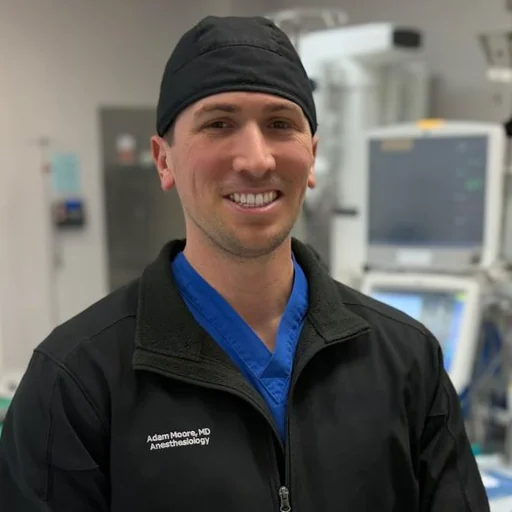
Practicing anesthesiologist with experience across MD-only, medical supervision of CRNAs, and medical direction of CAAs. Founded AnesthesiaJobs.com to help anesthesia professionals find the best job for their personal and professional life.
More about Adam →