New Grad Anesthesiologist Salary: First-Year Pay Guide

Quick Facts
- New grad first-year base: ~$320,000–$380,000 typical; up to $450,000+ in high-demand settings (Resolve, 2026)
- Anesthesiologist baseline (all): $336,640 mean/year (BLS OEWS, May 2024) — median top-coded above $239,200
- Experienced market average: ~$472,000 (Medscape, 2024) to ~$535,000 median (SalaryDr, 2026)
- Average signing bonus: ~$48,250 (Resolve rData, 2026) — range $0 to $300,000
- Trajectory: Year 1 guaranteed salary → RVU/production → partnership or full employed pay by year 3–5
- Job outlook: 3.2% anesthesiologist employment growth 2024–2034; ~80% of facilities reported shortages by 2022 (BLS; ASA)
Your new grad anesthesiologist salary is the first real number of your career — and it's strong out of the gate, typically landing between $320,000 and $380,000 in year one, with high-demand and rural roles pushing past $450,000 (Resolve, 2026). That first-year figure usually sits below the experienced-anesthesiologist market average because you're often on a guaranteed salary before production ramps up. Understanding that ramp — and how to read your first contract — matters more than chasing the biggest headline offer. Start with the full market on our anesthesiologist jobs hub, then use this guide to benchmark your own first year.
This guide covers realistic first-year ranges by setting, signing bonuses and loan repayment, how to evaluate an RVU-based versus guaranteed contract, and the year 1 → year 5 → partnership trajectory.

New Grad Anesthesiologist Salary: First-Year Ranges
New attendings coming straight out of a four-year residency generally start below the experienced-physician average, because guaranteed first-year salaries are set before you've built production. The market baseline from BLS (all anesthesiologists) is $336,640 (BLS OEWS, May 2024), with the median top-coded above $239,200 — but real first-year offers, captured by physician-specific data, run higher and vary by setting.
| Setting | Typical First-Year Base | Notes |
|---|---|---|
| Academic medical center | ~$300,000–$360,000 | Lower base, strong benefits, PSLF-eligible |
| Hospital-employed | ~$350,000–$400,000 | Guaranteed salary + productivity upside |
| Private practice (partnership track) | ~$380,000–$450,000+ | Lower year-1 during buy-in, higher long-term |
| High-demand / rural | $450,000+ | Premium base + aggressive bonuses |
(Sources: BLS OEWS, May 2024; Resolve, 2026)
Two honest caveats. First, private-practice partnership-track roles often start lower during a buy-in period and pay off later — the year-1 number can understate the real value. Second, where a precise first-year subspecialty figure isn't cleanly published, treat these as sourced ranges. For how first-year pay fits into the full career arc across settings and experience, see our guide to how much anesthesiologists make.
Signing Bonuses and Loan Repayment
For new grads, the contract's cash extras can rival the base in real value — especially against six-figure student debt.
- Signing bonus: The average anesthesiology signing bonus is about $48,250 (Resolve rData, 2026), but the range is enormous — from $0 at some coveted academic posts to $300,000 at hard-to-staff facilities. Bonuses are often paid over 1–2 years with a clawback if you leave early.
- Loan repayment: Many hospital and rural roles add loan-repayment assistance on top of base. Nonprofit and academic employers frequently qualify for Public Service Loan Forgiveness (PSLF), which can be worth more than a cash bonus over time.
- Relocation and CME: Standard adds — negotiate them explicitly rather than assuming they're included.
The right structure depends on your debt load. If you're carrying a large balance, PSLF-eligibility or direct loan repayment can outweigh a bigger signing bonus. Our guide to anesthesiologist student loans breaks down how first-year salary, forgiveness, and repayment strategy interact — essential reading before you sign.
How to Evaluate Your First Contract: RVU vs. Guaranteed
The single most important structural question in a first contract: guaranteed salary or production-based (RVU) pay?
| Feature | Guaranteed Salary | RVU / Production |
|---|---|---|
| Year-1 predictability | High — fixed number | Lower — depends on volume |
| Upside | Capped or modest | Higher if volume is strong |
| Best for | New grads still building speed | Efficient, high-volume providers |
| Risk | Low | Case volume, staffing, seasonality |
(Sources: Medscape Physician Compensation Report 2025; MGMA DataDive 2025)
(General contract structures; confirm specifics with each employer.)
Most new grads benefit from a guaranteed base for the first 1–2 years — often with a production floor plus RVU upside — while you build efficiency and case speed. Pure RVU compensation rewards experienced, high-volume anesthesiologists but can penalize a new attending still learning a hospital's systems. When you read an offer, look past the headline number to: the guarantee period, the RVU conversion factor, call frequency and pay, non-compete terms, tail malpractice coverage, and the path to partnership or full employed pay.
Geographic Variation for New Grads
Where you start changes your first-year number as much as the setting does. High-cost coastal metros post large nominal salaries, but purchasing power often favors less-saturated markets. Rural and underserved areas consistently pay a premium — higher base, bigger bonuses, and loan repayment — to attract new physicians, which makes them some of the strongest first-year offers available.
- Major metros (coastal): High nominal pay, high cost of living, more competition for spots.
- Mid-size and Sun Belt markets: Strong pay, lower cost of living, better net purchasing power.
- Rural / critical-access: Premium base plus aggressive signing and loan-repayment incentives.
The lesson mirrors what CRNAs see entering the field: the biggest sticker number isn't always the best real deal. For a parallel view of how new-graduate pay behaves at the front of an anesthesia career, our entry-level CRNA salary guide illustrates the same first-year dynamics from the nursing side.
Trajectory: Year 1 → Year 5 → Partnership
First-year pay is a starting line, not the finish. The typical arc:
- Year 1–2: Guaranteed base while you build speed and, in private practice, work toward buy-in. Often the lowest-earning years relative to your long-term potential.
- Year 3–5: Production ramps, RVU upside kicks in, and employed physicians reach full market pay. New grads commonly move from the $320K–$380K start toward the experienced market average of $472K–$535K (Medscape, 2024; SalaryDr, 2026).
- Partnership (private practice): After a buy-in period, partners share group profits — often the highest-earning tier, with equity in ancillary revenue and greater schedule control.
Fellowship changes this curve too: a subspecialty year delays your first attending paycheck but can raise your ceiling and open higher-acuity, higher-premium roles. Weigh that opportunity cost against the payoff in our anesthesiology fellowship guide.
Negotiating Your First Offer
New grads routinely leave value on the table by negotiating only the base salary. The base is often the least flexible line — but the surrounding terms are where a first contract is won or lost:
- Signing bonus and start date: Both are frequently negotiable, and a later start can mean a larger bonus at hard-to-staff sites.
- Loan repayment vs. PSLF: If your employer is a nonprofit, staying PSLF-eligible may beat a taxable cash bonus over a few years.
- Call frequency and pay: Confirm how many nights and weekends you'll take and what each pays — call load shapes both income and burnout risk.
- Tail malpractice coverage: Who pays for "tail" coverage when you leave can be a five-figure difference; get it in writing.
- Partnership timeline: In private practice, the buy-in length and terms determine your real long-term earnings far more than the year-1 base.
You have the most leverage before you sign and almost none after. Benchmark every offer against the market ranges above, and don't be afraid to ask — a strong shortage market (nearly 80% of facilities reported anesthesia shortages by 2022) works in your favor.
Related Reading
- How Much Do Anesthesiologists Make? 2026 Salary Breakdown
- Anesthesiologist Student Loans: Repayment & Forgiveness
- Entry-Level CRNA Salary: What New Grads Earn
- Anesthesiology Fellowship Guide: Paths, Length & Pay
Ready to land a strong first anesthesiology job out of residency?
Browse Anesthesiologist Jobs on anesthesiajobs.com →
Whether you're comparing academic stability against private-practice upside, anesthesiajobs.com lists first-year and experienced roles nationwide. Benchmark your offer against the full anesthesiologist salary picture, sign up for job alerts to hear about new-grad-friendly openings first, and explore the market on our anesthesiologist jobs hub. More about Adam →
Frequently Asked Questions
What is a typical new grad anesthesiologist salary?
A new grad anesthesiologist salary typically runs $320,000–$380,000 in year one, with high-demand and rural roles reaching $450,000 or more (Resolve, 2026). First-year pay usually sits below the experienced market average of $472,000–$535,000 (Medscape, 2024; SalaryDr, 2026) because new attendings are often on a guaranteed salary before production ramps up.
How big is a signing bonus for a new anesthesiologist?
The average anesthesiology signing bonus is about $48,250 (Resolve rData, 2026), but it ranges from $0 at competitive academic posts to $300,000 at hard-to-staff facilities. Bonuses are typically paid over one to two years with a clawback if you leave early, and are often paired with relocation assistance and loan-repayment help.
Should a new grad take a guaranteed salary or RVU-based pay?
Most new grads benefit from a guaranteed base for the first one to two years — ideally with a production floor plus RVU upside — while building case efficiency. Pure RVU compensation rewards experienced, high-volume anesthesiologists but can penalize a new attending still learning a hospital's systems. Always confirm the guarantee period, RVU conversion factor, call pay, non-compete, and partnership path.
Where do new grad anesthesiologists earn the most?
Rural and critical-access markets consistently offer the strongest first-year packages — premium base pay plus aggressive signing bonuses and loan repayment to attract physicians. High-cost coastal metros post large nominal salaries, but mid-size and Sun Belt markets often deliver better net purchasing power after cost of living.
How fast does anesthesiologist pay grow after year one?
Quickly. Production ramps over years 3–5, moving many physicians from a $320K–$380K start toward the experienced market average of $472K–$535K. In private practice, reaching partnership after a buy-in period typically brings the highest earnings through profit-sharing and equity — while the first year or two are often the lowest relative to long-term potential.
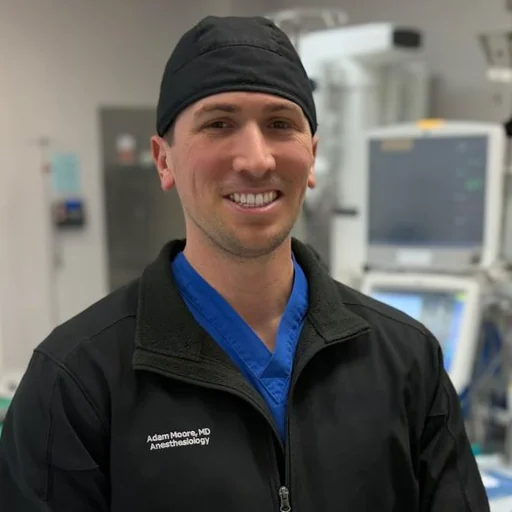
Practicing anesthesiologist with experience across MD-only, medical supervision of CRNAs, and medical direction of CAAs. Founded AnesthesiaJobs.com to help anesthesia professionals find the best job for their personal and professional life.
More about Adam →