Anesthesiologist Student Loan Repayment: Strategies for $300K+ Debt

Key Takeaways
- The median medical school debt alone is $205,000 (AAMC, 2024), and total education debt for anesthesiologists often exceeds $300,000–$400,000+ when including undergraduate and pre-med costs
- Anesthesiologists earn a BLS mean base salary of $336,640 (BLS, 2024) and total compensation of $535,000 median (SalaryDr, 2026) — giving them one of the strongest debt-to-income ratios in all of medicine
- Public Service Loan Forgiveness (PSLF), income-driven repayment (IDR), private refinancing, and aggressive payoff strategies each suit different career paths
- With the right repayment plan, most anesthesiologists can eliminate $300K+ in student loans within 5–10 years of completing residency
Becoming an anesthesiologist requires one of the longest and most expensive training investments in healthcare — and the anesthesiologist student loans that come with it can feel overwhelming. Between four years of undergraduate education, four years of medical school, and four years of residency (plus optional fellowship), the total price tag routinely exceeds $300,000 in educational debt before you earn your first attending paycheck.
But here’s the encouraging reality: anesthesiologists are among the highest-paid physicians in the country, with a median total compensation of $535,000 (SalaryDr, 2026) and starting salaries around $377,000+ (AMN Healthcare, 2025). That earning power, combined with the right repayment strategy, means this debt is not only manageable — it’s an investment with outstanding returns. Whether you’re a medical student, resident, or newly minted attending, this guide breaks down every major strategy to conquer your anesthesiologist student loans efficiently.
For a full breakdown of anesthesiologist earnings across settings and experience levels, see our complete anesthesiologist salary guide.
📊 Salary Data Sources & Freshness This guide cites data from multiple sources: the U.S. Bureau of Labor Statistics (BLS, May 2024 — latest government data), ZipRecruiter (2026 advertised salaries), Glassdoor, AMN Healthcare, SalaryDr, and other industry reports. Government salary surveys have a 12–18 month reporting lag. Current advertised salaries on job boards typically reflect real-time market conditions and may be higher. Anesthesia provider compensation has risen steadily over the past five years.
How Much Debt Do Anesthesiologists Actually Carry?
Understanding the full scope of anesthesiologist student loans is the first step toward building a payoff plan. Medical school debt alone tells only part of the story.
The Real Numbers
| Debt Category | Typical Range | Median/Average |
|---|---|---|
| Undergraduate (pre-med) | $30,000–$200,000 | ~$80,000–$120,000 |
| Medical school (MD/DO) | $150,000–$350,000 | $205,000 median (AAMC, 2024) |
| Total education debt | $200,000–$450,000+ | ~$265,000–$350,000 |
| Interest accrued during residency (4 yrs) | $40,000–$80,000+ | Varies by rate |
| Total debt at attending start | $250,000–$500,000+ | $300,000–$400,000 typical |
According to the Association of American Medical Colleges (AAMC), 71% of graduating medical students in 2024 carried educational debt, with a median of $205,000 in medical school loans alone. When you factor in undergraduate debt — which averaged $28,000 among those who borrowed for pre-med (AAMC, 2024) — and the interest that capitalizes during four years of residency at $65,000–$80,000 per year, the total balance at the start of an attending career frequently lands between $300,000 and $400,000+.
The Interest Problem During Residency
One of the most significant — and often underestimated — factors in anesthesiologist student loan growth is the interest that accrues during residency. At current federal graduate loan rates (6.53% for Direct Unsubsidized Loans in 2024–2025), a $250,000 balance generates roughly $16,000 in interest per year. Over four years of residency, that’s $64,000+ in additional debt before you’ve made a single attending-level payment.
This is why choosing the right repayment plan during residency — not just after — is critical.

Anesthesiologist Salary vs. Student Loan Debt: The Ratio That Matters
Before diving into strategies, it’s worth framing the good news: anesthesiologists have one of the most favorable debt-to-income ratios in medicine.
| Metric | Value |
|---|---|
| BLS Mean Base Salary | $336,640 (BLS, 2024) |
| Total Compensation Median | $535,000 (SalaryDr, 2026) |
| Total Compensation Average | $569,729 (SalaryDr, 2026) |
| Advertised Average Salary | $393,215 (ZipRecruiter, 2026) |
| Starting Salary (Post-Residency) | ~$377,000+ (AMN Healthcare, 2025) |
| Locum Tenens Rate | $300–$450/hr |
| Locum Annual Gross | $600,000–$900,000+ |
Debt-to-income ratio: A $350,000 loan balance against a $377,000+ starting salary gives a ratio of roughly 0.9:1. Financial advisors generally consider a debt-to-income ratio under 1.5:1 to be very manageable for physicians. Anesthesiologists sit comfortably in that range.
The bottom line: while $300K+ in student loans sounds daunting, anesthesiologist compensation makes this debt highly serviceable. The question isn’t whether you can pay it off — it’s which strategy helps you do it fastest and at the lowest total cost.
Strategy 1: Public Service Loan Forgiveness (PSLF)
Public Service Loan Forgiveness remains one of the most powerful tools for physicians working in nonprofit or government settings. Under PSLF, your remaining federal loan balance is forgiven — tax-free — after 120 qualifying monthly payments (10 years) while employed full-time by a qualifying public service employer.
How PSLF Works for Anesthesiologists
| PSLF Requirement | Details |
|---|---|
| Qualifying loans | Federal Direct Loans only (consolidate FFEL/Perkins if needed) |
| Qualifying employer | 501(c)(3) nonprofits, government, VA hospitals, academic medical centers |
| Qualifying payments | 120 monthly payments on an IDR plan |
| Payment timeline | Residency payments count (years 1–4), then 6 more years as attending |
| Forgiveness amount | Remaining balance after 120 payments — tax-free |
PSLF During Residency: The Head Start
Here’s the strategic advantage: your four years of anesthesiology residency can count as four years (48 payments) toward the 120-payment PSLF requirement — if your residency hospital is a qualifying nonprofit employer (most academic medical centers are). During residency, your income-driven repayment (IDR) payments will be relatively low because your resident salary ($65,000–$80,000) keeps your calculated payment small.
Example PSLF timeline for an anesthesiologist:
| Phase | Years | Monthly Payment (est.) | Total Paid |
|---|---|---|---|
| Residency (IDR payments) | 4 years | $400–$700/mo | $19,200–$33,600 |
| Attending (IDR payments) | 6 years | $3,500–$5,000/mo | $252,000–$360,000 |
| Total paid before forgiveness | 10 years | $271,200–$393,600 | |
| Estimated forgiveness amount | $100,000–$250,000+ |
For an anesthesiologist with $350,000 in federal loans, PSLF could result in $100,000–$250,000+ being forgiven — depending on your IDR plan and income growth. That’s a substantial financial benefit.
Who Should Choose PSLF?
PSLF is ideal for anesthesiologists who: - Work at academic medical centers, VA hospitals, or nonprofit health systems - Carry very high federal loan balances ($300K+) - Plan to stay in qualifying employment for at least 10 years total (including residency) - Are comfortable with income-driven repayment during the payoff period
PSLF is not ideal if you plan to enter private practice, work exclusively as a 1099 independent contractor, or refinance your federal loans with a private lender (refinancing disqualifies you from PSLF permanently).
Strategy 2: Income-Driven Repayment (IDR) Plans
Income-driven repayment plans cap your monthly payment at a percentage of your discretionary income, with any remaining balance forgiven after 20–25 years. For anesthesiologists not pursuing PSLF, IDR plans can provide payment flexibility — though high earners may end up paying more in total interest compared to aggressive payoff approaches.
Current IDR Plan Options (2026)
| Plan | Payment Cap | Forgiveness Timeline | Notes |
|---|---|---|---|
| Income-Based Repayment (IBR) | 10–15% of discretionary income | 20–25 years | Available to most borrowers |
| Pay As You Earn (PAYE) | 10% of discretionary income | 20 years | Must demonstrate financial hardship |
| Income-Contingent Repayment (ICR) | 20% of discretionary income | 25 years | Available to all Direct Loan borrowers |
| Repayment Assistance Program (new) | Varies | Varies | Created under 2025 OBBB Act; details still being finalized |
Important note: The SAVE plan, which was introduced in 2023, has been shut down due to legal challenges. Borrowers previously on SAVE have been transitioned to other IDR options. The new Repayment Assistance Program created under the One Big Beautiful Bill Act (2025) is expected to replace several legacy IDR plans — check studentaid.gov for the latest details.
IDR Strategy During Residency
During residency, IDR plans are almost universally the right choice for anesthesiologists. Your payments stay low relative to your growing loan balance, and if you’re pursuing PSLF, these payments count toward your 120-payment requirement. Even if you plan to refinance after residency, staying on IDR during training preserves your federal loan protections.
IDR as a Standalone Strategy
For anesthesiologists not pursuing PSLF, relying solely on IDR for 20–25 years of forgiveness is usually not the most efficient path. At an attending salary of $377,000+, your IDR payments will be high enough that you’ll likely pay off most or all of the balance before forgiveness kicks in — and any amount forgiven under standard IDR (not PSLF) is treated as taxable income.
Bottom line: Use IDR strategically during residency and early career, but transition to aggressive payoff or refinancing once your attending income stabilizes.
Strategy 3: Private Refinancing
For anesthesiologists in private practice or those not pursuing PSLF, refinancing federal loans with a private lender can dramatically reduce total interest costs.
Current Refinancing Rates (2026)
| Lender Type | Fixed Rate Range | Variable Rate Range |
|---|---|---|
| Physician-specific lenders (Laurel Road, SoFi, etc.) | 3.89%–8.44% APR | 4.74%–9.99% APR |
| General refinance lenders | 4.99%–10%+ APR | 5.50%–12%+ APR |
| Credit union options | 4.25%–7.50% APR | Varies |
Rates as of mid-2026. Physician-specific lenders like SoFi, Laurel Road, Earnest, and Panacea Financial often offer preferential rates and terms for medical professionals. Sources: NerdWallet, SoFi, Earnest, 2026.
The Math: Refinancing vs. Standard Repayment
| Scenario | Federal Standard (6.5%) | Refinanced (4.5%) | Savings |
|---|---|---|---|
| Loan balance | $350,000 | $350,000 | — |
| Term | 10 years | 7 years | — |
| Monthly payment | $3,975 | $5,070 | — |
| Total interest paid | $127,000 | $76,000 | $51,000 |
| Total paid | $477,000 | $426,000 | $51,000 |
Refinancing a $350,000 balance from 6.5% to 4.5% — and shortening the term to 7 years — can save over $50,000 in total interest. With an anesthesiologist starting salary of ~$377,000+ (AMN Healthcare, 2025), the higher monthly payment is very manageable.
When to Refinance (and When Not To)
Refinance if you: - Are NOT pursuing PSLF (refinancing disqualifies you permanently) - Are in private practice or employed by a for-profit group - Have a strong credit profile and stable attending income - Want to minimize total interest paid over the life of the loan
Do NOT refinance if you: - Are pursuing or considering PSLF - Are still in residency (IDR with federal protections is usually better during training) - Need income-driven payment flexibility - Are uncertain about your long-term employment setting
Strategy 4: Aggressive Payoff (The “Live Like a Resident” Approach)
This is the strategy favored by many high-earning physicians and popularized by financial advisors like White Coat Investor: continue living on a resident-level budget for 2–5 years after becoming an attending and direct the surplus income toward crushing your loans.
How the Numbers Work
| Factor | Year 1 as Attending | Year 2+ |
|---|---|---|
| Gross salary | $377,000+ (AMN Healthcare, 2025) | $393,215+ (ZipRecruiter, 2026) |
| “Resident lifestyle” spending | ~$80,000–$100,000/yr | ~$80,000–$100,000/yr |
| Taxes (est. effective rate ~30%) | ~$113,000–$118,000 | ~$118,000+ |
| Available for loan payments | ~$160,000–$184,000/yr | ~$175,000+/yr |
| Monthly loan payment potential | $13,000–$15,000/mo | $14,500+/mo |
At this pace, even a $400,000 loan balance can be eliminated in roughly 2.5–3 years. That’s the power of an anesthesiologist’s income when deployed strategically.
Making It Sustainable
The “live like a resident” approach doesn’t mean deprivation. It means:
- Delaying lifestyle inflation: Keep your housing, car, and discretionary spending at residency levels for 2–3 years
- Automating payments: Set up automatic transfers so the money goes to loans before you can spend it
- Celebrating milestones: Track your payoff progress and reward yourself at key milestones (every $50K paid off, for example)
- Building an emergency fund first: Before going all-in on loan payments, save 3–6 months of expenses as a safety net
This strategy works exceptionally well when combined with refinancing — low interest rate plus high monthly payments equals the fastest possible payoff.
Strategy 5: Employer Loan Repayment Assistance
A growing number of healthcare employers offer student loan repayment assistance as part of their recruitment packages — and anesthesiologists, given the intense demand for their skills, are well-positioned to negotiate these benefits.
Common Employer Programs
| Benefit Type | Typical Value | Where to Find It |
|---|---|---|
| Sign-on bonus (loan-designated) | $25,000–$100,000 | Hospital systems, anesthesia groups |
| Annual loan repayment stipend | $10,000–$30,000/yr | Academic centers, VA, large health systems |
| Service commitment loan repayment | $50,000–$200,000 over 3–5 years | Rural hospitals, underserved areas |
| Relocation + loan package | Varies | Competitive markets |
Government and Military Programs
- NHSC Loan Repayment Program: Offers up to $50,000+ in loan repayment for providers serving in Health Professional Shortage Areas (HPSAs). While primarily targeted at primary care, some anesthesiologists in underserved and rural settings may qualify through facility-based eligibility. A 2-year service commitment is required, with extensions available.
- VA (Veterans Health Administration): The VA’s Education Debt Reduction Program (EDRP) offers up to $200,000 in student loan repayment for physicians — including anesthesiologists — working at VA medical centers. Given the VA’s ongoing need for anesthesia providers, this is one of the most generous programs available.
- Military service: The Army, Navy, and Air Force Health Professions Loan Repayment Programs can cover up to $120,000+ in educational debt in exchange for a service commitment. Military anesthesiologists also receive competitive base pay, tax-free housing allowances, and excellent benefits.
- State-specific programs: Many states offer their own loan repayment programs for physicians who practice in underserved areas. Check your state’s health department or explore rural anesthesia opportunities to learn more.
Negotiating Loan Repayment Into Your Contract
When evaluating your first attending position, don’t overlook student loan assistance as a negotiable benefit. Many anesthesiologists focus exclusively on base salary but leave thousands on the table by not asking about loan repayment support. Even a $50,000 sign-on bonus earmarked for loans can shave a year off your repayment timeline.

Building Your Personalized Repayment Plan
The best repayment strategy depends on your specific situation. Here’s a decision framework:
Step 1: Know Your Numbers
Before choosing a strategy, calculate: - Total federal loan balance (including accrued interest) - Total private loan balance (if any) - Weighted average interest rate across all loans - Expected first-year attending salary — starting at ~$377,000+ (AMN Healthcare, 2025) - Monthly budget after taxes, retirement contributions, and essential expenses
Step 2: Choose Your Primary Strategy
| Your Situation | Best Primary Strategy |
|---|---|
| Working at a nonprofit/VA/academic center | PSLF + IDR |
| Entering private practice, balance $300K+ | Refinance + aggressive payoff |
| Very high balance ($400K+), uncertain career path | IDR during residency → reassess as attending |
| Rural or underserved area practice | Employer/NHSC repayment + supplemental payoff |
| Locum tenens ($600K–$900K+ gross) | Aggressive payoff from high earnings |
Step 3: Optimize the Details
- During residency: Enroll in IDR, certify income annually, ensure your employer qualifies for PSLF if you’re pursuing that path
- Transition to attending: Reassess within 6 months of starting your attending position — this is the most critical financial decision point
- Tax planning: Work with a physician-focused financial advisor or CPA to optimize your tax strategy alongside loan repayment
- Retirement balance: Don’t neglect employer-matched retirement contributions even while paying off loans — the guaranteed return on a 401(k) match is hard to beat
Common Mistakes to Avoid
Even high-earning anesthesiologists can stumble with anesthesiologist student loans if they fall into these common traps:
- Refinancing when PSLF is the better play: If you work at a qualifying nonprofit employer, refinancing eliminates your chance at tax-free forgiveness. Run the numbers before you refinance.
- Ignoring interest during residency: Capitalized interest adds tens of thousands to your balance. Consider making interest-only payments during residency if your budget allows.
- Not certifying PSLF employment annually: Submit your Employment Certification Form (ECF) every year — don’t wait until you hit 120 payments to find out your employer didn’t qualify.
- Lifestyle inflation on day one: The jump from $75,000 in residency to $377,000+ as an attending is life-changing — but immediately upgrading your lifestyle can turn a 3-year payoff into a 15-year slog.
- Treating all debt equally: Federal and private loans have different rules, protections, and strategies. Manage them separately.
Anesthesiologist Student Loans in Context: A Career Worth the Investment
It’s easy to fixate on the debt, but perspective matters. Anesthesiologists enjoy:
- Mean base salary of $336,640 (BLS, 2024) with total compensation reaching $535,000 median (SalaryDr, 2026)
- Starting salaries of ~$377,000+ (AMN Healthcare, 2025) — among the highest starting salaries in all of medicine
- Locum tenens potential of $300–$450/hr ($600,000–$900,000+ annually) for those seeking maximum earning power
- 3.2% projected job growth (2024–2034) with strong demand driven by an aging population and expanding surgical needs
- Exceptional job security across hospitals, ambulatory surgery centers, academic medical centers, and private practice
The $300K+ in student loans is a temporary challenge on the path to one of the most rewarding — and well-compensated — careers in healthcare. With a strategic repayment plan, most anesthesiologists can be debt-free within 5–10 years of completing residency, with decades of high earning ahead.
Ready to explore opportunities? Browse anesthesiologist positions on AnesthesiaJobs.com and see what’s available in your preferred setting and location.
Related Reading
- How Much Do Anesthesiologists Make? 2026 Salary Breakdown
- CRNA Student Loan Forgiveness & Repayment Strategies
- Rural Anesthesia Jobs: Opportunities & Incentives
CTA: Browse Anesthesiologist Jobs on AnesthesiaJobs.com Browse Anesthesiologist Jobs →
Frequently Asked Questions
How much student loan debt does the average anesthesiologist have?
The average anesthesiologist graduates with $300,000–$400,000+ in total educational debt when combining undergraduate loans, medical school debt (median $205,000 per AAMC, 2024), and interest accrued during four years of residency. Some anesthesiologists carry $450,000+ depending on their undergraduate institution and whether they attended a private medical school.
Can anesthesiologists qualify for Public Service Loan Forgiveness (PSLF)?
Yes. Anesthesiologists who work full-time for qualifying nonprofit employers — including most academic medical centers, VA hospitals, and nonprofit health systems — can qualify for PSLF. After making 120 qualifying monthly payments on an income-driven repayment plan, the remaining federal loan balance is forgiven tax-free. Residency years at a qualifying employer count toward the 120 payments.
How long does it take an anesthesiologist to pay off student loans?
It depends on the strategy. With aggressive payoff (“live like a resident” approach), many anesthesiologists eliminate $300K–$400K in debt within 2.5–5 years of completing residency. With PSLF, the timeline is 10 years of qualifying payments (including residency). With standard repayment, 10–15 years is typical. Anesthesiologist starting salaries of ~$377,000+ (AMN Healthcare, 2025) make accelerated payoff very achievable.
Should anesthesiologists refinance their student loans?
It depends on your career path. If you work in private practice or for a for-profit employer and are NOT pursuing PSLF, refinancing can save $50,000+ in interest over the life of your loans. Current physician refinancing rates start as low as 3.89% fixed APR (2026). However, if you are pursuing PSLF or may work for a qualifying nonprofit employer, do NOT refinance — it permanently disqualifies your federal loans from forgiveness.
Do any employers help anesthesiologists repay student loans?
Yes. Many hospitals, health systems, and anesthesia groups offer sign-on bonuses ($25,000–$100,000), annual loan repayment stipends ($10,000–$30,000/year), or service-commitment repayment packages ($50,000–$200,000 over 3–5 years). The VA’s Education Debt Reduction Program offers up to $200,000 in loan repayment. Military Health Professions programs cover up to $120,000+. These benefits are often negotiable — always ask during the contract process.
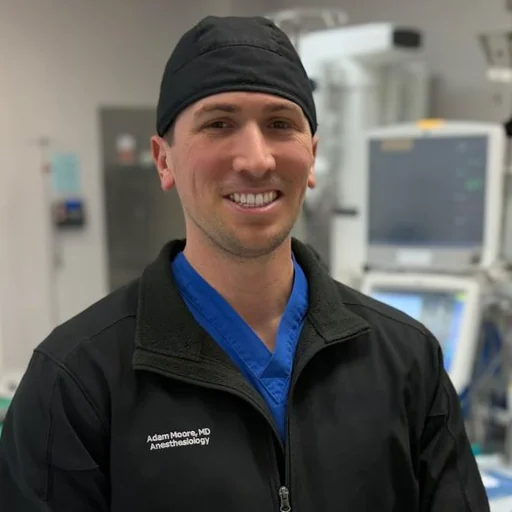
Practicing anesthesiologist with experience across MD-only, medical supervision of CRNAs, and medical direction of CAAs. Founded AnesthesiaJobs.com to help anesthesia professionals find the best job for their personal and professional life.
More about Adam →