CRNA Salary Florida: 2026 Pay, Cost of Living & Job Market

Key Takeaways
If you’re researching CRNA salary Florida figures for 2026, you’ll find a state that offers one of the strongest overall compensation packages in the country — and it’s not just about the base pay. Florida combines competitive salaries, zero state income tax, a near-average cost of living, and booming demand for anesthesia providers into a package that’s hard to beat. Whether you’re a new graduate evaluating your first offer or an experienced CRNA considering a relocation, the Sunshine State deserves serious consideration. Start exploring open positions on our CRNA Jobs page.
Florida is the third most populous state in the U.S., home to more than 23 million residents, over 400 hospitals, and thousands of ambulatory surgery centers (ASCs). That translates to massive surgical volume — and massive demand for CRNAs. Combined with Florida’s position as a retirement destination (aging populations drive surgical need), the state’s anesthesia job market has tightened significantly, pushing pay upward at a pace that outstrips nearly every other state.
This guide breaks down everything you need to know about CRNA compensation in Florida: statewide averages, city-by-city data, cost-of-living-adjusted take-home pay, practice settings, locum tenens rates, the job market outlook, and how the state stacks up against competitors like California and Texas.
📊 Salary Data Sources & Freshness This guide cites data from multiple sources: the U.S. Bureau of Labor Statistics (BLS, May 2024 — latest government data), ZipRecruiter (2026 advertised salaries), Glassdoor, AMN Healthcare, SalaryDr, and other industry reports. Government salary surveys have a 12–18 month reporting lag. Current advertised salaries on job boards typically reflect real-time market conditions and may be higher. Anesthesia provider compensation has risen steadily over the past five years.
CRNA Salary Florida: Statewide Overview
Florida’s CRNA compensation has surged in recent years. Here’s how the numbers break down across multiple trusted sources:
| Source | Florida CRNA Salary | Year |
|---|---|---|
| BLS Mean | $236,610 | May 2024 |
| Marit Health (peer-reported avg) | $282,082 | 2026 |
| Marit Health (median) | $266,618 | 2026 |
| AMN Healthcare | $195,000 | 2025 |
| National BLS Mean (for comparison) | $231,700 | May 2024 |
| National BLS Median (for comparison) | $223,210 | May 2024 |
| National Advertised Avg (for comparison) | $260,000 | ZipRecruiter, 2026 |
The BLS mean of $236,610 places Florida slightly above the national BLS mean of $231,700 (BLS, May 2024). But the real story is the trajectory: Florida saw the largest CRNA salary increase of any state from 2023 to 2024, jumping $59,660 — from $176,950 to $236,610 (Becker’s/BLS). That nearly 34% year-over-year increase signals surging demand and a tightening labor market.
Meanwhile, real-world peer-reported data from Marit Health tells an even more encouraging story: Florida CRNAs report an average total compensation of $282,082 in 2026, with academic positions averaging $298,406 and non-academic positions averaging $276,512. The middle 50% of Florida CRNAs earn between $251,812 and $320,625, and top earners push well past $330,000.
How Florida Compares to National Benchmarks
It’s important to put Florida’s numbers in national context. Nationally, CRNAs earn a BLS median of $223,210 and a BLS mean of $231,700 (BLS, May 2024), with advertised positions averaging $260,000 (ZipRecruiter, 2026). Top earners at the 90th percentile reach $394,500 nationally (ZipRecruiter, 2026).
Florida’s BLS mean of $236,610 exceeds the national mean, and the state’s market-reported average of $282,082 (Marit Health, 2026) exceeds the national advertised average. Add in zero state income tax, and Florida CRNAs often take home more money than colleagues in nominally higher-paying states. For a complete look at how all 50 states compare, see our guide to the Top 10 Highest-Paying States for CRNAs.

CRNA Salary Florida by City and Metro Area
Compensation varies significantly across Florida’s diverse metro areas. Here’s what the data shows:
| Metro Area | Estimated CRNA Salary Range | Median Home Price (Single Family, Apr 2026) |
|---|---|---|
| Miami–Fort Lauderdale–West Palm Beach | $250,000–$320,000+ | $650,000 |
| Tampa–St. Petersburg–Clearwater | $250,000–$333,000+ | $405,000 |
| Orlando–Kissimmee–Sanford | $230,000–$280,000 | $440,000 |
| Jacksonville | $230,000–$290,000 | $399,990 |
| Gainesville | $230,000–$280,000 | $368,000 |
| Fort Myers–Cape Coral | $240,000–$300,000 | $390,000 |
| Pensacola | $250,000–$310,000 | $342,900 |
| Sebring / Rural Central FL | $280,000–$330,000 | $290,000 |
(Salary ranges compiled from Marit Health peer reports, Indeed, and current job postings, 2026. Home prices from Florida Realtors, April 2026.)
A few patterns stand out:
- South Florida (Miami, Fort Lauderdale, West Palm Beach) offers the highest raw salaries but also the highest cost of living. A self-employed 1099 CRNA in Miami reports earning $320,000 for a 35-hour week (Marit Health, 2026), while a W-2 position in West Palm Beach starts around $185,000 for a new graduate.
- Tampa Bay is a strong market where experienced CRNAs in ASC settings report earning $200/hr ($333,000 annualized) on 1099 arrangements (Marit Health, 2026).
- Rural and underserved areas like Sebring offer some of the highest pay — current advertised positions range from $320,000 to $330,000 — paired with the lowest housing costs in the state.
- Pensacola and the Panhandle combine solid salaries with some of the most affordable housing in Florida.
The takeaway? Florida CRNAs who are flexible on location — especially those willing to work in smaller markets or ASC-heavy areas — can maximize both salary and purchasing power.
The No-State-Income-Tax Advantage: CRNA Salary Florida Take-Home Pay
Florida’s zero state income tax is one of the biggest financial advantages for CRNAs working in the state. This isn’t a minor perk — it can translate to $10,000–$25,000+ more in annual take-home pay compared to states with significant income taxes.
Here’s a simplified comparison for a CRNA earning roughly equivalent gross pay:
| Factor | Florida | California | New York |
|---|---|---|---|
| Gross CRNA Salary | $260,000 | $270,000 | $265,000 |
| State Income Tax Rate (approx.) | 0% | ~9.3% | ~6.85% |
| Estimated State Tax Paid | $0 | ~$25,110 | ~$18,150 |
| After-State-Tax Income | $260,000 | ~$244,890 | ~$246,850 |
| Cost of Living Index | 100.7 | 140.5 | 124.7 |
Even when a CRNA in California or New York earns a higher gross salary, the combination of state income tax and higher cost of living erodes that advantage. A Florida CRNA earning $260,000 effectively out-earns a California CRNA at $270,000 on a take-home, purchasing-power-adjusted basis.
Florida Cost of Living by the Numbers
Florida’s overall cost of living index is 100.7 — just 0.7% above the national average (MERIC, Q1 2026). For comparison, California sits at 140.5 and New York at 124.7. Within Florida, costs vary by region:
| Florida Region | Relative Cost of Living | Housing Affordability |
|---|---|---|
| South Florida (Miami, Fort Lauderdale) | Above average | Median single-family home: $650,000 |
| Tampa Bay | Near average | Median single-family home: $405,000 |
| Orlando | Near average | Median single-family home: $440,000 |
| Jacksonville | Below average | Median single-family home: $399,990 |
| Panhandle (Pensacola) | Below average | Median single-family home: $342,900 |
| Rural Central FL (Sebring, Ocala) | Well below average | Median single-family home: $285,000–$290,000 |
(Source: Florida Realtors, April 2026; MERIC, Q1 2026)
CRNAs targeting mid-sized cities like Jacksonville, Tampa, or Pensacola enjoy an exceptional combination: strong salaries, no state income tax, and housing costs that are at or below the national average. That’s a rare trifecta in high-paying healthcare careers.
CRNA Salary Florida by Practice Setting
Where you work matters as much as where you live. Different practice settings in Florida offer distinct compensation profiles:
| Practice Setting | Typical Florida Salary Range | Notes |
|---|---|---|
| Hospital (W-2, employed) | $220,000–$270,000 | Benefits included; national BLS hospital avg is $234,250 (BLS, May 2024) |
| Ambulatory Surgery Center (ASC) | $250,000–$333,000+ | High volume, predictable hours; strong in FL |
| Outpatient Care Center | $250,000–$290,000 | National BLS outpatient avg: $263,960 |
| Academic Medical Center | $250,000–$298,000 | Marit Health FL academic avg: $298,406 (2026) |
| 1099 / Independent Contractor | $280,000–$350,000+ | Higher gross, self-funded benefits |
| Locum Tenens | $200–$325+/hr | See locum section below |
Florida’s large network of ASCs — the state is among the nation’s leaders in outpatient surgical volume — means CRNA opportunities in ambulatory settings are abundant. ASC positions often feature predictable schedules (no overnight call), competitive pay, and a favorable work-life balance.
New graduate CRNAs in Florida can expect starting salaries of $220,000–$260,000, consistent with the national starting range. W-2 hospital positions for new grads may begin at the lower end, while 1099 arrangements and ASC roles can push starting compensation toward the higher end. For more on what to expect in your first CRNA role, see our entry-level CRNA salary guide.
Locum Tenens CRNA Salary in Florida
Florida is one of the most active locum tenens markets in the country for CRNAs, driven by seasonal population surges (snowbirds), tourism-related demand, and a large number of facilities competing for providers.
| Locum Factor | Florida Market Rate |
|---|---|
| Hourly rate | $200–$325+/hr |
| Weekly gross (40 hrs) | $8,000–$13,000+ |
| Annual gross potential | $400,000–$550,000+ |
| Housing/travel | Often provided or stipend included |
| Tax status | Typically 1099 |
| Peak demand season | October–April (snowbird season) |
Locum tenens CRNAs in Florida can earn $200–$325+ per hour, with annual gross potential of $400,000–$550,000+. The market hourly rate for permanent positions is approximately $200/hr (2026), while locum assignments command a premium due to their flexibility and short-term nature.
Florida’s seasonal demand cycle creates especially lucrative opportunities during the winter months (October through April), when the state’s population swells with seasonal residents. Facilities in South Florida and along the Gulf Coast often offer premium rates during this period.
For a deeper dive into how locum pay compares to permanent positions, read our Locum Tenens CRNA Salary vs. Permanent guide. You can also explore our comprehensive Locum Tenens Guide for CRNAs for tips on getting started.
Florida CRNA Job Market & Demand in 2026
Florida’s CRNA job market is among the strongest in the nation, driven by several converging factors:
Population Growth & Demographics
Florida is the third most populous state and one of the fastest-growing, ranked #2 nationally for inbound migration (U-Haul, 2025). The state’s population skews older than the national average — older patients require more surgeries, more anesthesia, and more CRNAs.
Surgical Volume
Florida is home to more than 400 hospitals and one of the country’s largest networks of ambulatory surgery centers. The continued shift toward outpatient surgery — a trend that benefits CRNA employment — is especially pronounced in Florida, where ASCs handle a growing share of orthopedic, ophthalmologic, and cosmetic procedures.
National CRNA Demand
Nationally, the BLS projects 38% employment growth for CRNAs from 2022 to 2032 — nearly ten times the average for all occupations. Florida, with its large and growing population, captures an outsized share of this demand. The AANA’s 2025 job market outlook confirms abundant opportunities fueled by growing surgical demand and provider shortages nationwide.
Practice Environment
Florida operates under a physician supervision model for CRNAs, meaning nurse anesthetists work in collaboration with anesthesiologists or operating physicians. While not a full independent practice state, Florida’s high demand and large number of anesthesia care team settings create ample opportunities. For a full list of states where CRNAs practice independently, see our CRNA Independent Practice States guide.
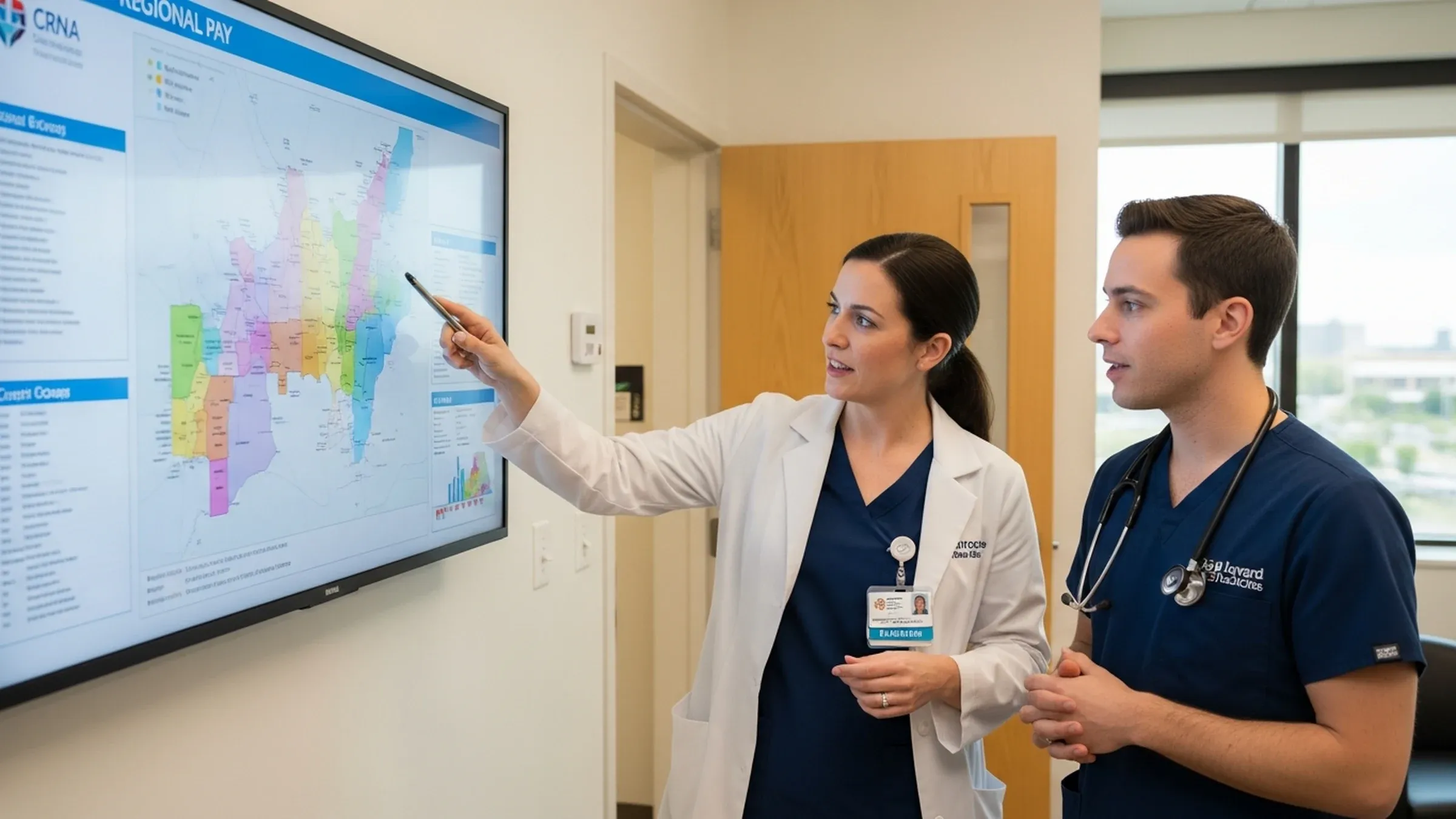
How Florida CRNA Salary Compares to Other Top States
How does the CRNA salary Florida package stack up against other popular states? Here’s a side-by-side look:
| State | BLS Mean Salary | State Income Tax | Cost of Living Index | Net Advantage |
|---|---|---|---|---|
| Florida | $236,610 | 0% | 100.7 | ✅ Strong take-home, average COL |
| California | $245,920 | Up to 13.3% | 140.5 | High gross, eroded by tax + COL |
| Texas | $208,450 | 0% | 93.9 | No tax + low COL, lower gross |
| New York | $256,160 | Up to 10.9% | 124.7 | High gross, significantly taxed |
| Massachusetts | $292,390 | 5% + 4% surtax | 147.8 | Highest gross, very high COL |
| Illinois | $281,240 | 4.95% | 92.3 | High gross, moderate tax + low COL |
(BLS, May 2024; MERIC, Q1 2026; state tax rates approximate for high earners)
Florida’s combination of an above-average BLS salary, zero state income tax, and a near-national-average cost of living creates one of the best real compensation packages in the country. While states like Massachusetts and Illinois offer higher gross pay, Florida CRNAs often keep more of what they earn.
For detailed salary breakdowns in other top states, explore: - CRNA Salary California - CRNA Salary Texas - How Much Do CRNAs Make?
Tips for Maximizing Your CRNA Salary in Florida
Whether you’re relocating to Florida or already practicing in the state, these strategies can help you optimize your compensation:
1. Consider Location Strategically
Rural and underserved areas in Florida (Sebring, Ocala, the Panhandle) often pay $40,000–$60,000 more than urban centers — with significantly lower housing costs. The salary-to-cost-of-living ratio in these markets is exceptional.
2. Explore 1099 and ASC Opportunities
Florida’s thriving ASC market creates opportunities for 1099 independent contractor positions that pay $280,000–$350,000+. While you’ll need to self-fund benefits and manage self-employment taxes, the net compensation often exceeds W-2 alternatives. For a thorough comparison, read our 1099 vs. W-2 CRNA guide.
3. Leverage Seasonal Locum Demand
Florida’s snowbird season (October–April) creates predictable spikes in locum tenens demand. CRNAs who pick up locum shifts during peak season at $200–$325+/hr can significantly boost annual earnings.
4. Negotiate Effectively
Florida’s tight CRNA labor market gives you leverage. Come to the table with data — use the salary benchmarks in this guide — and don’t leave money on the negotiating table. For specific tactics, see our CRNA Contract Negotiation guide.
5. Factor in the Full Package
Florida’s zero state income tax is worth $10,000–$25,000+ annually compared to high-tax states. When evaluating offers, calculate your after-tax, cost-of-living-adjusted income rather than comparing gross salaries alone.
Related Reading
- Top 10 Highest-Paying States for CRNAs
- How Much Do CRNAs Make? Complete 2026 Salary Guide
- CRNA Salary California: 2026 Pay, Cost of Living & Job Market
- CRNA Salary Texas: 2026 Pay, Cost of Living & Job Market
- Best Cities for Anesthesia Jobs
- Locum Tenens CRNA Salary vs. Permanent
CTA: Browse CRNA Jobs on AnesthesiaJobs.com Florida’s CRNA job market is thriving — and AnesthesiaJobs.com has the latest openings across the state. Whether you’re looking for a permanent hospital position, an ASC role, or locum tenens assignments, start your search today.
Frequently Asked Questions
How much do CRNAs make in Florida in 2026?
CRNAs in Florida earn a BLS mean salary of $236,610 (BLS, May 2024), with market-reported averages reaching $282,082 (Marit Health, 2026). Individual compensation varies by setting, experience, and employment type — W-2 hospital positions may start around $220,000–$260,000 for new graduates, while experienced CRNAs in ASC or 1099 roles report earning $280,000–$350,000+. Nationally, CRNAs earn a BLS median of $223,210, a BLS mean of $231,700 (BLS, May 2024), and an advertised average of $260,000 (ZipRecruiter, 2026).
Is Florida a good state for CRNAs financially?
Yes. Florida offers a powerful financial package for CRNAs: competitive salaries that exceed the national BLS mean, zero state income tax (saving $10,000–$25,000+ per year compared to high-tax states), and a cost of living index of just 100.7 — barely above the national average (MERIC, Q1 2026). When you calculate take-home pay adjusted for taxes and living costs, Florida ranks among the best states in the country for CRNA real compensation.
What is the starting salary for a new CRNA in Florida?
New graduate CRNAs in Florida can expect starting salaries of $220,000–$260,000, consistent with the national starting range. W-2 hospital positions for new grads may start toward the lower end of this range, while 1099 contracts and ASC roles can push starting compensation higher. Florida’s no-income-tax advantage means new CRNAs keep more of their starting salary compared to peers in states like California or New York.
How much do locum tenens CRNAs make in Florida?
Locum tenens CRNAs in Florida earn $200–$325+ per hour, with annual gross potential of $400,000–$550,000+. Florida is one of the most active locum markets due to its large number of facilities and seasonal demand surges during snowbird season (October–April). Housing and travel are often provided or covered by a stipend. Locum assignments are typically 1099, so providers should account for self-employment taxes and self-funded benefits.
Which Florida cities pay CRNAs the most?
Florida CRNA pay varies by metro area. South Florida (Miami, Fort Lauderdale) and Tampa Bay tend to offer the highest gross salaries — with experienced CRNAs reporting $300,000–$333,000+ in market data. However, rural and underserved areas like Sebring offer advertised positions at $320,000–$330,000 with dramatically lower housing costs. When factoring in cost of living, mid-sized markets like Jacksonville, Pensacola, and Tampa often deliver the best overall value.

Practicing anesthesiologist with experience across MD-only, medical supervision of CRNAs, and medical direction of CAAs. Founded AnesthesiaJobs.com to help anesthesia professionals find the best job for their personal and professional life.
More about Adam →