CAA Interview Questions: What to Expect & How to Prep

Quick Facts
- The model matters: CAAs practice exclusively within the physician-led anesthesia care team (ACT), so nearly every interview probes how you work under anesthesiologist direction (ASA, 2026)
- Certification is a hard requirement: Current NCCAA certification is required for employment — expect to confirm it early (NCCAA, 2026)
- Supervision ratios vary by state: Some states set the anesthesiologist-to-CAA ratio in statute; others defer to the medical board or billing rules (ASA/state boards, 2026)
- Three question buckets: Role/scope (ACT and supervision), clinical/technical, and behavioral — plus your questions for them
- What groups screen for: Team orientation, adaptability, and a strong clinical foundation, since scope is defined by the directing anesthesiologist and hospital protocol (ASA, 2026)
- Education baseline: Master's-level training and a premedical background — interviewers assume this and build on it (Nurse.org, 2026)
Preparing for CAA interview questions means walking into a conversation that no other anesthesia role has quite the same way: because Certified Anesthesiologist Assistants work exclusively within the physician-led anesthesia care team, hiring groups spend real time probing how you think about supervision, teamwork, and scope. Nail those themes and you'll stand out; treat the interview like a generic clinical screen and you'll miss what the group is actually evaluating. If you're still comparing career paths or want the big-picture view of the profession, our CAA jobs hub sets the context — then use this guide to walk in ready.
Below are the CAA-specific questions you're most likely to hear, the clinical and behavioral questions that round out the interview, what anesthesia groups are really screening for, and the sharp questions you should ask them.

What CAA Employers Are Really Looking For
Before the specific questions, understand the lens. CAAs implement the anesthesia care plan under the direction of a physician anesthesiologist, and the AA scope of practice is always defined by the medically directing anesthesiologist, the hospital's clinical protocols, the state's board of medicine, and state regulations (ASA, 2026). That reality shapes exactly three traits every group screens for:
- Team orientation. You'll spend your career inside the ACT. Groups want evidence you collaborate smoothly with anesthesiologists, CRNAs, surgeons, and OR nurses — not someone seeking solo autonomy.
- Adaptability. Because scope flexes with the directing anesthesiologist, the facility, and the state, employers value CAAs who adjust to different supervision styles and protocols without friction.
- A strong clinical foundation. Master's-level training is assumed; interviewers want to see that you can execute the fundamentals reliably and communicate clearly under pressure.
Frame your answers around these three, and even a tough question becomes an opening to show fit.
CAA-Specific Interview Questions
These are the questions that separate a CAA interview from a CRNA or PA interview. Expect several of them.
- "How do you approach working under anesthesiologist supervision?" — The core question. Show that you view physician direction as a strength of the ACT model, describe how you communicate a plan and escalate concerns, and give a concrete example of executing an anesthesiologist's plan smoothly.
- "What attracted you to the CAA path over CRNA or PA?" — Be genuine and positive about all paths. Emphasize what drew you specifically: the anesthesia-focused master's training, the premedical foundation, and your comfort thriving within the physician-led care team.
- "How do you handle scope-of-practice conversations with staff who aren't familiar with CAAs?" — Groups in newer CAA states hear this a lot. Show you can explain your role calmly and accurately, defer scope questions to protocol and the directing anesthesiologist, and educate without becoming defensive.
- "How do you keep care consistent when supervision ratios or protocols differ by site or state?" — Demonstrate that you read the room: you confirm the local ratio, protocol, and directing physician's preferences before you assume anything.
- "Describe your relationship with the CRNAs and anesthesiologists on your last team." — A direct team-fit probe. Concrete, respectful, collaborative examples win here.
Clinical & Technical Questions
Your master's-level training is assumed, so these questions test judgment and communication more than rote knowledge:
- Walk me through your preoperative evaluation and how you build an anesthesia care plan with the supervising anesthesiologist.
- How do you manage a difficult airway, and at what point do you call the anesthesiologist?
- Talk me through your response to intraoperative hypotension (or hypoxia, bronchospasm, malignant hyperthermia).
- How do you approach postoperative pain management within the care-team model?
- Describe your setup and check routine for the anesthesia machine and monitors.
The strongest answers pair correct clinical reasoning with clear escalation logic — showing exactly where the anesthesiologist enters the decision. That habit is what makes a CAA safe inside the ACT. For a deeper look at where those boundaries sit, review our CAA scope of practice guide before you interview.
Behavioral Questions
Expect standard behavioral prompts, which you should answer with the STAR method (Situation, Task, Action, Result):
- Tell me about a time you disagreed with a colleague about a patient's care.
- Describe a high-pressure case and how you stayed composed.
- Give an example of adapting quickly to a new protocol or unfamiliar team.
- How do you handle feedback from a supervising anesthesiologist?
- Tell me about a mistake or near-miss and what you changed afterward.
Route every answer back to the three traits: teamwork, adaptability, and clinical reliability. These questions mirror what other anesthesia roles face too — if you want to see how the framing shifts by role, compare our CRNA interview questions and anesthesiologist interview questions guides.
Questions You Should Ask the Interviewer
A CAA interview is a two-way evaluation. Asking sharp questions signals that you understand the model:
- "What's the typical supervision ratio and case mix here?" — Reveals your day-to-day and whether the setting fits your goals.
- "How is the anesthesia care team structured — CAAs, CRNAs, and anesthesiologists?" — Clarifies your collaborators and your role within them.
- "What does onboarding and mentorship look like for a new CAA?" — Shows you value doing it right, and surfaces the group's support level.
- "How does the group handle CME time and certification maintenance?" — Signals long-term commitment to your NCCAA certification.
- "What are the call and scheduling expectations?" — Essential for evaluating the real lifestyle. To weigh settings side by side, our CAA work settings guide compares hospitals, surgery centers, and specialty practices.
How to Research the Anesthesia Group Beforehand
Preparation is your biggest advantage. Before the interview:
- Confirm the state's CAA landscape. Know whether the state licenses CAAs, and how supervision ratios are set there — statute, medical board, or billing rules (ASA/state boards, 2026). This lets you speak fluently about scope in that specific market.
- Learn the group's structure. Is it hospital-employed, a private group, or an ACT staffing a surgery center? Look up who holds the anesthesia contract and how large the team is.
- Understand the case mix. Cardiac, OB, pediatric, and outpatient work each demand different skills; tailor your clinical examples to what the group actually does.
- Verify your credentials are interview-ready. Have your NCCAA certification, transcripts, and licensure details organized — employers confirm current certification early because it's a hard requirement for employment (NCCAA, 2026).
Doing this homework lets you answer "Why us?" with specifics, and it turns the scope and supervision questions from a test into a conversation.
Related Reading
- CRNA Interview Questions: What to Expect
- Anesthesiologist Interview Questions & Prep
- CAA Work Settings: Hospitals, Surgery Centers & More
- CAA Scope of Practice Explained
Ready to put your interview prep to work?
Browse CAA Jobs on anesthesiajobs.com →
New CAA openings post regularly across every ACT market — explore the full picture on our CAA jobs hub, brush up on the boundaries with our CAA scope of practice guide, sign up for job alerts to hear about roles first, or read more about Adam →
Frequently Asked Questions
What are the most common CAA interview questions?
The most common CAA interview questions center on the anesthesia care team model: how you approach working under anesthesiologist supervision, why you chose the CAA path over CRNA or PA, and how you handle scope-of-practice conversations. You'll also face clinical questions (airway management, intraoperative emergencies, pain management) and behavioral questions about teamwork and composure under pressure.
How should I answer questions about anesthesiologist supervision?
Frame physician direction as a strength of the ACT model, not a limitation. Explain how you communicate the anesthesia plan, execute it reliably, and escalate concerns at the right moment. A concrete example of smoothly carrying out a directing anesthesiologist's plan — and knowing exactly when to involve them — shows you thrive within the team-based model CAAs are built for.
What do anesthesia groups look for when hiring CAAs?
Groups screen for three traits: team orientation (you collaborate well within the ACT), adaptability (you adjust to different supervision ratios and protocols by site and state), and a strong clinical foundation (your master's-level training executes reliably under pressure). Because scope is defined by the directing anesthesiologist and hospital protocol, fit with the team matters as much as clinical skill.
What questions should I ask in a CAA interview?
Ask about the typical supervision ratio and case mix, how the anesthesia care team is structured, what onboarding and mentorship look like for a new CAA, how the group handles CME and NCCAA certification maintenance, and the call and scheduling expectations. These questions show you understand the ACT model and help you judge whether the setting truly fits.
How do I prepare for a CAA interview?
Research the group and the state's CAA landscape: confirm whether the state licenses CAAs and how supervision ratios are set, learn whether the group is hospital-employed or private, and study its case mix so you can tailor clinical examples. Organize your NCCAA certification and licensure documents in advance, and rehearse team-oriented STAR answers for the behavioral and scope questions.
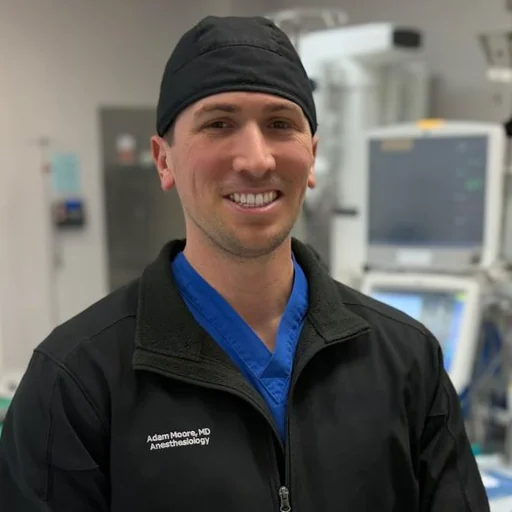
Practicing anesthesiologist with experience across MD-only, medical supervision of CRNAs, and medical direction of CAAs. Founded AnesthesiaJobs.com to help anesthesia professionals find the best job for their personal and professional life.
More about Adam →