Anesthesiologist Interview: 12 Questions You'll Be Asked
Quick Facts:
- Anesthesiologist interviews are typically more formal than other medical specialty interviews — expect a 1-2 day site visit
- Common interview format: Recruiter screen → Phone interview → On-site visit with grand rounds or case presentation → Offer
- Mean anesthesiologist base salary: $336,640/year (BLS, May 2024 — note: this reflects base salary only, not total compensation). Median total compensation reaches $535,000 (SalaryDr, 2026, 176 verified reports), with starting salaries around $377,000 (AMN Healthcare, 2025)
- Hiring committees evaluate clinical competence, cultural fit, production expectations, and long-term commitment
Landing an anesthesiology attending position is the culmination of years of medical school, residency, and possibly fellowship training. The anesthesiologist interview process is rigorous, often spanning multiple days and involving conversations with department chairs, practice partners, hospital administrators, and OR staff. Understanding what anesthesiology job interview questions to expect — and how to answer them strategically — can make the difference between receiving an offer and continuing your search.
This guide covers the 12 most common anesthesiologist interview questions, organized by category, with proven answer frameworks tailored for physicians interviewing for attending-level positions. Whether you're completing fellowship and seeking your first attending role or an experienced anesthesiologist exploring a career move, these strategies will help you present yourself with confidence.
Before Your Interview: Preparation Essentials
Anesthesiology interviews differ from other medical interviews in several key ways:
- Site visits are typically 1-2 days, including facility tours, meals with potential colleagues, and sometimes a case presentation or grand rounds lecture
- Multiple stakeholders will evaluate you: department chair, practice partners, OR directors, hospital leadership
- Every interaction counts — dinner with colleagues is part of the evaluation, not a casual social event
- Research the practice thoroughly: case volume, surgical specialties, payer mix, academic vs. private, partnership track details
If you're also exploring the broader job market, our anesthesiologist job market overview provides valuable context on current demand and trends.
Clinical & Technical Questions
These questions evaluate your clinical expertise, training, and ability to handle the case mix at the facility.
1. "Describe your fellowship training and how it prepared you for this position."
Why they ask: For fellowship-trained candidates, this question assesses how your subspecialty expertise aligns with the department's needs.
Answer framework:
- Summarize your fellowship focus and case volume: "During my cardiac anesthesia fellowship at [Institution], I managed over 500 cardiac surgical cases including complex valve operations, aortic surgery, heart transplants, and mechanical circulatory support."
- Connect your training directly to the position's requirements: "Your department's growing structural heart program aligns well with my training in TEE-guided interventional procedures."
- Highlight unique skills or research: "I also developed expertise in point-of-care ultrasound and published two papers on perioperative hemodynamic optimization."
Tips:
- Tailor this answer to the specific department — a community hospital values different skills than an academic medical center
- If you're a generalist without fellowship training, emphasize the breadth and depth of your residency experience
- Mention any teaching or quality improvement work from your fellowship
2. "Walk us through how you'd manage [specific complex clinical scenario]."
Why they ask: This tests your clinical reasoning, decision-making process, and ability to communicate your thought process under pressure.
Answer framework:
- Use a systematic approach: "I'd begin with a thorough preoperative assessment, focusing on [relevant factors]. For induction, I'd choose [approach] because [rationale]. My monitoring plan would include [specifics]. For maintenance, I'd consider [strategy]."
- Discuss contingency planning: "If [complication] occurred, my escalation plan would be..."
- Incorporate evidence-based practice: Reference recent guidelines or landmark studies when relevant
Tips:
- Think out loud — they want to see your reasoning process, not just the final answer
- Acknowledge uncertainty when appropriate: "There's debate in the literature about this approach, but based on [evidence], I favor..."
- Mention multidisciplinary communication: "I'd discuss the anesthetic plan with the surgical team beforehand to align on goals"
3. "What are your areas of clinical strength, and where do you see opportunities for growth?"
Why they ask: Self-awareness and intellectual honesty are highly valued in physician hiring. This question also helps them assess fit with the department's needs.
Answer framework:
- Lead with genuine strengths supported by evidence: "Cardiac and thoracic anesthesia is my primary area of strength, having managed over 700 cases during training. I'm also particularly skilled in advanced regional anesthesia techniques and perioperative TEE."
- Frame growth areas positively: "While my pediatric anesthesia experience is solid, I'd welcome the opportunity to expand my comfort with complex neonatal cases, and I understand your children's hospital affiliation would provide that exposure."
Tips:
- Avoid false modesty ("I'm a perfectionist") — be genuine
- Show that your growth areas don't conflict with core job requirements
- Demonstrate a plan for professional development in those areas
Practice Management Questions
These questions assess your understanding of the business side of anesthesia practice and your potential contribution beyond clinical care.
4. "What are your expectations regarding productivity and case volume?"
Why they ask: Anesthesia departments need to ensure new hires understand production expectations, especially in private practice models where compensation is productivity-based.
Answer framework:
- Show you understand the business model: "I understand that in a private practice model, productivity is closely tied to compensation, and I'm prepared for that. During my training, I developed efficient turnover practices and strong time management skills."
- Ask informed questions: "I'd love to understand more about the typical daily case volume, room assignments, and how productivity metrics are structured here."
- Express willingness to contribute: "I'm committed to being a productive member of the team while maintaining the highest standards of patient care."
Tips:
- Research typical anesthesia productivity benchmarks for the practice type (academic vs. private vs. employed)
- Understand ASA units, time-based billing, and how compensation models work
- Don't appear solely motivated by minimizing work — balance efficiency with quality
5. "How do you envision contributing to our department beyond clinical care?"
Why they ask: Departments want physicians who add value through leadership, teaching, research, quality improvement, or administrative engagement.
Answer framework:
- Identify 2-3 specific areas based on your research of the department: "I noticed your department is expanding its ERAS protocols. I led our ERAS implementation during fellowship and would be excited to contribute to that initiative."
- Reference teaching interest if it's an academic center: "I'm passionate about medical education and served as a chief resident with strong evaluations from trainees."
- Mention committee work or leadership: "I'd be interested in contributing to your quality and safety committee, particularly around perioperative outcomes tracking."
Tips:
- Match your offerings to the department's stated priorities — check their website, recent publications, and strategic plans
- Be specific rather than generic: "I want to contribute" is weaker than "I'd like to lead your regional anesthesia education program"
- If you're interested in research, mention specific projects or collaborations you envision
6. "What is your understanding of the current challenges facing anesthesiology as a specialty?"
Why they ask: They want to assess your awareness of the broader landscape — workforce dynamics, practice models, reimbursement pressures, and scope of practice discussions.
Answer framework:
- Demonstrate broad awareness: "Anesthesiology is navigating several important challenges, including evolving practice models, workforce distribution issues, and the need to demonstrate value beyond the operating room."
- Be balanced and thoughtful: Discuss the anesthesia team model respectfully, noting that collaboration benefits patient care
- Show forward thinking: "I believe anesthesiologists who embrace perioperative medicine, lead quality initiatives, and demonstrate measurable outcomes will continue to thrive."
Tips:
- This is not the place for political commentary on scope of practice debates — stay professional and balanced
- Mention value-based care, perioperative surgical home models, or enhanced recovery pathways
- Show awareness of current trends and opportunities in anesthesiology
Culture Fit & Team Dynamics
These questions evaluate whether you'll integrate well with the existing team and institutional culture.
7. "Tell us about your approach to working with CRNAs and the anesthesia care team."
Why they ask: Most anesthesia departments operate with some form of team-based care. Your ability to work collaboratively with CRNAs, CAAs, and residents is essential.
Answer framework:
- Express genuine respect for team members: "I've had excellent experiences working in care team models throughout my training. I believe CRNAs and CAAs are highly skilled professionals, and effective collaboration produces the best patient outcomes."
- Describe your leadership style: "My approach is to foster an environment of mutual respect and open communication. I'm accessible for questions, proactive in case planning, and committed to creating a supportive team culture."
- Share a positive example: "During my residency, I worked alongside experienced CRNAs who significantly enhanced my own training. That collaborative relationship is something I want to continue building."
Tips:
- This is a critical question — any hint of condescension toward CRNAs or CAAs is a red flag for hiring committees
- Focus on patient outcomes as the shared goal
- Understand the facility's specific practice model before the interview and speak to it directly
8. "What type of call schedule are you comfortable with?"
Why they ask: Call responsibilities vary widely between practices. They need to know your flexibility and expectations.
Answer framework:
- Be honest about your preferences while showing flexibility: "I understand that call is an essential part of anesthesia practice, and I'm prepared to take my fair share. I'm comfortable with [frequency you can commit to], and I'm flexible on the structure — whether that's in-house, home call, or a combination."
- Ask clarifying questions: "Can you tell me more about how call is structured here? Is there a separate trauma call, OB call, or cardiac call? How is call compensated?"
Tips:
- Research typical call structures for the practice type before the interview
- Be realistic — overpromising on call willingness creates problems later
- Understand the call compensation model: per diem, bundled, or separate from base salary
9. "Where do you see yourself in 5-10 years?"
Why they ask: Partnership-track practices and academic departments invest heavily in onboarding. They want long-term commitment.
Answer framework:
- Show commitment to growth within the organization: "In five years, I'd like to be an established member of this department with a reputation for clinical excellence in [specialty]. I'm interested in taking on leadership within [specific area — quality committee, education, subspecialty section]."
- For partnership-track positions: "I'm committed to the partnership track and excited about the opportunity to build equity in a practice I believe in."
- Show long-term vision: "In ten years, I see myself contributing to departmental leadership and mentoring the next generation of anesthesiologists."
Tips:
- Avoid suggesting you'll leave for another opportunity or start a side venture
- If you're considering a geographic area, mention community ties or reasons you'd stay
- Align your vision with the department's growth plans
Compensation & Career Questions
These questions address the practical aspects of the position. Handle them with professionalism and preparation.
10. "What are your compensation expectations?"
Why they ask: They need to assess whether their budget aligns with your expectations and whether you understand the market.
Answer framework:
- Demonstrate market knowledge: "Based on my training, subspecialty fellowship, and the current market data for anesthesiologists in this region, I'm targeting a total compensation package in the range of $[X] to $[Y]."
- Broaden the conversation: "I'm looking at the complete picture — base salary or guarantee, production incentives, signing bonus, relocation, CME, retirement, malpractice coverage, and partnership timeline."
- Show flexibility: "The specifics of the compensation structure are less important to me than finding the right long-term fit. I'm open to discussing what works for both sides."
Tips:
- Review anesthesiologist salary data before your interview
- Understand the difference between employment models: academic salary, private practice production, hospital-employed guarantees
- For partnership-track practices, understand the buy-in structure and timeline
- Consider geographic cost-of-living differences — salaries vary significantly by region and setting
11. "Are you interested in research/teaching opportunities?"
Why they ask: Academic centers need clinician-educators and researchers. Even private practices may have teaching affiliations or quality research initiatives.
Answer framework: For academic positions:
- "Teaching is one of my professional passions. During residency, I received the Outstanding Teacher award and developed a simulation-based crisis management curriculum for CA-1 residents. I'd welcome a protected educational role."
- "My research interests focus on [area]. I have [X publications] and an active collaboration with [team/institution] that I'd like to continue developing."
For private practice:
- "While my primary focus is clinical excellence, I value contributing to education. I'd be interested in precepting residents or CRNAs if your practice has teaching affiliations."
Tips:
- Be honest about your interests — saying you love research when you don't will create misalignment
- For academic roles, come prepared with a research plan or teaching portfolio
- Understand the balance of clinical vs. non-clinical time expected
12. "Do you have any questions for us?"
Why they ask: Thoughtful questions demonstrate due diligence, genuine interest, and professional maturity.
Essential questions to ask:
About the practice:
- "What does the typical daily schedule look like? How are rooms and cases assigned?"
- "How is the anesthesia department structured? What's the ratio of physicians to CRNAs/CAAs?"
- "What's the current case volume and surgical specialty breakdown?"
About growth and culture:
- "What does the onboarding and mentorship process look like for new attendings?"
- "How does the department handle conflict resolution and quality concerns?"
- "What are the department's strategic priorities for the next 3-5 years?"
About compensation and partnership:
- "Can you walk me through the partnership track timeline and buy-in structure?"
- "How is productivity measured, and what does the typical ramp-up period look like for new hires?"
- "What malpractice coverage is provided — occurrence-based or claims-made with tail coverage?"
Tips:
- Prepare 8-10 questions — many will be answered during the visit
- Save compensation-specific questions for private conversations with the practice administrator, not the group dinner
- Ask current associates about their experience: "What do you enjoy most about practicing here?"
Site Visit Etiquette: Unwritten Rules
The on-site interview extends well beyond the formal question-and-answer sessions:
- Dinner is part of the interview — Be personable but professional. Limit alcohol. Don't be the last one at the bar.
- Be kind to everyone — Administrative staff, OR nurses, and CRNAs will be asked for their impressions of you
- Tour with purpose — Ask informed questions about equipment, workflows, and case types during the facility tour
- Follow up promptly — Send personalized thank-you notes to every person you met within 24-48 hours
- Assess the culture — Pay attention to how team members interact, the overall morale, and whether the environment feels collaborative or tense
Take the Next Step in Your Career
You've trained for over a decade to reach this point. Approach your anesthesiologist interview with the same rigor you bring to the operating room — thorough preparation, systematic thinking, and confident execution.
Browse Anesthesiologist Jobs on AnesthesiaJobs.com →
Don't wait for opportunities to find you — sign up for job alerts and be the first to know about positions that match your specialty, location, and practice preferences.
Related Reading
- How Much Do Anesthesiologists Make? Salary Guide — Understand compensation benchmarks before you negotiate
- CRNA vs. Anesthesiologist: Roles, Salary & Scope Compared — Understand the anesthesia care team landscape
- Anesthesiologist Trends & Opportunities — Stay current on market dynamics shaping the specialty
- CRNA vs. CAA vs. Anesthesiologist — A comprehensive look at all three anesthesia provider roles
Frequently Asked Questions
How long does the anesthesiologist interview process take?
The typical anesthesiologist interview process spans 4-8 weeks from initial recruiter contact to offer. It usually begins with a phone screen from a recruiter, followed by a phone or video interview with the department chair or practice leader, then an in-person site visit lasting 1-2 days. Some academic departments may require a grand rounds presentation. After the site visit, expect 1-3 weeks for a decision. The process can be faster for private practices with urgent needs.
What should I bring to an anesthesiology site visit?
Bring a professional portfolio including your updated CV, a list of references, copies of your medical license and board certification, a summary of your case volumes or procedure log, and any teaching or research materials if applying to an academic center. Also bring business professional attire for all formal sessions and business casual for tours and dinners. Have a printed list of your prepared questions and a notepad for notes.
How do anesthesiologist interviews differ from residency/fellowship interviews?
Attending-level interviews are more focused on practice management, productivity, cultural fit, and long-term commitment than training interviews. You'll be evaluated as a potential colleague and partner, not a student. Expect detailed questions about compensation expectations, call willingness, team leadership, and departmental contributions. The social components (dinners, informal conversations) carry significantly more weight than in training interviews.
Should I work with a recruiter for my anesthesiology job search?
Recruiters can be valuable, especially for your first attending position or when exploring unfamiliar markets. They provide access to opportunities you might not find on your own, handle initial negotiations, and offer insights into practice cultures. However, also search independently through job boards like AnesthesiaJobs.com to ensure you're seeing the full market. There's no cost to the candidate — recruiters are paid by the hiring facility.
How do I evaluate whether a practice is the right fit?
Beyond compensation, assess these factors during your site visit: team dynamics (observe how physicians, CRNAs, and staff interact), call burden (ask current associates about real call frequency and quality of life), growth trajectory (is the practice growing or declining?), leadership stability (frequent turnover in leadership is a red flag), and community fit (can you see yourself living and building a life in this area?). Speak privately with junior partners or recently hired associates for the most candid perspectives.
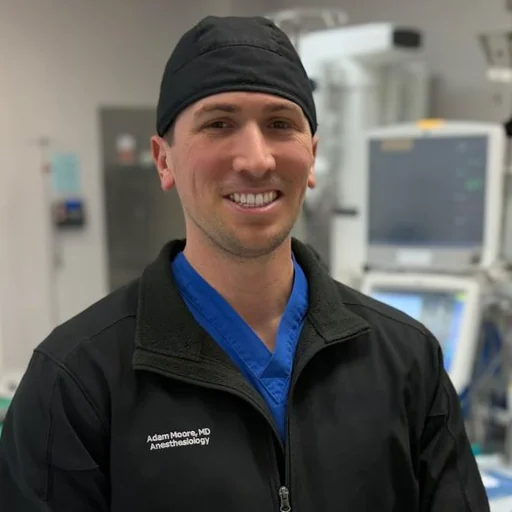
Practicing anesthesiologist with experience across MD-only, medical supervision of CRNAs, and medical direction of CAAs. Founded AnesthesiaJobs.com to help anesthesia professionals find the best job for their personal and professional life.
More about Adam →