AI in Anesthesia: Will Technology Replace Anesthesia Providers?
Key Takeaways
- AI in anesthesia is a powerful clinical tool — but expert consensus holds it will augment, not replace CRNAs, Anesthesiologists, and CAAs
- Applications already in use include real-time vital-sign monitoring, predictive hypotension alerts, and AI-guided ultrasound for regional anesthesia
- The one attempt at automated sedation — Johnson & Johnson’s Sedasys system — was discontinued in 2016 after failing commercially and clinically
- Automation-risk analyses rate nurse anesthetists at just 12% risk of replacement (WillRobotsTakeMyJob, 2025)
- With projected shortages of up to 6,300 anesthesiologists by 2036 and 38% CRNA job growth through 2032, demand for human providers has never been stronger
The conversation around AI in anesthesia has moved from academic speculation to operating-room reality. Machine-learning algorithms now analyze thousands of data points per second, predict complications before they appear on a monitor, and help guide needle placement during regional blocks. For CRNAs, Anesthesiologists, and CAAs alike, understanding what AI can — and cannot — do is essential for navigating the future of the specialty.
This guide explores every angle: the technologies already being deployed, the high-profile failure that set the field back, what the research says about job security, and how smart providers can use AI to elevate their practice. For a broader look at where the specialty is heading, visit our Anesthesiologist Trends & Opportunities hub.
📊 Salary Data Sources & Freshness This guide cites data from multiple sources: the U.S. Bureau of Labor Statistics (BLS, May 2024 — latest government data), ZipRecruiter (2026 advertised salaries), Glassdoor, AMN Healthcare, SalaryDr, and other industry reports. Government salary surveys have a 12–18 month reporting lag. Current advertised salaries on job boards typically reflect real-time market conditions and may be higher. Anesthesia provider compensation has risen steadily over the past five years.
How AI in Anesthesia Is Already Being Used
AI is not some far-off possibility — it is actively reshaping perioperative workflows today. Here are the most impactful areas where artificial intelligence is making a difference in anesthesia care.
Real-Time Patient Monitoring and Predictive Analytics
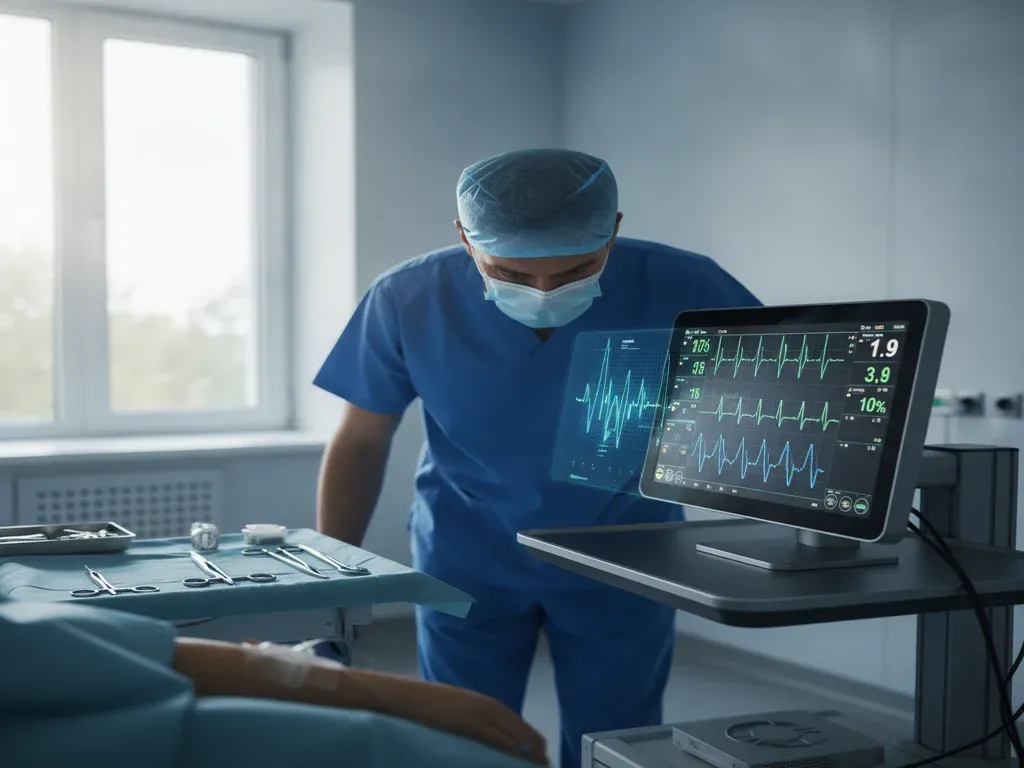
Traditional monitors display vital signs and alarm when thresholds are breached. AI-enhanced monitoring goes further: it analyzes continuous streams of hemodynamic data and can predict adverse events — like intraoperative hypotension — minutes before they occur (Kambale & Jadhav, Saudi Journal of Anaesthesia, 2024). Instead of reacting to a crisis, providers can proactively intervene.
Systems like the Acumen Hypotension Prediction Index (HPI) use machine-learning algorithms trained on millions of arterial waveform data points to flag hypotensive episodes before blood pressure drops. This gives anesthesia providers a meaningful head start on vasopressor administration, fluid boluses, or position changes.
AI-Guided Regional Anesthesia and Vascular Access
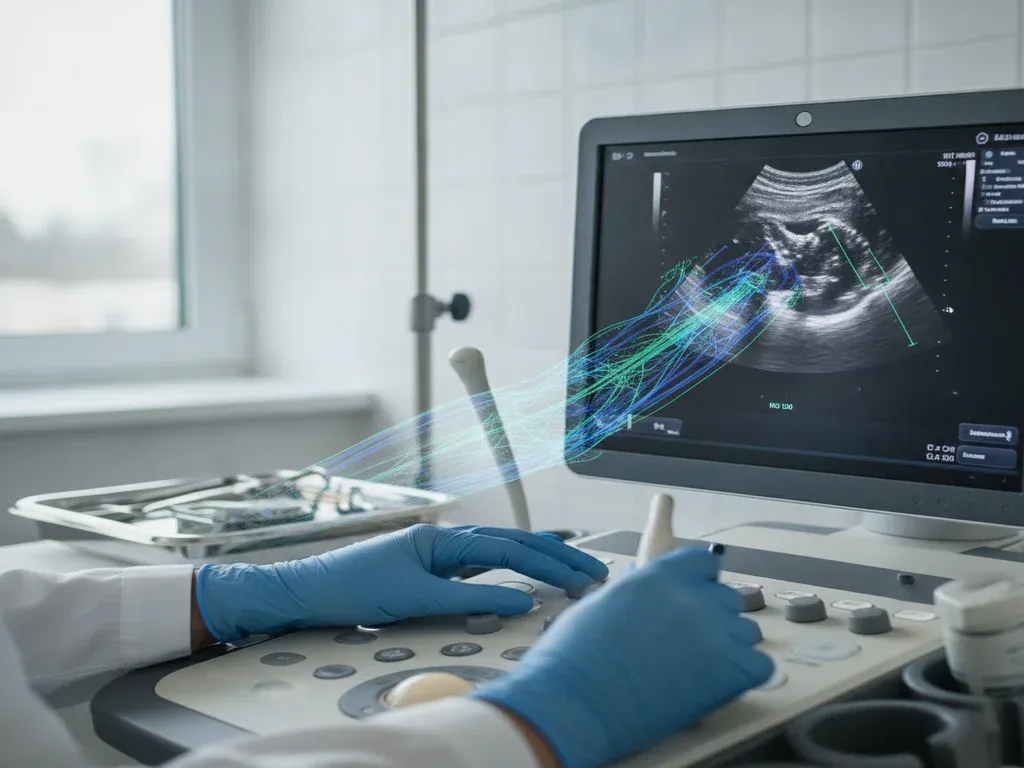
One of the most exciting frontiers is AI-assisted ultrasound. Algorithms overlay real-time anatomical identification onto ultrasound images during nerve blocks and vascular access procedures. For CRNAs, Anesthesiologists, and CAAs performing regional anesthesia, this means:
- Faster, more accurate identification of nerve structures
- Reduced needle passes and patient discomfort
- Improved success rates for less experienced practitioners
- Real-time guidance that enhances — rather than replaces — the provider’s skill
Researchers note that AI-driven image-guided planning is “the cutting edge of technological integration into anesthesiology to enhance procedural precision” (ASA Medical Student Component, 2025).
Closed-Loop Drug Delivery Systems
In Europe, pilot studies have tested closed-loop anesthesia delivery systems that use AI to automatically titrate anesthetic agents (propofol, remifentanil) based on continuous feedback from processed EEG (depth of anesthesia) and hemodynamic monitors. These systems adjust infusion rates in real time to maintain a target anesthetic depth.
While promising, these systems currently operate under close physician supervision — they do not eliminate the need for an anesthesia provider in the room. They function more like an advanced autopilot: the human stays at the controls and can override at any moment.
Preoperative Risk Assessment and Decision Support
AI algorithms can analyze a patient’s entire medical history — comorbidities, lab values, medication lists, prior surgical outcomes — and generate a personalized risk profile in seconds. This helps anesthesia teams:
- Identify high-risk patients earlier in the surgical planning process
- Reduce last-minute cancellations due to unrecognized conditions
- Tailor anesthetic plans to individual patient needs
- Allocate resources more effectively (e.g., ICU bed availability)
Administrative and Revenue Cycle Applications
Beyond the clinical realm, AI is transforming the business side of anesthesia practice. Intelligent scheduling platforms predict case durations and turnover times, optimizing OR throughput. AI-powered billing systems identify coding errors, fight payer denials automatically, and ensure documentation compliance — a major advantage for anesthesia groups negotiating hospital contracts (Coronis Health, 2025).
The Sedasys Lesson: Why Automation Failed
Any honest discussion of AI in anesthesia must address the cautionary tale of Sedasys — the most ambitious attempt to automate anesthesia delivery for routine procedures.
What Was Sedasys?
Johnson & Johnson’s Sedasys was a computer-assisted personalized sedation (CAPS) system designed to deliver propofol for minimal-to-moderate sedation during colonoscopies and EGDs — without an anesthesia provider in the room. A non-anesthesia nurse would oversee the system while a gastroenterologist performed the procedure.
What Happened?
- 2010: The FDA initially rejected Sedasys over safety concerns
- 2013: After an appeal, the FDA granted limited approval for use only in healthy (ASA I–II) patients undergoing routine procedures
- 2016: Johnson & Johnson discontinued the device after sluggish sales and widespread clinical resistance
The device failed for multiple reasons:
- Safety limitations: It could only handle the healthiest patients during the simplest procedures — exactly the cases that rarely have complications even without AI
- Clinical resistance: Anesthesia professional societies argued that sedation is inherently unpredictable, and that even “routine” cases can require split-second airway management decisions
- Narrow scope: The device could not manage general anesthesia, regional techniques, complex patients, or surgical emergencies
- Liability concerns: Hospitals were reluctant to adopt a system whose failure mode — an unconscious, unresponsive patient without a trained airway manager present — was unacceptable
Why This Matters Today
Sedasys demonstrated a fundamental truth: anesthesia is not a single-variable problem that a machine can solve. It requires simultaneous management of hemodynamics, ventilation, consciousness, pain, surgical conditions, and unpredictable patient responses. The human judgment, manual dexterity, and split-second decision-making that CRNAs, Anesthesiologists, and CAAs bring to every case cannot be reduced to an algorithm — at least not with any technology on the current horizon.
Will AI Replace CRNAs, Anesthesiologists, or CAAs?
The short answer: no. The long answer is more nuanced, but equally reassuring for anesthesia providers.
What the Data Says
- WillRobotsTakeMyJob.com rates nurse anesthetists at just 12% automation risk — classified as “Minimal Risk” — noting that the occupation “appears difficult to replace end-to-end with current or near-future automation” (2025)
- The American Society of Anesthesiologists (ASA) has stated that “AI will never replace the human connection between patient and provider,” and that AI in anesthesia exemplifies how technology can “augment over automate” (ASA, 2025)
- Essential Anesthesia Management concluded: “AI will never replace Anesthesiologists or CRNAs. But clinicians who can interpret, refine and — when necessary — challenge AI will set the standard for modern care” (2025)
Why Anesthesia Is Resistant to Full Automation
Anesthesia care demands a combination of skills that remain uniquely human:
| Human Skill | Why AI Can’t Replace It |
|---|---|
| Clinical judgment in ambiguity | AI excels at pattern recognition but struggles with novel, unpredictable situations — the exact scenarios where anesthesia providers earn their value |
| Manual dexterity | Intubation, mask ventilation, arterial lines, central lines, epidurals, and nerve blocks require hands-on procedural skill |
| Patient communication | Pre-op anxiety management, informed consent discussions, and post-op reassurance require empathy and human connection |
| Crisis management | Anaphylaxis, malignant hyperthermia, difficult airways, and massive hemorrhage demand rapid, creative, multimodal responses |
| Team coordination | Communicating with surgeons, circulating nurses, and OR staff in real time during evolving situations |
| Ethical decision-making | End-of-life care, consent capacity, and balancing risks for complex patients require moral reasoning |
The “Copilot” Model — Not Replacement
The emerging consensus across the anesthesia community is that AI will function as a clinical copilot — not a replacement pilot. Just as aviation autopilot handles routine flight segments while pilots manage takeoffs, landings, and emergencies, AI in the OR will handle data processing, pattern detection, and routine titration while anesthesia providers manage the full scope of patient care.
As Coronis Health’s 2025 analysis noted, AI is “more likely to strengthen the argument for maintaining the care team model rather than replacing it.” If AI-assisted oversight leads to fewer adverse events and better resource utilization, it becomes a differentiator — not a displacer.
AI in Anesthesia and the Provider Shortage
Far from threatening jobs, AI may actually help address one of the specialty’s most pressing challenges: the worsening anesthesia provider shortage.
The Shortage by the Numbers
| Metric | Figure | Source |
|---|---|---|
| Projected anesthesiologist shortage by 2036 | 6,300 | Medicus Healthcare Solutions, 2025 |
| Projected anesthesiologist shortage by 2025 | 8,450 | Medicus, 2025 |
| CRNA projected job growth (2022–2032) | 38% | BLS |
| Anesthesiologist projected job growth (2024–2034) | 3.2% | BLS |
| Percentage of anesthesiologists over age 55 | ~50% | Industry reports, 2025 |
| Surgical demand growth rate | 2–3% per year | ScienceDirect, 2024 |
With demand for surgical and procedural anesthesia rising and a wave of retirements approaching, there simply are not enough human providers to fill every OR. AI tools can help existing providers work more efficiently — not by replacing colleagues, but by:
- Reducing documentation burden so providers spend more time at the bedside
- Improving OR scheduling to reduce wasted downtime between cases
- Enhancing monitoring so providers can maintain the highest safety standards even during long shifts
- Supporting preoperative screening to streamline patient flow
This efficiency boost is especially critical in rural and underserved areas, where the anesthesiologist shortage is most acute and where CRNAs already provide the majority of anesthesia care.
How AI in Anesthesia Affects Compensation
A common concern is that AI-driven efficiency might suppress wages. The evidence strongly suggests the opposite: anesthesia provider compensation continues to climb because of the shortage and despite AI adoption.
Current Compensation Snapshot (All 3 Roles)
| Compensation Metric | CRNA | Anesthesiologist | CAA |
|---|---|---|---|
| BLS/National Average | $223,210 median (BLS, May 2024) | $336,640 mean base (BLS, 2024) | $247,000–$253,000 (Becker’s/Marit Health, 2026) |
| Advertised Average | $260,000 (ZipRecruiter, 2026) | $393,215 (ZipRecruiter, 2026) | ~$291,000 (Glassdoor, 2026) |
| Starting Salary | $220,000–$260,000 | ~$377,000+ (AMN, 2025) | $200,000–$250,000 |
| Top Earners | $394,500 (90th pct, ZipRecruiter, 2026) | $535,000 median total comp (SalaryDr, 2026) | Up to $350,000 (BagMask, Q1 2026) |
| Locum Tenens Rate | $200–$325+/hr | $300–$450/hr | $200–$275/hr |
| Locum Annual Gross | $400,000–$550,000+ | $600,000–$900,000+ | — |
These figures reflect a market where human expertise is in higher demand than ever. AI may make providers more productive, but it does not reduce the need for licensed, skilled anesthesia professionals at the point of care. For detailed salary breakdowns, see:
Regulatory and Liability Challenges for AI in Anesthesia
Even as AI technology advances, significant regulatory and legal barriers prevent it from replacing human providers.
FDA Oversight
The FDA maintains a growing list of AI-enabled medical devices authorized for marketing in the United States. However, no AI system is currently approved for autonomous anesthesia delivery. Every FDA-cleared AI tool in the anesthesia space is classified as a clinical decision support system — meaning it advises a human provider rather than acting independently.
The Liability Question
If an AI system recommends a dosing adjustment that leads to a poor outcome, who is liable? The provider who followed the recommendation? The hospital that purchased the system? The software vendor? This unresolved legal landscape makes hospitals reluctant to expand AI’s role beyond advisory functions.
As the Coronis Health analysis (2025) noted: “Until this is clarified legally, anesthesiologists may be reluctant to fully rely on automation for expanded supervision ratios.”
CMS Supervision Rules
Under current CMS regulations, anesthesiologists directing care in the anesthesia care team model are limited to supervising a maximum of four concurrent cases. Some industry observers have speculated that AI could eventually justify expanding this ratio. However, CMS regulatory change historically lags far behind technological capability — and professional societies like the ASA would need to endorse any changes based on large-scale safety data.
The Bias Problem
AI systems are only as fair as the data they are trained on. If training datasets underrepresent certain patient populations (by race, age, sex, or comorbidity profile), the algorithms can produce biased recommendations. Human providers bring the clinical judgment to recognize and override biased outputs — another reason the human-in-the-loop model is essential.
How Smart Providers Are Embracing AI in Anesthesia
The most forward-thinking CRNAs, Anesthesiologists, and CAAs are not fearing AI — they are learning to leverage it as a competitive advantage.
Skills That Will Matter Most
- AI literacy: Understanding how algorithms work, what data they use, and where their blind spots are
- Data interpretation: Being able to critically evaluate AI-generated recommendations rather than accepting them passively
- Technology integration: Comfort with new monitoring platforms, closed-loop systems, and AI-enhanced documentation tools
- Adaptability: Willingness to evolve workflows as new tools become available
- Communication: Explaining AI-assisted care decisions to patients, surgeons, and hospital administrators
Career Positioning
Providers who can demonstrate proficiency with AI-enhanced tools will be increasingly attractive to:
- Large hospital systems investing in smart OR infrastructure
- Anesthesia management groups seeking efficiency gains
- Academic medical centers at the forefront of AI research
- Locum tenens agencies placing providers in tech-forward facilities
For a deeper look at how the job market is evolving, see our Anesthesia Job Outlook guide.
The Future of AI in Anesthesia: What to Expect by 2030
While no one can predict the future with certainty, the trajectory of AI in anesthesia points toward deeper integration — not replacement.
Near-Term (2026–2028)
- Wider adoption of predictive hypotension and hemodynamic monitoring AI
- AI-powered pre-op risk stratification becoming standard in major health systems
- Expanded use of AI-guided ultrasound for regional anesthesia and vascular access
- Smart documentation systems reducing charting time by 30–50%
Medium-Term (2028–2030)
- Closed-loop drug delivery systems moving from European trials to FDA approval pathways
- AI-enhanced care team models allowing providers to manage higher patient volumes with maintained safety
- Personalized anesthetic plans based on pharmacogenomic data analyzed by AI
- AI-driven OR scheduling becoming the norm rather than the exception
What Will NOT Happen
- Autonomous, provider-free anesthesia delivery for general anesthesia or complex cases
- Mass displacement of CRNAs, Anesthesiologists, or CAAs
- A reduction in demand for licensed anesthesia providers
The fundamental reality remains: the U.S. needs more anesthesia providers, not fewer. AI is a tool that helps those providers deliver safer, more efficient care — and the CRNA vs Anesthesiologist comparison continues to be about choosing between two outstanding, in-demand career paths, not about either role disappearing.
Related Reading
- Anesthesia Job Outlook: Growth, Demand & Future Trends
- The Anesthesiologist Shortage: Causes, Impact & Opportunities
- CRNA vs Anesthesiologist: Career Comparison Guide
- Anesthesiologist Trends & Opportunities
CTA: Browse Anesthesia Jobs on AnesthesiaJobs.com
AI is reshaping how care is delivered — but human providers remain at the heart of every case. Find your next opportunity today.
Browse CRNA Jobs → | Browse Anesthesiologist Jobs → | Browse CAA Jobs →
Frequently Asked Questions
Will AI replace CRNAs, Anesthesiologists, or CAAs?
No. Expert consensus holds that AI will augment — not replace — anesthesia providers. Anesthesia requires clinical judgment, manual dexterity, patient communication, and crisis management skills that AI cannot replicate. Automation-risk analyses rate nurse anesthetists at just 12% risk of replacement (WillRobotsTakeMyJob, 2025), and the ASA has stated that “AI will never replace the human connection between patient and provider.”
What happened to the Sedasys automated anesthesia machine?
Johnson & Johnson’s Sedasys system was a computer-assisted sedation device approved by the FDA in 2013 for minimal-to-moderate sedation in healthy patients during routine colonoscopies. It was discontinued in 2016 due to sluggish sales, clinical resistance, and the fundamental limitation that it could only handle the simplest cases in the healthiest patients — not the complex, unpredictable situations that define anesthesia care.
How is AI currently used in anesthesia?
AI is used in several ways: predictive hemodynamic monitoring that detects hypotension minutes before it occurs, AI-guided ultrasound for regional anesthesia and vascular access, preoperative risk stratification, closed-loop drug delivery systems (in pilot studies), smart OR scheduling, and automated billing and documentation. All current applications function as decision-support tools under human provider supervision.
Will AI lower anesthesia provider salaries?
Current evidence suggests the opposite. CRNAs earn a median of $223,210 (BLS, May 2024) with advertised averages of $260,000 (ZipRecruiter, 2026), while Anesthesiologists earn a BLS mean of $336,640 with total compensation reaching $535,000 (SalaryDr, 2026). CAAs average $247,000–$253,000 (Becker’s/Marit Health, 2026). With projected shortages of up to 6,300 anesthesiologists by 2036 and 38% CRNA job growth, demand for human providers continues to drive compensation upward.
How can anesthesia providers prepare for AI integration?
Providers should develop AI literacy (understanding how algorithms work and where they fail), build comfort with new monitoring and documentation platforms, practice critical evaluation of AI-generated recommendations, and stay engaged with continuing education on emerging technologies. Providers who can effectively integrate AI tools into their practice will be the most competitive in the job market.
Practicing anesthesiologist with experience across MD-only, medical supervision of CRNAs, and medical direction of CAAs. Founded AnesthesiaJobs.com to help anesthesia professionals find the best job for their personal and professional life.
More about Adam →